
The car journey is quiet. Your child, usually full of stories, is staring out of the window. Then comes the question: “What if I forget it all?”
If your child has a first grading coming up, that mix of excitement and nerves is completely understandable. You may be wondering the same thing: what if they freeze, forget a technique or feel disappointed? You do not need to dismiss those worries or promise everything will go perfectly. A grading is a chance to recognise progress and help your child learn, whatever the day brings.
What is a grading for?
At Kane Academy, gradings are a check on progress and a celebration of effort. They are not a filter designed to remove students. Personal development is at the heart of our martial arts classes in Huddersfield, so the focus is on your child’s own journey, not on how they compare with the child next to them.
Your child has been practising techniques and combinations in class. A grading gives them an opportunity to show what they have learned and take a meaningful next step. For younger Tiny Tigers, aged 4–7, and Ninja Kids, aged 7–12, it can also help build confidence, focus and resilience in a supportive setting.
What happens on the day?
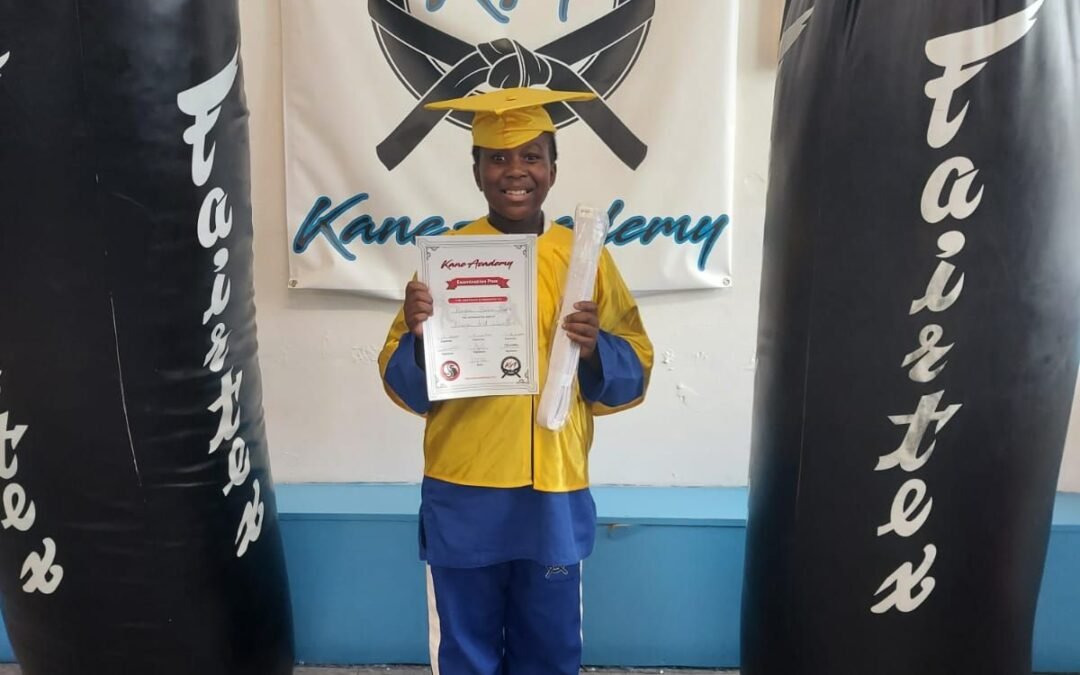
The exact arrangements can vary. In general, children demonstrate techniques and combinations they have been practising in class in front of the coaches, while families are there to support them. Successful students are presented with a certificate and their new belt. Children wear a graduation cap and gown for photos, and some gradings also include an “Examination Pass” certificate frame.
The team confirms the exact date, time and arrangements for each grading in advance. If anything is unclear, ask your coach rather than relying on assumptions. Knowing what to expect can make the day feel more familiar for you and your child.
How to prepare in the week before
Your child has already put in the training. Keep the final week steady and reassuring rather than turning it into a last-minute test.
- Keep attending class. Gradings recognise the practice your child has already done. Continuing with their usual routine helps them stay connected to the coaches and techniques they know.
- Practise technique names for a couple of minutes at home. Keep it light and short. A quick reminder can help the names feel familiar, while an hour of drilling may make the grading seem like a source of pressure.
- Pack water and the correct uniform. Getting these ready ahead of time removes avoidable decisions on the day and helps your child feel prepared.
- Arrive with time to spare. A calm arrival gives your child a moment to settle in, rather than having to rush into the grading feeling flustered.
- Keep the night before calm and aim for an early bedtime. Rest and a familiar evening routine can help your child feel more settled than an intensive final practice.

What to say when your child feels nervous
Start by naming the nerves without trying to talk them away. You might say, “It makes sense to feel nervous when you’re about to try something new.” Listening calmly shows your child that they do not have to hide how they feel.
Then remind them of something specific they have improved. For example: “I’ve noticed how much more balanced your stances look.” This gives them something real to draw confidence from.
Avoid promising that they will pass. You cannot know exactly how the day will go, and a promise can add pressure. Also try not to rely only on “just do your best.” Although well meant, that can leave a child unsure what to do. Instead, give them one small focus: strong stances, clean technique or listening carefully for the coach’s commands. One clear job can feel more manageable than worrying about the whole grading.
Praise the process, not just the belt
The American Psychological Association’s guidance on praise, drawing on Carol Dweck’s work, recommends noticing effort and specific strategies rather than describing a child as naturally clever or talented. The research links this kind of process praise with persistence, seeking challenges and treating setbacks as opportunities to learn. It concerns praise and learning generally, not martial arts gradings specifically, but the idea offers a useful way to support your child.
Try saying, “Your stances were so steady, that’s the practice paying off,” or “You listened carefully and kept going when you felt unsure.” These comments help your child notice actions they can repeat and develop. The belt matters, but so does the focus, courage and practice that brought them to grading day.
If they do not pass first time
It happens, and it is not a failure. Your child’s coach will explain exactly what to work on next, so they have a clear path forward. Coming back to try again is one of the most valuable things a child can learn to do. It is a chance to practise resilience, ask for help and keep growing.
On the car journey home, try these three things:
- “I’m proud of you for giving it a go.” This recognises courage and participation, not just the result.
- “What part felt best to you?” This helps your child reflect on their experience in their own words.
- “Your coach will help you practise the next step, and we’ll take it one class at a time.” This offers reassurance without turning the moment into a performance review.
Let your child share their feelings before jumping into advice. A calm conversation can wait until they are ready.
After the grading: celebrate, then keep going
Put the certificate somewhere your child can see it, or let them choose a place at home. Mark the milestone in a way that suits your family, such as sharing a favourite meal or telling them what you noticed about their effort.
Then let the achievement settle. You do not need to review every session or ask your child to keep proving themselves. Help them return to the next block of training with the same steady encouragement. At Kane Academy, values such as kindness, resilience, healthy living, inclusivity and continuous growth are part of the journey, alongside learning martial arts.
If your child is very nervous or easily overwhelmed
Tell the coach beforehand. They can talk with you about what may help and prepare your child as best they can. Arrive a few minutes early, and consider agreeing a small signal your child can use if they need a breather. Be clear that they can keep training and approach grading at their own pace. Every child is different, so speak with the coaches about what is possible rather than assuming a particular adjustment can be guaranteed.
Find a class at Kane Academy
If your child has a grading coming up, ask your coach what to focus on in the final week. If they have not started yet, you are welcome to book a trial session and come and see a class. Kane Academy offers trial sessions for all new members. New students can also choose a 4-week starter programme for £49.99 or a 6-week beginner course for £199, which includes uniform, gloves and gradings.
Kane Academy welcomes families from Marsh, Lindley, Salendine Nook, Oakes, Fixby, Greenhead and across Huddersfield. Classes run at St James Hall, St James Road, Marsh, Huddersfield, HD1 4QA. You can read more about world champion instructor Rebecca Kane and explore the full timetable.
Tuesday and Thursday:
4:00-4:30pm Tiny Tigers
4:30-5:00pm Tiny Tigers
5:00-5:45pm Ninja Kids
5:45-6:30pm Ninja Kids
6:30-7:15pm Black Belt Club Elite Class
7:15-8:00pm Teen and Adult Kickboxing
Saturday:
9:00-9:30am Tiny Tigers
9:30-10:00am Tiny Tigers
10:00-10:45am Ninja Kids
10:45-11:30am Ninja Kids
11:30am-12:15pm Women's Kickboxing
12:15-1:00pm Family Kickboxing
View the full Kane Academy timetable.
Your child does not need to feel completely fearless to take part. With a little preparation, supportive words and a coach who understands their journey, they can step onto the mat, focus on one thing at a time and discover what they are capable of.