
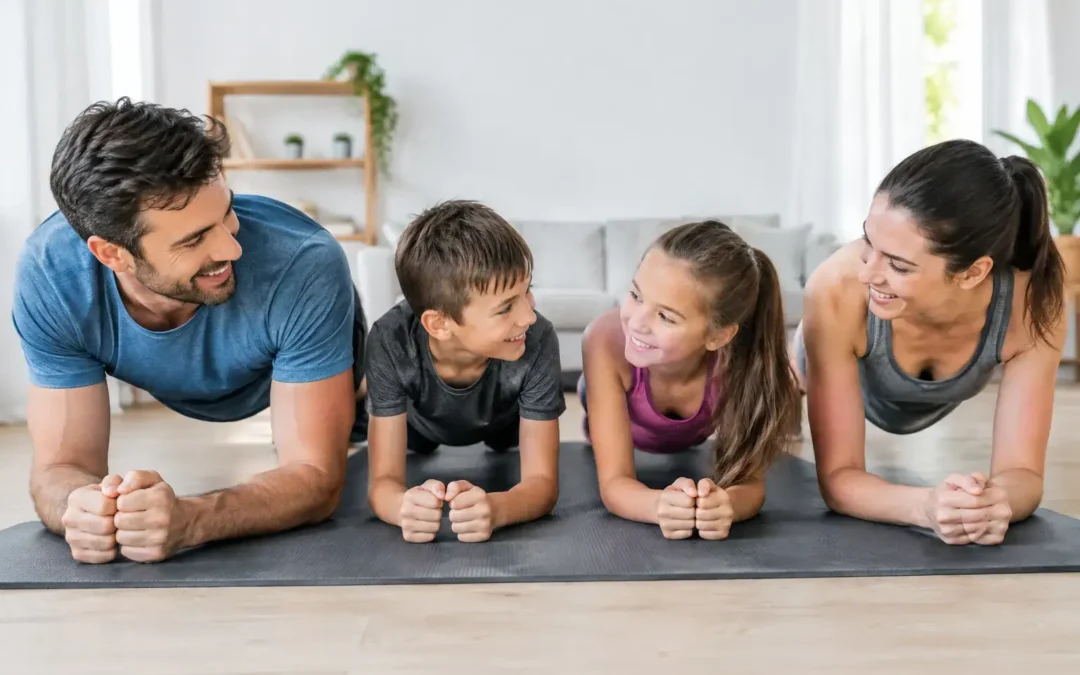
A child who is nervous about trying a new activity often feels braver when Mum, Dad, a sibling or another trusted adult understands what training feels like too. That is one of the top benefits of family training in martial arts: it turns an unfamiliar challenge into something shared. Rather than asking one person to step outside their comfort zone alone, the whole family can build confidence, fitness and positive habits around a common goal.
Martial arts training is not about creating the toughest person in the room. At its best, it teaches people how to stay calm under pressure, respect others, listen carefully and keep going when something feels difficult. For families, those lessons can carry far beyond the training mats.
The top benefits of family training in martial arts
A shared routine makes activity easier to sustain
Busy family life can make exercise feel like another task on an already full list. When martial arts becomes part of a family routine, it is easier to protect that time. Children see adults making movement and wellbeing a priority, while parents have a clear, enjoyable reason to stay active rather than relying on motivation alone.
Training together does not always mean everyone attends the same class. Young children need coaching designed for their stage of development, while teenagers and adults need appropriate technical challenge. A well-structured academy gives each person an age-suitable route, but the family still shares the routine: getting ready, encouraging one another and talking about progress afterwards.
That consistency matters more than the occasional intense workout. Regular kickboxing, self-defence or Filipino martial arts practice develops coordination, mobility, cardiovascular fitness and strength steadily. It can also help replace screen time with an activity that feels purposeful rather than forced.
Confidence grows through visible effort
Confidence is not simply being loud or naturally outgoing. It is the quiet belief that you can attempt something new, make mistakes, learn and improve. Martial arts gives children and adults repeated opportunities to experience that process.
A beginner may struggle to remember a sequence, hold their balance or speak up in class. With patient coaching and practice, they begin to notice small wins: a sharper technique, better focus, a completed drill or the courage to work with a new partner. Family members who train can recognise those wins in each other because they understand the effort behind them.
This is especially valuable for shy children. Instead of being labelled as lacking confidence, they can develop it at their own pace in a supportive setting. Seeing a parent, older sibling or trusted relative practise with humility can be powerful too. It shows that being new at something is normal, and that progress comes from turning up.
Positive behaviour has somewhere practical to go
Children are often told to concentrate, show respect and manage their emotions. Martial arts gives those instructions a practical setting. They learn to line up, listen, take turns, follow safety rules and respond appropriately when things do not go their way.
For adults, training can be a healthy release after a demanding day. Hitting pads under supervision, moving with purpose and concentrating on technique can help clear mental clutter. The benefit is not that martial arts removes stress completely. It gives people a constructive way to manage it rather than carrying it into the rest of family life.
At home, the language of training can be useful. A family can talk about perseverance, accountability and kindness in real terms, not as vague ideas. When a child has practised taking feedback respectfully in class, it may become easier to accept guidance with schoolwork or household responsibilities.
Family training builds connection without pressure
Families do not need to be identical to enjoy martial arts. One person may love the fitness element, another the structure of gradings, and someone else the social side of class. Shared participation creates conversation without requiring everyone to have the same goals.
After a session, parents can ask better questions than “Did you have fun?” They might ask what felt challenging, which technique needed the most focus, or what their child was proud of. These conversations show children that effort is worth noticing, even when they are not immediately the best at something.
There is also real value in cheering each other on. A younger child may be inspired by an older sibling working towards a grading. A teenager may gain confidence from seeing a parent start as a complete beginner. Those moments can shift the family dynamic away from comparison and towards encouragement.
Of course, training together should never become pressure to perform. A child who needs their own class identity should have it. A parent who prefers to support from the side-lines before joining should feel welcome to do so. The strongest family training culture is one where everyone is encouraged, never pushed beyond what is appropriate for them.
Resilience becomes a habit, not a slogan
Every martial artist has sessions where timing is off, a technique takes longer to understand or fitness feels lower than expected. Those moments are not failures. They are part of learning.
When families see resilience in action, it becomes more believable. Children watch adults return after a tough session. Adults see their children try again after a mistake. Over time, the message is simple: difficulty is information, not a reason to give up.
Gradings can support this lesson when they are treated as milestones rather than the only measure of success. Preparing for a new level builds commitment and gives members a clear target. Yet the real growth is found in the weeks of regular practice beforehand: learning the details, improving technique and developing the discipline to keep going.
Practical self-defence brings reassurance
Self-defence is a meaningful part of martial arts training, but it should be taught responsibly. It is not about encouraging confrontation or making dramatic promises. Good self-defence begins with awareness, clear boundaries, confidence and the ability to avoid unnecessary risk.
For children, this can include learning how to use their voice, recognise uncomfortable situations and seek help from trusted adults. For teenagers and adults, it may include personal safety awareness, distance management and simple, practical responses taught in a controlled environment.
The physical skills matter, but so does the mindset. Someone who stands with greater confidence, communicates clearly and understands their options may be better equipped to avoid trouble altogether. Families can have age-appropriate conversations about safety because training provides a sensible framework for them.
Inclusion makes progress possible for more people
Not every child learns, communicates or processes information in the same way. A family-focused martial arts environment should recognise that difference without lowering expectations of what a child can achieve. With patient coaching, clear routines and suitable adaptations, many children with additional needs can enjoy the structure, movement and sense of belonging that training offers.
Parents should feel comfortable discussing what helps their child engage. It might be extra time to settle in, a clearer demonstration, space from a busy group or a gradual introduction to partner work. The right approach depends on the individual, which is why a supportive coaching team matters.
At Kane Academy, the aim is for each member to feel seen as a person first, then supported to progress at a pace that challenges them well. That combination of high standards and genuine encouragement helps families feel they belong.
How to make family martial arts training last
Start with a realistic commitment. One regular session each week can be enough to build momentum, particularly for a beginner. Avoid making training another source of stress by choosing a class time that works with school, work and rest.
Give each family member room to set a personal goal. A child may want to speak more confidently in class, a teenager may want to improve fitness, and an adult may be working towards stress relief or self-defence skills. Shared activity does not require shared targets.
Finally, notice effort as much as achievement. Celebrate the first class, the return after a difficult week, the improved focus and the willingness to try. The belt or certificate will matter, but the habits built along the way are what can stay with a family for years.
The best training journey is not the one that looks most impressive from the outside. It is the one that helps each person feel stronger, calmer and more capable, while reminding them that they have people in their corner.