
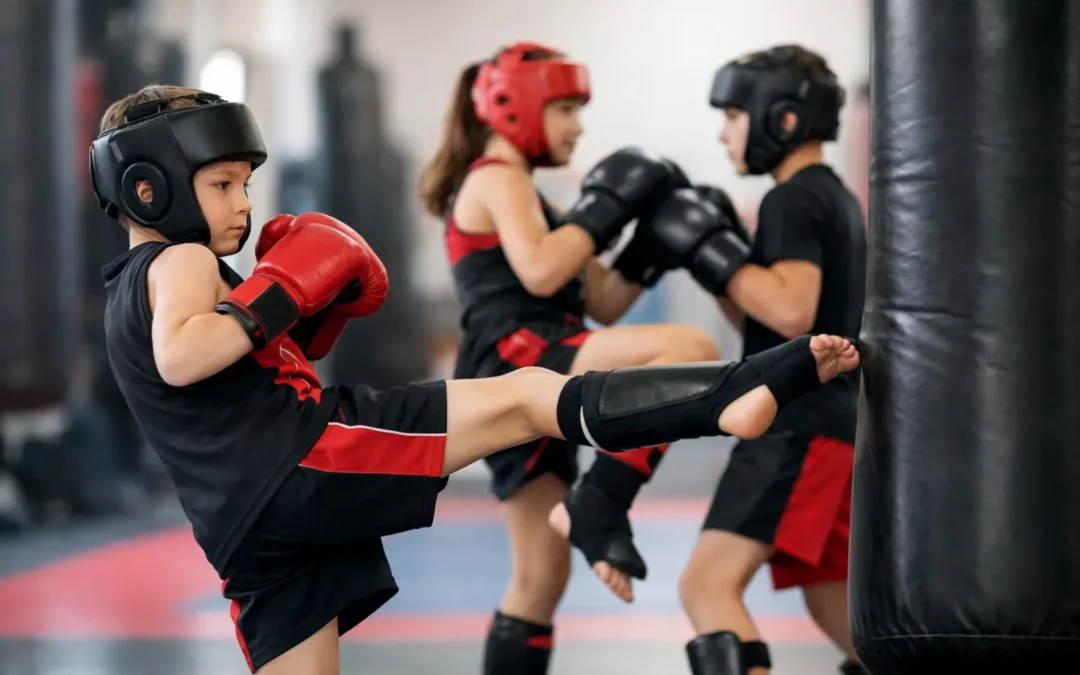
A four-year-old does not need to train like a teenager, and a shy eight-year-old does not need to be the loudest child in the room to benefit from martial arts. The question around children’s kickboxing ages is less about finding one perfect starting number and more about finding a class that meets your child where they are.
When kickboxing is taught properly, children learn movement, balance, listening skills and self-control before they ever worry about complex techniques. They get active, make friends and discover that progress comes from showing up, trying again and treating others with respect. That is where confidence starts.
What age can a child start kickboxing?
Many children can begin structured martial arts from around four years old, provided the programme is specifically designed for younger children. At this stage, the goal is not hard training or preparing children for competition. It is helping them learn to follow simple instructions, take turns, move safely and enjoy being part of a group.
A good early-years class uses games, simple drills and achievable challenges. Children may practise basic stances, safe striking shapes on equipment, coordination exercises and listening routines. The best sessions feel fun, but they still have purpose. A child learns that when the coach gives an instruction, they stop, look and listen. Those habits can carry into school, home life and other activities.
From around seven, many children are ready for a little more structure. They can usually concentrate for longer, remember short combinations and begin to understand why technique matters. They may set goals, work towards gradings and take greater pride in improving their fitness and skill.
Teenagers can train in a more developed kickboxing programme, with coaching adapted to their physical development, confidence level and experience. Some will want a positive outlet for stress and energy. Others may be looking for fitness, practical self-defence awareness or a place where they feel they belong.
Children’s kickboxing ages and the right class
Age bands are useful because children develop differently, but they should never be the only consideration. A confident five-year-old and a nervous five-year-old may need different encouragement. Equally, a child who has never played sport can thrive alongside one who is naturally active when the coaching is patient and well organised.
At Kane Academy, Tiny Tigers is designed for children aged four to seven, while Ninja Kids supports seven to twelve-year-olds. This division gives each group the right balance of challenge and support. Younger children need shorter activities, clear routines and plenty of positive reinforcement. Older children can spend more time developing technique, discipline, fitness and teamwork.
The transition point at age seven is not a test that a child must pass. It is simply a helpful guide. A thoughtful instructor will consider maturity, confidence, coordination and how settled the child feels in their current class. The aim is for every child to feel stretched, not overwhelmed.
Ages four to seven: building foundations through movement
For younger children, martial arts should build a strong relationship with movement. They learn how to run, balance, turn, jump and control their bodies in a safe setting. These skills support kickboxing training, but they also help with general physical confidence.
This is often a brilliant age for children who are hesitant in new groups. A predictable class routine can make a big difference. They know when to line up, when to practise, when to rest and when to celebrate a good effort. Over time, even a quiet child may begin volunteering answers, partnering with another child or proudly demonstrating a skill for their family.
Parents should expect age-appropriate activities rather than adult-style workouts. There should be no pressure to hit hard, prove toughness or keep up with older children. Fun and structure work together here.
Ages seven to twelve: skills, focus and resilience
Between seven and twelve, children can begin linking techniques into simple combinations and understanding the value of regular practice. They often enjoy the sense of achievement that comes with earning a new belt or certificate, but the real benefit is what happens along the way.
A child who struggled to remember a sequence may learn to slow down and try again. A child who finds losing difficult may learn to respond calmly. A child who avoids physical activity may find a type of exercise they genuinely look forward to each week. These are valuable lessons, and they cannot be rushed.
This age group also benefits from clear boundaries. Respect for coaches, training partners and equipment is part of the lesson. Kickboxing is never about picking fights or intimidating others. It is about control, awareness and using strength responsibly.
Teenagers: a healthy challenge and a supportive outlet
Teenage years bring different pressures. Schoolwork, friendship groups, social media and changing confidence can all affect how young people feel about themselves. A kickboxing class can offer a valuable reset: a place to work hard, switch off from distractions and see measurable progress.
Teenagers are often capable of more detailed technical training and higher-intensity fitness work, but good coaching still matters. They need an environment where beginners are welcomed, questions are encouraged and individual development is respected. Not every teenager wants to compete, and they do not need to. Training for fitness, self-defence skills, confidence and personal goals is every bit as worthwhile.
How to tell whether your child is ready
You do not need to wait until your child is fearless, sporty or perfectly focused. In fact, children often join because they need help with confidence, routine or physical activity. Readiness is usually about whether they can take part safely with support, not whether they already have natural ability.
A trial class is the most useful way to find out. Watch how your child responds to the coach and the group. Do they seem comfortable after the first few minutes? Are instructions explained in a way they can understand? Is the class active without becoming chaotic? A little first-session nerves are completely normal. What matters is whether they leave feeling encouraged.
It also helps to be honest with the instructor beforehand. Mention if your child is shy, anxious, has an additional need, finds noise difficult or needs extra time to settle. Inclusive coaching is not about lowering standards. It is about adapting the route so every child has a fair opportunity to grow.
What safe children’s kickboxing should look like
Parents are right to ask about safety. Quality children’s kickboxing is carefully managed and age-appropriate. Coaches should teach control from the beginning, supervise partner work closely and make sure protective equipment is used when activities call for it.
For young beginners, much of the practice will be done on pads, bags or through movement drills. Contact should never be treated as the main attraction. Good instructors focus on posture, distance, balance, control and respect long before increasing complexity.
Look for a class with clear behaviour expectations and a positive atmosphere. Children should be corrected constructively, praised for effort and taught that mistakes are part of learning. A supportive academy does not rely on shouting or embarrassment to create discipline. It builds discipline through consistency, accountability and encouragement.
Choosing the best start for your child
The best starting age is the age at which your child can join a suitable class and feel supported enough to keep coming back. For some families, that is four. For others, it may be seven, ten or during the teenage years. There is no prize for starting earliest, and no child is too late to begin as a complete beginner.
A structured introductory course or trial session takes away much of the uncertainty. Your child can experience the class, meet the coaches and see whether the environment feels right before making a bigger commitment. Bring them along with an open mind, celebrate the small wins and let confidence build one lesson at a time.