
A stick is not the starting point in Filipino martial arts. Awareness is. Before you learn a pattern, a strike or a defence, you learn to pay attention: to distance, timing, posture and the space around you. That practical mindset is what makes Filipino martial arts Huddersfield training such a rewarding option for adults, teenagers and anyone who wants to feel more capable in everyday life.
Often known as Kali, Eskrima or Arnis, Filipino martial arts are systems built around intelligent movement and practical self-defence. They can look fast and highly technical, particularly when sticks are involved, but a well-led beginner class starts at a pace that allows every student to build confidence properly. You do not need experience, exceptional fitness or a background in combat sports to begin.
What are Filipino martial arts?
Filipino martial arts developed through a long tradition of weapons-based and empty-hand training in the Philippines. Different styles use different names and place emphasis on different methods, but many share the same core idea: learn principles that work across a range of situations rather than relying on one fixed technique.
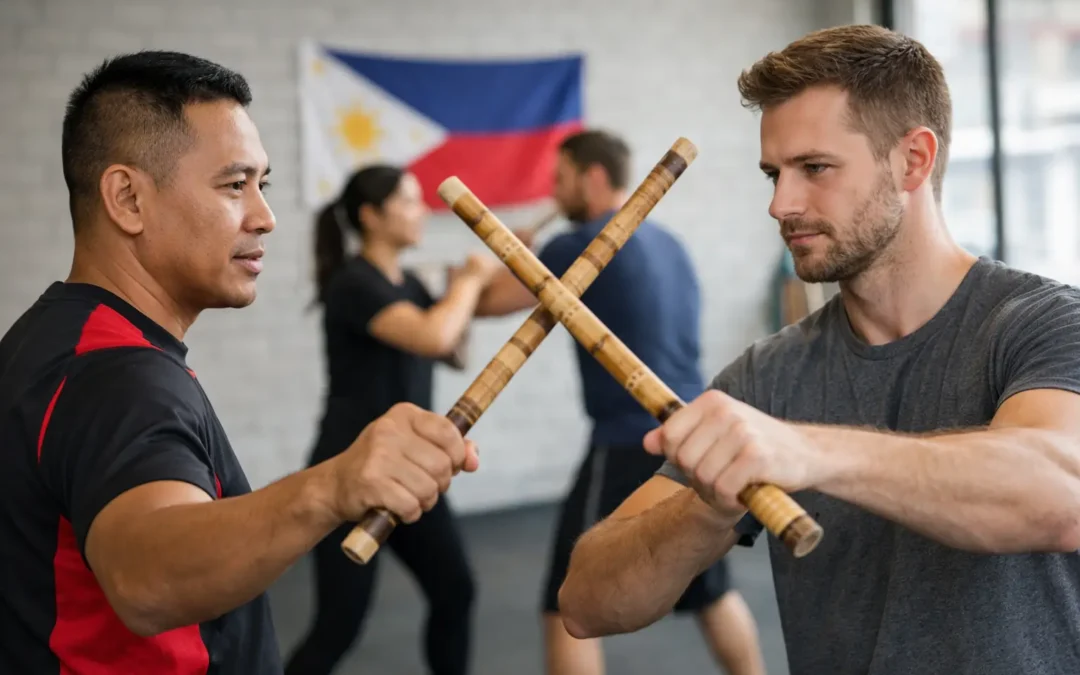
Training commonly includes stick work, open-hand striking, footwork, blocks, parries, simple disarms and controlled partner drills. The sticks are training tools, not an invitation to be reckless. They help students understand lines of attack, coordination and distance in a clear, visible way. Those skills then carry into empty-hand self-defence.
This is one reason the art feels so engaging. You are not simply repeating movements in the air. You are learning how to read motion, respond calmly and move with purpose alongside a training partner.
Why Filipino martial arts suit complete beginners
A first class may challenge your coordination, and that is completely normal. Many beginners find the left-and-right patterns take concentration at first. The reward is that steady practice improves hand-eye coordination, balance and focus surprisingly quickly.
The right environment matters as much as the style. Beginners need clear coaching, safe equipment, manageable drills and partners who want them to succeed. At Kane Academy, training is structured so that people can learn progressively, rather than being thrown into advanced combinations before they understand the foundations.
You will work on stance, movement and basic angles before building towards more involved drills. Repetition has a purpose: it helps your body remember what to do when you are under pressure. But classes should never feel like a test you are expected to pass on day one. Everyone starts somewhere.
It is practical without being intimidating
Some people are drawn to Filipino martial arts because they want self-defence skills. Others want a lively alternative to the gym, a new challenge or a way to improve their confidence. The beauty of the system is that it supports all of those goals.
Practical self-defence is not about promising that one move solves every problem. Real situations are unpredictable. Good training develops awareness, decision-making, distance management and the confidence to avoid trouble where possible. Physical techniques are valuable, but they sit within a bigger picture of staying calm, creating space and getting to safety.
That honest approach is especially useful for beginners. You are learning effective principles without being sold unrealistic guarantees.
The fitness benefits are more than a hard workout
Filipino martial arts can raise your heart rate, improve mobility and develop strength through purposeful movement. Footwork keeps you active, drills encourage quick reactions, and controlled striking develops endurance in the shoulders, arms and core.
Yet the benefits are not only physical. Learning a new pattern while responding to a partner asks your brain to stay present. After a demanding day, that concentration can be a powerful reset. There is little room to dwell on work emails or the week ahead when you are counting a drill and moving with control.
How challenging a class feels depends on your starting point, sleep, fitness and previous activity level. Someone returning to exercise may initially need more breaks, while an experienced martial artist may focus on sharpening speed and precision. Both can make meaningful progress because the aim is development, not comparison.
Confidence is built one controlled drill at a time
Confidence does not arrive because somebody tells you to be confident. It grows when you repeatedly meet a challenge, keep going and realise you can do more than you thought.
That could be remembering a sequence you found confusing last week. It could be holding good posture while a partner feeds a drill. It could simply be walking into class as a newcomer and returning the following week. These moments matter.
For teenagers, Filipino martial arts can offer structure, positive physical challenge and an encouraging social setting. For adults, it can be a chance to reclaim time for themselves while building fitness and useful skills. In either case, training with respectful partners creates a sense of belonging that is hard to find in a solo workout.
Safety and respect come first
Weapons training naturally raises questions for first-time students and parents. Safe Filipino martial arts instruction is controlled, supervised and based on respect. Training sticks are used appropriately, protective equipment may be introduced for relevant drills, and students learn control before speed.
Partner work is cooperative at the learning stage. You are helping each other develop timing and awareness, not trying to prove who is toughest. As skills grow, drills can become more dynamic, but the standards remain the same: listen, communicate, stay in control and look after your training partner.
This culture also makes the art accessible. You do not have to arrive feeling fearless. You only need to be willing to learn.
What to expect from your first session
Your first Filipino martial arts class should begin with a warm-up designed to prepare your body for movement. You may then be introduced to a ready stance, basic footwork and a small number of striking angles or defensive movements. The instructor will demonstrate, break the skill into manageable parts and give you time to practise.
Do not worry about getting every detail right. Early sessions are about becoming familiar with the movements and learning how the class works. Wear comfortable clothing, bring water and be ready to concentrate. If equipment is needed, your instructor should explain what is provided and what you may need as you progress.
It is also sensible to mention any injury, health concern or additional support requirement before training. A professional instructor can help you adapt the session where appropriate. Martial arts should stretch you beyond your comfort zone, but not ignore your individual needs.
Is Filipino martial arts right for you?
If you enjoy learning practical skills, like the idea of partner-based training and want exercise that keeps your mind busy, it may be an excellent fit. It is particularly appealing to people who find repetitive gym routines difficult to sustain.
It may not be the best choice if you only want heavy sparring from your first session, or if you prefer a purely individual workout with no partner interaction. Even then, it is worth trying a class before deciding. The atmosphere, coaching style and community often shape the experience more than assumptions about the art itself.
For people in Huddersfield looking to become fitter, more resilient and more self-assured, Filipino martial arts offer a meaningful place to start. Book a trial, ask questions, and give yourself permission to be a beginner. The first lesson is not about being perfect with a stick. It is about taking one positive step towards becoming stronger, calmer and more capable.