
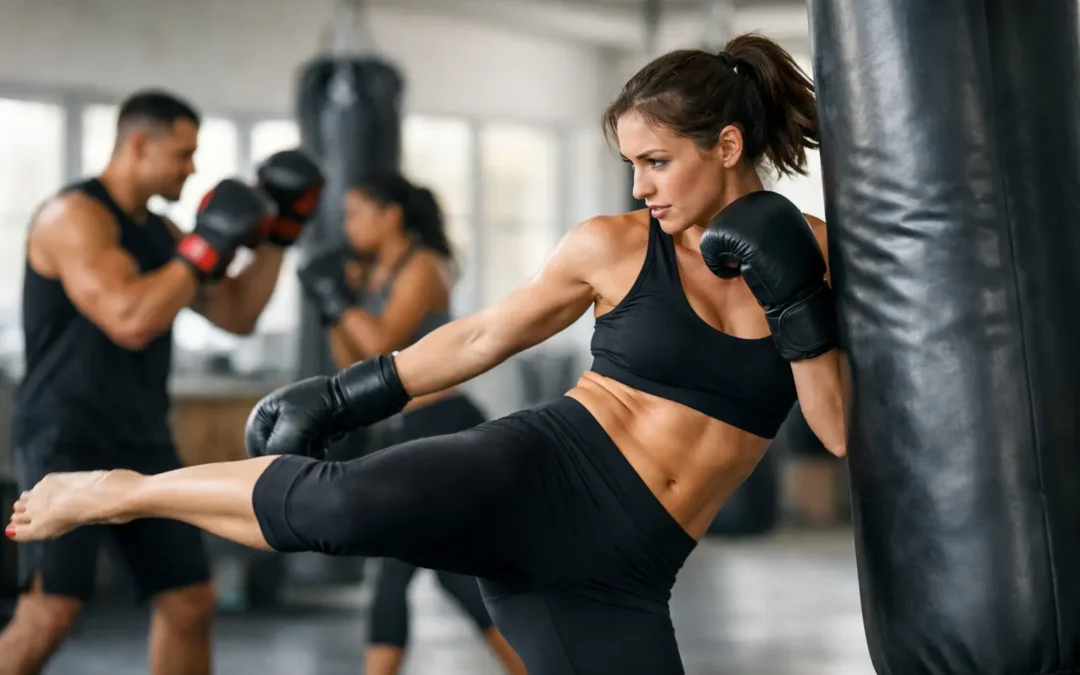
A treadmill can improve your fitness, but it rarely teaches you how capable you are. Kickboxing classes to get fit offer something more engaging: a full-body workout with a purpose. You learn clear techniques, work towards achievable goals and leave each session knowing you have used your body and mind.
For many beginners, the biggest surprise is not how hard they train. It is how quickly training starts to feel empowering. You do not need to be naturally sporty, flexible or experienced to begin. You simply need a supportive class, patient coaching and the willingness to take one session at a time.
Why kickboxing is such an effective way to get fit
Kickboxing brings together cardio training, strength work, coordination and mobility in one structured class. Rather than repeating the same movement for an hour, you may practise punches, kicks, footwork, defensive skills, pad drills and controlled conditioning. That variety keeps your attention on the task in front of you, which can make the effort feel more rewarding.
Your heart rate rises during combinations and pad rounds, helping to develop cardiovascular fitness and stamina. Kicks, knee strikes and stable fighting positions demand work from the legs and core. Punching with good form develops the shoulders, back and arms, while footwork challenges balance and coordination. The result is a workout that uses the whole body rather than isolating one area.
The exact intensity depends on the class and your current starting point. A complete beginner may focus on learning clean technique, pacing themselves and building consistency. Someone with more experience can increase the speed, power and complexity of their combinations. Good coaching makes room for both, without making newer members feel left behind.
Fitness that has a purpose
There is a difference between being exhausted and feeling that you have achieved something. Kickboxing gives physical training a skill-based focus. You are not just counting repetitions. You are learning how to stand with balance, move with control, throw a punch correctly and respond calmly under pressure.
That focus can be especially helpful if conventional gym routines have never held your interest. When you are concentrating on a combination or listening for your coach’s next instruction, the session moves forward naturally. You still work hard, but there is a reason behind the effort.
There is also the confidence that comes from developing practical self-defence awareness. Fitness is a valuable goal in itself, yet knowing that you are becoming more alert, stronger and more able to protect yourself adds another layer of motivation. Training should always be responsible and controlled, but the sense of capability carries into everyday life.
What to expect from your first kickboxing class
Walking into a martial arts class for the first time can feel daunting, particularly if you are worried about being the least fit person there. In a well-run beginner session, nobody expects you to arrive knowing the terminology or throwing powerful kicks. The first aim is to help you feel comfortable, safe and clear about what you are doing.
You will usually begin with a warm-up designed to prepare your joints, muscles and heart rate for movement. From there, a coach may introduce a small number of basic techniques. This could include your stance, guard position, straight punches, simple kicks and how to move without losing balance. You may practise on pads, with a partner under close supervision, or through solo drills.
You will not be expected to spar on day one. Sparring, where offered, is a controlled activity introduced only when it is appropriate for the individual and programme. Early training is about foundations: good technique, awareness, respect for training partners and confidence in your own movement.
Wear comfortable clothing that allows you to move freely, bring water and be ready to learn. Starter equipment is often introduced as you progress, so there is no need to spend heavily before you know that the class is right for you.
How often should you train to see results?
For most people, one class a week is an excellent place to start. It creates a routine without overwhelming a busy schedule, and it gives your body time to recover as it adapts to new movements. After a few weeks, many members find that they have more energy, improved coordination and a growing appetite for a second session.
Training twice a week is often a strong balance for noticeable fitness progress. It gives you regular cardiovascular work, enough repetition to improve technique and a reliable release from the pressures of work, family life or study. The best frequency is the one you can sustain. Three demanding sessions followed by a month away will achieve less than steady weekly attendance.
Results will vary. If your aim is weight management, kickboxing works best alongside sensible eating habits, sleep and overall activity. If you want greater strength, you may also benefit from resistance training. If stress relief is the priority, the focused nature of a class may be as valuable as the calories burned. There is no single measure of progress, which is why setting a personal goal matters.
The confidence benefit is real
Fitness changes are often visible over time, but confidence can begin earlier. Each time you remember a combination, complete a round you thought would be too difficult or walk back into class after a challenging week, you prove something to yourself.
This is not about becoming aggressive. Martial arts should encourage calmness, self-control and respect. The confidence built through kickboxing is quieter than that. It is the ability to hold yourself well, speak up when needed and recognise that you can learn hard things with practice.
For women who want a supportive route into exercise, women’s kickboxing classes can be a particularly welcoming option. Training alongside others with similar goals can remove some of the uncertainty that comes with trying a new activity. For teenagers, kickboxing can offer structure, positive role models and a healthy place to channel energy. Adults often value the same things, even if they describe them as fitness, stress relief or getting back on track.
Choosing kickboxing classes to get fit
The best class is not necessarily the one that promises the toughest workout. Look for coaching that is technically sound, encouraging and adapted to the people in the room. A good academy will explain its beginner pathway, make safety expectations clear and help you progress without pressure to compare yourself with others.
Ask whether the programme is structured. Clear progression gives training direction, whether that means building towards a grading, improving your fitness test results or becoming more confident with key techniques. It also helps children, teenagers and adults see that improvement is earned through regular effort.
Community matters too. The people around you can make the difference between attending once and building a habit that lasts. At Kane Academy, the goal is not to create an intimidating room full of elite athletes. It is to give beginners and progressing members a disciplined, friendly environment where effort is noticed and everyone has space to grow.
Start where you are, then keep showing up
You do not need to wait until you are fitter to try kickboxing. That is like waiting until you can speak a language before taking a lesson. Begin at your own level, use the coaching available and let consistency do its work.
The first class may leave you pleasantly tired. A few months of regular training can leave you stronger, sharper and far more confident in what your body can do. Choose a supportive beginner session, focus on the next small improvement and give yourself the chance to enjoy becoming fitter.