
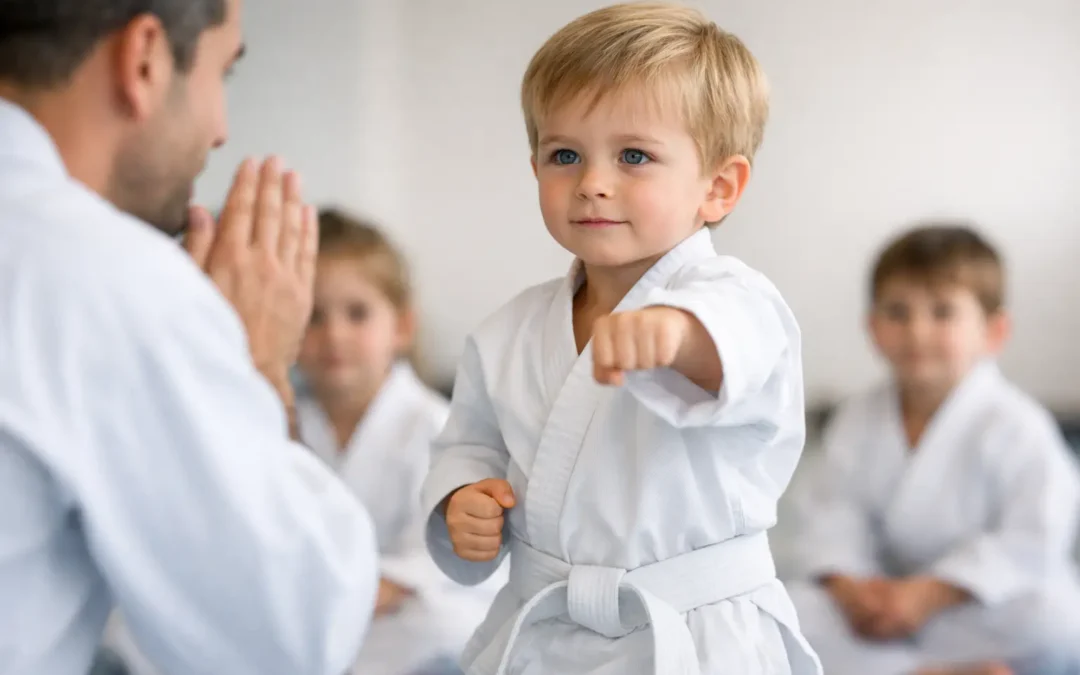
A four-year-old may not yet remember which shoe goes on which foot, but they can absolutely begin learning how to stand tall, listen carefully and keep trying when something feels new. That is the real starting point for martial arts classes for 4 year olds. At this age, training is not about producing tiny fighters or expecting perfect technique. It is about giving children a positive, structured place to move, grow and feel proud of themselves.
For many parents, the question is not whether their child has enough energy for martial arts. It is whether they are ready to join in, follow direction and feel comfortable away from home. The right class meets children where they are, using movement, games, clear routines and plenty of encouragement to help them settle in.
What four-year-olds gain from martial arts
A well-run beginner class helps a child practise skills they use far beyond the training area. They learn to line up, take turns, respond when their name is called and focus on one simple task at a time. These may sound like small wins, but for a four-year-old they are big building blocks for nursery, school and everyday life.
Physical development matters too. Kicking pads, balancing on one leg, moving through simple drills and practising safe falling or rolling can all improve coordination and body awareness. Children are naturally active, but martial arts gives that energy a useful direction. They begin to understand how to control their bodies rather than simply race around the room.
Confidence grows through repetition. A child who was unsure in their first lesson may soon be raising their hand, showing a stance or proudly earning praise for remembering the class rules. Progress at this age is often quiet and gradual. It can look like joining the warm-up without a parent nearby, trying a new movement after watching others, or returning after a difficult session with a smile.
Martial arts classes for 4 year olds should feel playful and structured
Young children learn through play, imagination and doing. That does not mean a class should be chaotic. In fact, four-year-olds tend to thrive when every lesson has a familiar rhythm: a welcoming start, a warm-up, a few focused activities, a game that reinforces a skill and a calm finish.
The best programmes balance fun with boundaries. A coach may use animal movements to develop balance, coloured targets to practise reactions, or simple challenges that teach children to move with control. Beneath the fun, children are learning essential habits: eyes on the instructor, kind hands and feet, taking turns, and stopping straight away when asked.
Technical expectations should be realistic. A four-year-old does not need to memorise long combinations or understand every detail of a martial art. They need a safe introduction to basic positions, simple strikes on suitable equipment, movement and listening skills. Quality comes from age-appropriate coaching, not from making the class feel like an adult session in miniature.
Confidence is not the same as being loud
Some children run into a new activity ready to lead the room. Others watch closely from the side, hold a parent’s hand or need several lessons before joining in fully. Both responses are normal.
For a shy child, martial arts can be particularly valuable because improvement is personal. They do not have to be the fastest runner or the loudest voice. They can experience success by standing independently, completing a drill or speaking clearly when it is their turn. Supportive coaches should never force a child into the spotlight before they are ready, but they should give them gentle opportunities to take part.
Is your child ready to start?
There is no single checklist that decides whether a child is ready. Most four-year-olds do not arrive with flawless focus or perfect behaviour, and they should not be expected to. What matters more is whether the programme is designed to develop those qualities.
A child may be ready to try a class if they can spend a short period in a group setting, respond to simple instructions some of the time and show interest in moving, copying or playing alongside other children. Even then, their first few sessions may be wobbly. They might cling to you one week and charge onto the training floor the next.
It can be worth waiting if a child is currently overwhelmed by busy group environments or finding separation especially difficult. However, waiting is not always the only answer. Speak openly with the academy about your child’s needs. A patient instructor, a gradual introduction and permission for a parent to observe can make a meaningful difference.
Children with additional needs can also benefit greatly from martial arts, provided the setting is genuinely inclusive and the coaching can be adapted. Ask how instructors support different communication styles, sensory needs and learning speeds. A good academy will focus on the individual child rather than expect every child to develop in exactly the same way.
Safety comes before flashy moves
Parents are right to ask how martial arts training is kept safe. At four, safety is not an added extra. It is the foundation of every activity.
Children should be supervised closely, work with suitable equipment and be taught control from the very first session. Activities need enough space, clear rules and regular reminders that martial arts skills are for class, fitness and personal development, not for hurting people. Contact, if any is used, should be carefully managed and appropriate to the child’s age and stage.
Look for instructors who can hold a young child’s attention without shouting or intimidating. Firm boundaries are helpful, but a child should leave feeling encouraged, not frightened of making a mistake. The strongest lessons teach discipline through consistency, respect and positive reinforcement.
What to look for in a first class
Before committing to a course, give your child the chance to experience the environment. A trial class lets you see whether the pace, coaching style and group atmosphere feel right for them.
Pay attention to more than whether your child completes every activity. Do the instructors greet them warmly? Are class rules explained simply? Is there a clear structure? Do children receive praise for effort, listening and kindness, rather than only for being naturally confident or athletic?
At Kane Academy, Tiny Tigers classes are designed for children aged four to seven, giving younger beginners room to develop through age-appropriate martial arts training. A structured programme can provide a clear pathway while still recognising that children learn at different speeds.
You may also want to ask about class size, instructor experience, progression and what happens when a child is having an off day. A good answer will be practical rather than overly polished. Four-year-olds are still learning emotional regulation, so occasional tears, tiredness or reluctance are part of the process. The key is how the coach responds.
Helping your child get the most from their sessions
Keep the build-up simple. Tell your child they are going to try some fun martial arts games, meet a coach and learn how to move like a ninja or tiger. Avoid placing pressure on them to perform, behave perfectly or make a best friend in the first lesson.
Arrive with time to spare, bring water if requested and choose comfortable clothing. A small snack beforehand can help if the session falls after nursery, but avoid sending them in over-tired or overly hungry where possible. The practical details can have a bigger impact than parents expect.
After class, ask open questions rather than testing them. “What was your favourite game?” or “Which move did you enjoy?” often works better than “Did you listen?” If they found something hard, acknowledge it: “New classes can feel strange at first. You kept going.” That message reinforces resilience without turning the lesson into a performance review.
Consistency is usually more valuable than intensity. One regular weekly session gives children time to recognise the routine, build trust with their coach and see familiar faces. Missing a session now and then is normal, but frequent changes can make it harder for a young child to settle.
A small start can create lasting habits
Martial arts will not suddenly make every four-year-old confident, focused and fearless after one class. Children still have difficult mornings, big feelings and days when they would rather stay close to home. What regular training can offer is a safe place to practise the skills that help them handle those moments.
With the right coaching, your child can learn that listening brings progress, effort is worth celebrating and being brave sometimes means trying something before you feel completely ready. Start with a welcoming trial, let them experience the class for themselves, and give their confidence the time it needs to grow.