
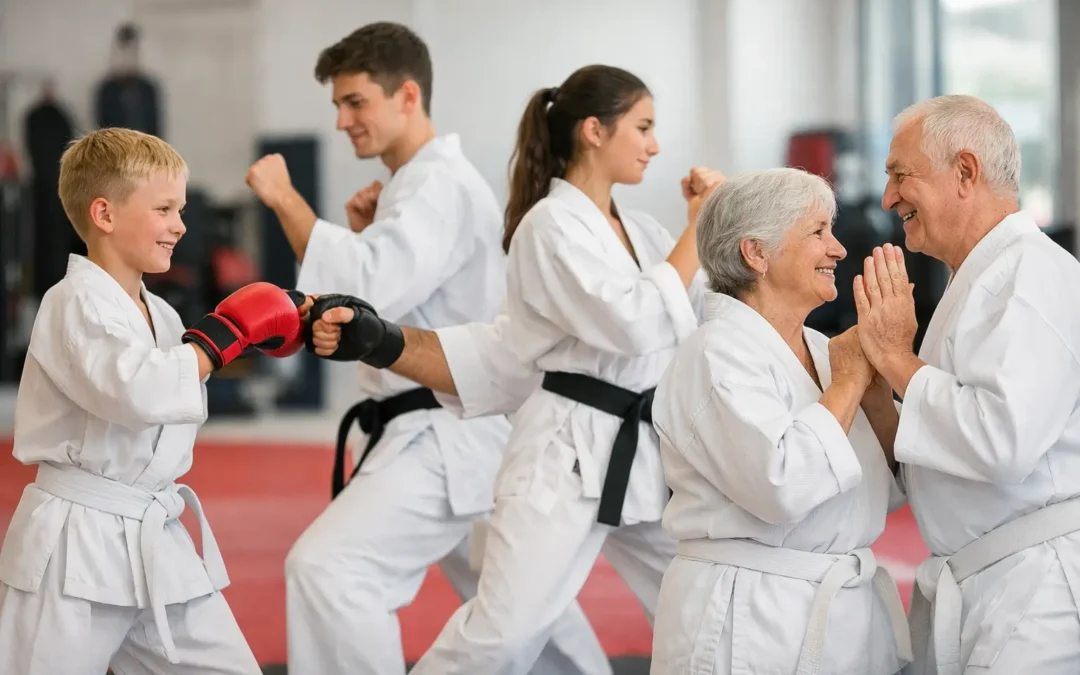
A child who avoids putting their hand up at school, a teenager carrying the weight of exams, or an adult stuck in the same gym routine may all need something different from training. The right martial arts classes Huddersfield can offer more than a high-energy workout. They can give people a place to move, learn, belong and prove to themselves that they can handle a challenge.
That is why choosing a class is not simply about finding the nearest timetable. It is about finding coaching that meets a person where they are now, then helps them grow with purpose. Whether your goal is confidence for a shy child, practical self-defence, better fitness or a new sense of structure, a supportive martial arts programme can be a powerful starting point.
What should martial arts classes give you?
A good class should feel welcoming on day one, while still giving students something meaningful to work towards. Beginners need clear instruction, patient coaching and a group where asking questions is normal. More experienced students need technical detail, physical challenge and progression that keeps training rewarding.
At its best, martial arts teaches people how to stay composed when something feels difficult. You learn to listen, practise, make mistakes and try again. That process builds discipline and resilience in a way that carries into school, work and family life.
There is a physical side too. Kickboxing and martial arts training can improve coordination, balance, mobility, stamina and strength. Yet fitness is often the result rather than the only reason people stay. Members return because they feel more capable, see their confidence growing and become part of a community that notices their progress.
Martial arts classes in Huddersfield should suit the student
Age-specific training matters. A four-year-old does not need the same lesson as a 15-year-old, and an adult beginner should not be expected to train as though they have years of combat-sport experience. The best programmes set the right challenge for each stage, without making anyone feel left behind.
Building strong starts for younger children
For children aged four to seven, training should be active, imaginative and structured. Classes such as Tiny Tigers can introduce movement, focus, listening and respectful behaviour through age-appropriate activities. They are not about asking very young children to perform complicated techniques. They are about helping them follow instructions, take turns, use their energy positively and feel proud of small wins.
For seven to twelve-year-olds, Ninja Kids-style classes can add more technical learning while keeping the atmosphere encouraging. Parents often notice changes beyond the class itself: a child stands a little taller, joins in more readily, copes better with losing a game or has the confidence to speak to new people.
Every child develops differently. Some will love the physical challenge straight away; others may need time to settle into a new group. A patient coach recognises that confidence is built through repeated positive experiences, not pressure.
Giving teenagers a positive outlet
Teenage years can be noisy, demanding and uncertain. Kickboxing provides a constructive place to work hard, switch off from screens and develop real discipline. Learning combinations, footwork and controlled sparring skills gives teenagers an immediate focus, while gradings and goals create a reason to keep showing up.
It is also a social activity without the usual pressure to be the loudest person in the room. Teenagers can train alongside peers, encourage one another and earn progress through effort. For those who already play sport, martial arts can complement their fitness. For those who have never found a team sport they enjoy, it can be the activity that finally clicks.
Training for adults, not just athletes
Adults often delay starting because they think they need to get fit first. They do not. A beginner class is where fitness begins. Good coaching adapts drills and intensity so that someone returning to exercise, managing a busy schedule or trying martial arts for the first time can train safely and make steady progress.
Adult kickboxing is an effective way to work up a sweat while learning useful skills. Padwork, technique drills and conditioning are more engaging than endlessly counting reps alone. There is also a welcome mental reset in concentrating fully on the next movement rather than the day’s emails or chores.
Women’s kickboxing offers a dedicated environment for those who prefer to begin training with other women. It can be an excellent route into fitness and self-defence training, especially for anyone who feels intimidated by a conventional gym setting. The important thing is not choosing the hardest-looking class. It is choosing the one that gives you the confidence to return next week.
Confidence and self-defence belong together
Self-defence is not about encouraging conflict. It is about awareness, boundaries, decision-making and having practical options when something does not feel right. Physical skills matter, but so do the confidence to use your voice, the judgement to create space and the knowledge that leaving a situation is a success.
Kickboxing, self-defence and Filipino martial arts can each bring different strengths to training. Kickboxing develops striking, movement and fitness. Self-defence focuses on realistic personal safety principles. Filipino martial arts can develop coordination, timing and an understanding of distance and control. The right mix depends on what you want from your training and where you are starting from.
For children, confidence is often the first layer of personal safety. A child who can stand calmly, communicate clearly and seek help is better equipped than one who has merely memorised a move. Training should reinforce kindness and respect alongside assertiveness, so students become more capable without becoming aggressive.
Inclusion is part of great coaching
No two students learn in exactly the same way. For families of children with additional needs, the right academy can make an enormous difference. An inclusive programme does not treat every student identically. It provides structure, clear expectations and coaching that can be adapted to individual development.
Before booking, speak openly about your child’s needs, what helps them settle and what situations they may find difficult. A thoughtful instructor will want to understand this. The aim is not to force a child into someone else’s idea of progress. It is to create an environment where they can take part, build trust and develop at a pace that feels achievable.
That same principle benefits every beginner. People thrive when they feel seen, supported and challenged appropriately.
What to look for before you book a trial
A trial class is your chance to look beyond the techniques. Notice how the coaches welcome new starters, explain activities and manage the energy in the room. Are students spoken to with respect? Is there a clear lesson structure? Do beginners have a route to progress rather than being left to work it out alone?
Ask what happens after the trial, too. A well-planned introductory course gives new members time to build foundations before moving into a longer beginner pathway. It is useful to know what is included, from equipment and licensing to certification and the opportunity to work towards a first grading. Clear information makes it easier for parents and adults to commit with confidence.
Kane Academy offers structured routes from a £10 trial class pass through to introductory and beginner programmes, so new students can experience the atmosphere before setting longer-term goals. That matters because martial arts is most rewarding when it becomes a regular habit, not a one-off burst of motivation.
Progress is earned one class at a time
The first session may feel unfamiliar. Your child might cling to your hand at the door, or you may wonder whether you are coordinated enough to remember a simple combination. That is completely normal. Nobody walks into their first class already confident, fit and technically sharp.
What changes people is returning. One lesson becomes a routine. A routine becomes progress. Then, quietly, the person who once stood at the back starts volunteering for the next drill, pushing through the final round or helping welcome someone new.
Choose martial arts classes where effort is recognised, kindness is expected and every student has room to grow. Then take the first step – the confidence you want to build starts with walking through the door.