
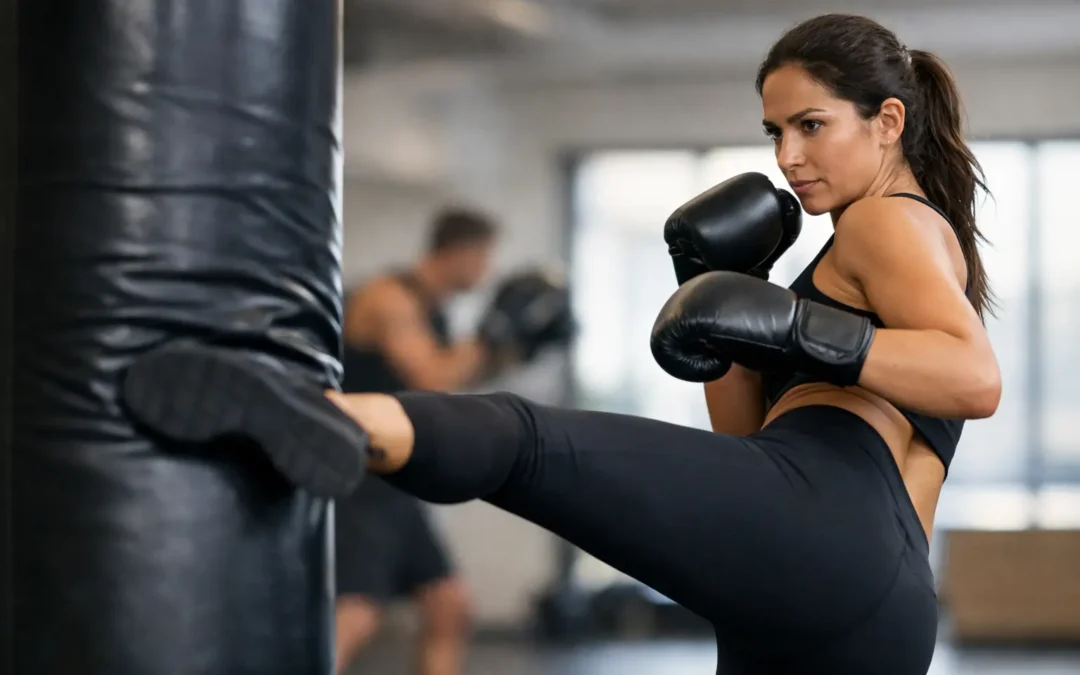
The first time you step on to the mats, confidence may be the last thing you feel. You might worry about getting moves wrong, being less fit than everyone else, or simply walking into a new group alone. That is exactly why learning how to build confidence through kickboxing can be so powerful. You do not need to arrive feeling fearless. You build belief by showing up, practising and noticing what you can do now that once felt difficult.
Kickboxing gives confidence a physical foundation. You learn to stand with purpose, move with balance, protect yourself and stay composed when your heart rate rises. Over time, those skills reach beyond the class. They can change how you handle pressure at school, work, home and in unfamiliar situations.
Why kickboxing builds confidence differently
Confidence is not about acting tough or believing you will never struggle. Real confidence is trust in your ability to respond when something is challenging. Kickboxing develops that trust through repeated, achievable evidence.
A beginner may start by learning a simple stance and a basic combination. At first, coordinating hands, feet, breathing and guard can feel like a lot to remember. Then, with patient coaching and repetition, the movement starts to make sense. The next session, you hold your guard higher. A few weeks later, you complete a full round without stopping. Those small wins are not accidental motivation. They are proof that effort creates progress.
There is also a healthy difference between kickboxing confidence and confidence built only on praise. Encouragement matters, especially for children and nervous beginners, but it becomes more meaningful when it is linked to action. Hearing “well done” after you keep trying, listen carefully or improve your technique teaches a stronger lesson: I can work through this.
How to build confidence through kickboxing step by step
Start as you are, not as you think you should be
Many people delay joining a class until they feel fitter, less shy or more coordinated. In reality, beginner programmes are designed for people at the beginning. You do not need prior martial arts experience, a perfect level of fitness or a loud personality to benefit.
Arrive ready to learn rather than ready to impress. Tell your instructor if you are nervous, returning to exercise after a break, or managing an injury or additional need. A good academy will adapt coaching, explain the session clearly and help you work at an appropriate pace. That feeling of being supported makes it easier to try, and trying is where confidence starts.
For parents, the same principle applies to children. A shy child does not need to become the noisiest person in the room to grow in confidence. They may first gain confidence by joining the warm-up, making eye contact with their coach or volunteering to demonstrate one move. Progress looks different for every child.
Set goals you can measure
Vague goals such as “be more confident” are worthwhile, but they are difficult to track. Give confidence something practical to attach itself to. Your goal might be attending one or two sessions each week for a month, remembering a combination without prompts, completing a full fitness drill, or speaking clearly when it is your turn.
Children often respond well to simple, visible targets: tying their belt independently, listening through the whole instruction, or trying a technique again after a mistake. Teenagers and adults may focus on stamina, technique, stress management or preparing for a grading.
Keep the target challenging but realistic. If you set a goal that is too large too soon, missing it can feel discouraging. A series of smaller targets creates momentum, and momentum is one of confidence’s best friends.
Practise being a beginner
Being new at something can feel uncomfortable, particularly for adults who are used to being capable in other areas of life. Kickboxing asks you to accept correction, repeat drills and occasionally lose your rhythm. That is not failure. It is training.
Try to replace “I cannot do this” with “I am still learning this”. Notice what your coach asks you to adjust, then give that one point your attention on the next repetition. Perhaps you need to bring your hands back to guard, turn your hip more cleanly or breathe out with each strike. Focusing on one improvement stops mistakes from becoming personal.
This mindset is valuable for children too. When young people learn that errors are information rather than embarrassment, they become more willing to participate at school, make friends and take on new challenges.
Build strength and fitness without comparing yourself
Physical capability has a direct effect on how you feel. When you can move for longer, hold a strong stance, strike pads with control and recover after a tough round, everyday tasks can feel more manageable. Kickboxing develops cardiovascular fitness, mobility, coordination and functional strength while giving each exercise a purpose.
However, confidence drops when every session becomes a comparison. There will always be someone who has trained longer, moves faster or can kick higher. Their progress does not reduce yours. Compare your current performance with your own starting point instead. Could you not complete the warm-up last month? Are you now able to focus for a whole round? That is the comparison that counts.
Learn calm control, not aggression
Kickboxing is disciplined training, not an excuse to lash out. One of its greatest confidence benefits is learning that strength and self-control belong together. You are taught when to use a technique, how to train safely with partners, and why respect matters before and after every session.
For women, teenagers and adults interested in self-defence, this can be particularly empowering. Better awareness, body language and practical movement can help you feel less vulnerable. But confidence is not a promise that you can control every situation. Sensible self-defence prioritises avoiding danger, creating space and getting to safety wherever possible.
That balance matters. The aim is not to become confrontational. It is to feel more prepared, more aware and more able to make good decisions under pressure.
Confidence grows in a supportive class
You can train alone, but community makes a meaningful difference. A welcoming kickboxing class gives you people who understand the effort behind a new technique, a difficult fitness session or the nerves before a grading. You may come in quietly, but regular attendance creates familiar faces, shared routines and a sense that you belong.
The right environment is especially important for younger members and people with additional needs. Clear boundaries, age-appropriate teaching and patient coaching create a space where everyone can participate with dignity. Confidence grows faster when people feel safe enough to make mistakes.
At Kane Academy, the focus is not simply on who can kick the highest or hit the hardest. Training is a chance to practise kindness, accountability, discipline and continual growth alongside credible kickboxing skills. A student who encourages a partner, listens carefully and keeps going after a tough drill is building character as well as technique.
Make confidence stick outside the class
The best sign that training is working is not just a better combination on the pads. It is noticing a change in daily life. You might speak up in a meeting, walk into a social event with better posture, encourage your child to try something new, or recover more quickly from a disappointing day.
After each session, take a moment to name one thing you did well and one thing you will work on next time. Keep it specific. “I kept my guard up during the final round” is more useful than “I was good.” “I will practise turning my supporting foot” gives you a clear focus for the next class.
Parents can use the same approach after a child’s lesson. Ask, “What was one brave thing you did today?” rather than only asking whether they won or were the best. It keeps the focus on effort, learning and courage.
Confidence does not arrive in one dramatic moment. It is built in ordinary sessions: putting on your gloves when you feel uncertain, trying the combination one more time, and recognising that you are stronger than you were last week. Start with the next class, give yourself permission to learn, and let the progress speak for itself.