
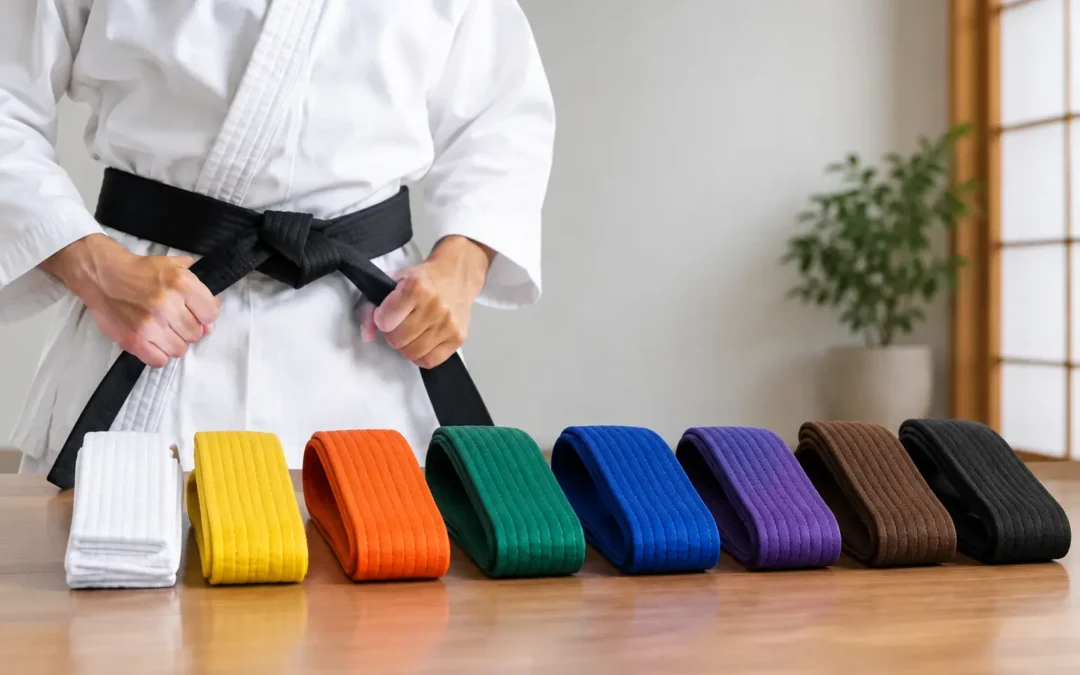
A new belt can feel like a huge moment. For a child, it may be the first time they have worked patiently towards a goal and stood proudly in front of their peers. For an adult, it can mark the return of focus, fitness and self-belief after a demanding few months. This guide to martial arts belt progression explains what belts are really for, what happens between gradings and why the lessons learned along the way matter as much as the colour around your waist.
What martial arts belts are designed to show
A belt is a visible sign of progress, but it is not simply a reward for turning up. In a well-structured programme, each grade represents a developing level of technical knowledge, control, fitness, discipline and attitude.
Beginners start by learning the foundations: how to stand safely, move with balance, make techniques correctly and train respectfully with others. As they progress, they are expected to perform those skills with better timing, power, awareness and consistency. They also begin to understand why the technique works, rather than copying a movement because an instructor has demonstrated it.
Belt systems vary between martial arts. The order of colours, the names of grades and the skills required will not be identical in kickboxing, Filipino martial arts, karate, judo or taekwondo. That is completely normal. Comparing one style’s belt colour directly with another’s can be misleading. What matters is whether the student is meeting the standard of the programme they are following.
At Kane Academy, progression is about becoming a more capable person as well as a more capable martial artist. That means learning to listen, showing kindness to training partners, accepting feedback and returning with a positive attitude when something feels difficult.
A guide to martial arts belt progression from beginner onwards
Most students begin at a white belt or beginner level. This stage is not about being perfect. It is about building strong habits before moving too quickly into more complicated work.
Early gradings commonly assess fundamental stances, footwork, basic strikes, defensive movements, padwork and simple combinations. Students may also need to show a basic understanding of martial arts etiquette, safe training behaviour and the terminology used in class. For children, being able to focus, follow instructions and work cooperatively can be every bit as significant as remembering a sequence.
As the belts progress, the standard changes. Techniques become more detailed, combinations become longer and students are expected to demonstrate greater control. They may work on more advanced defence, counters, partner drills, fitness exercises, self-defence principles or weapon-based material, depending on the martial art.
Higher grades are not just about collecting more techniques. They ask a student to make better decisions. Can they stay composed when tired? Can they keep their guard up while moving? Can they train with someone smaller, newer or less confident in a way that keeps both people safe? These are the qualities that turn knowledge into real martial arts ability.
The first grading is a milestone, not a finish line
For many beginners, the first grading is the most nerve-racking. There may be an unfamiliar format, an instructor watching closely and a room full of people who seem more experienced. That nervous energy is understandable.
Preparation makes the difference. Attending classes regularly gives students time to practise without panic. Asking questions after class, rehearsing key movements at home where appropriate and arriving ready to learn all help. Parents can support younger children by praising effort rather than putting pressure on them to be flawless.
A first belt shows that a student has made a commitment and learned the basics safely. It is a brilliant achievement, but it is also the beginning of a longer journey where each new stage offers fresh challenges.
What instructors look for at a grading
A grading should never be a surprise test designed to catch students out. Good instructors teach towards clear standards, give regular feedback and help students understand what they need to improve before assessment day.
Technical accuracy matters. A kickboxing student, for example, needs sound posture, sensible distance, safe guard position and controlled striking. Yet technique is only one part of the picture. Instructors also look for consistent effort, concentration, resilience and respectful behaviour.
Control is especially important. Martial arts are not about proving who can hit hardest in class. Students should be able to adapt their power to the drill, look after their training partner and respond calmly to instruction. This is why progression cannot be measured by strength or athleticism alone.
Attendance can matter too, not as a box-ticking exercise, but because repetition builds skill. Someone who trains regularly has more opportunities to correct small errors, improve fitness and become comfortable under pressure. A naturally sporty student who attends occasionally may need more time than a quieter beginner who practises with focus every week.
Why belt progression is different for every student
There is no single timetable that suits everyone. Children develop at different rates, particularly when confidence, coordination and attention are still growing. Teenagers may be balancing school demands. Adults may need to work around shifts, family life, injuries or periods of lower fitness.
The right pace is one that challenges a student without making martial arts feel overwhelming. Moving forward before the foundations are secure can create frustration later. Equally, holding back a student who is ready can reduce their motivation. A skilled instructor makes that judgement with the individual’s development in mind.
For students with additional needs, adapted coaching and a patient approach can make progression deeply meaningful. The goal is not to force every learner through an identical path at an identical speed. It is to create a safe environment where each person can build skills, confidence and independence in a way that is achievable for them.
This is one reason belts should not become a source of comparison between friends or siblings. One student’s next grade may represent improved balance and confidence in a group setting. Another’s may reflect sharper technique and greater fitness. Both have earned their progress.
How to get ready for your next belt
The most effective preparation happens across ordinary classes, not in a last-minute rush. Listen carefully when instructors correct a detail, because small adjustments to stance, guard or foot position often have a big impact. Practise with purpose rather than simply trying to go faster.
If you are unsure what to work on, ask. A clear question such as, “What should I focus on before my grading?” can give you a useful goal for the next few weeks. Adults should be honest about fitness and mobility too. Consistency is more valuable than exhausting yourself with one intense session and then missing the following week.
For parents, keep the message simple. Make sure your child has the right kit, arrives in good time and knows that nerves are normal. Avoid turning the grading into a pass-or-fail event at home. Encourage them to show what they have practised, listen well and enjoy being part of the team.
A healthy routine helps as well. Good sleep, regular meals and enough water support concentration and energy. These everyday habits reinforce a valuable lesson: progress in martial arts is built by the choices you make between classes as well as the effort you give during them.
What happens if a student is not ready yet?
Being asked to wait for a grading, or not passing every element first time, can be disappointing. It is not a label on a student’s potential. More often, it is useful guidance about the next step.
Perhaps a technique needs greater control, a sequence needs more practice or attendance has not yet allowed enough repetition. A constructive academy will explain what needs work and give the student a route forward. Returning to class, improving one area at a time and trying again develops a far more valuable quality than instant success: resilience.
This matters well beyond martial arts. Children learn that setbacks can be handled without giving up. Teenagers learn to take responsibility for preparation. Adults rediscover that improvement is still possible, whatever their starting point.
The real value behind every new belt
Belts give students goals they can see, celebrate and work towards. They can bring a real sense of pride, especially when family and teammates recognise the effort behind them. But the deeper reward is what changes during the weeks of training before the certificate is handed over.
A shy child may begin speaking up in class. A teenager may carry themselves with more confidence. An adult may notice they are fitter, calmer and better able to handle pressure. Each training session is a chance to practise discipline, respect and courage in a supportive setting.
Keep your eyes on the next lesson, not only the next colour. Turn up, train with care, ask for help when you need it and give yourself time to grow. The belt will follow, carrying a story of effort that is entirely your own.