
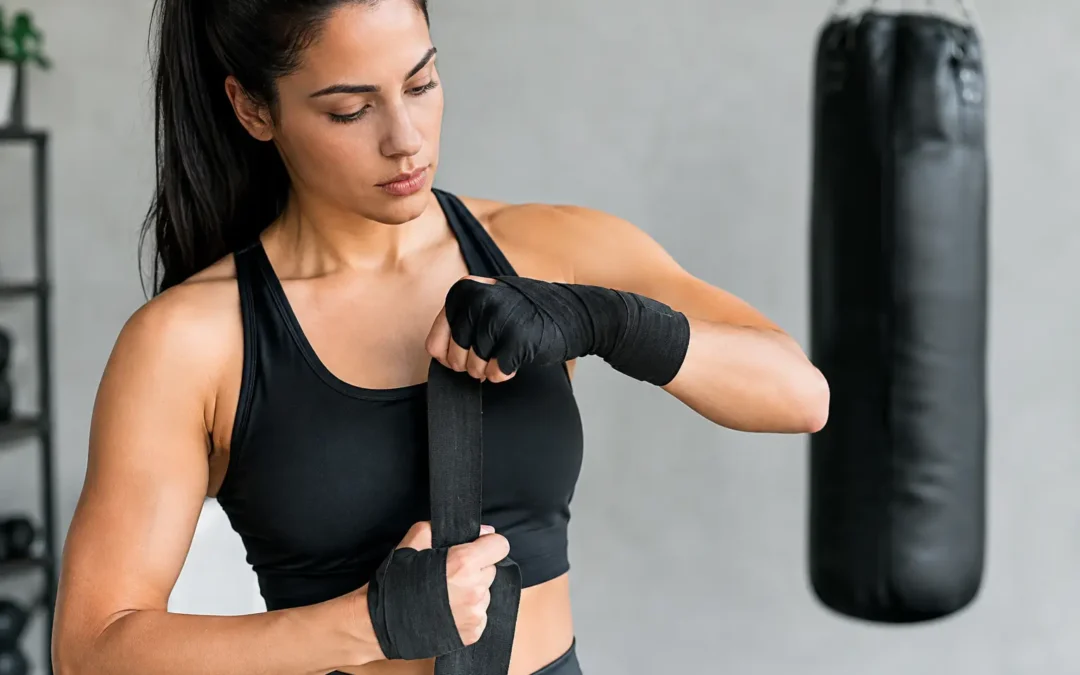
A hand wrap that slips halfway through pad work is more than annoying. It can leave your knuckles rubbing, your wrist unsupported and your focus pulled away from the technique you came to learn. Knowing how to wrap kickboxing hands properly gives you a more secure, comfortable base for every punch – whether you are attending your first class or building towards your next grading.
Hand wrapping can feel fiddly at first. That is completely normal. With a little repetition, it becomes part of your pre-class routine: a few calm minutes to get prepared, check your equipment and switch your mind into training mode.
Why hand wraps matter in kickboxing
Your hands contain many small bones and joints, while a punch sends force through the knuckles, hand and wrist in a split second. Wraps add a close-fitting layer of support around these areas. They also help hold the wrist in a straighter position and reduce friction inside your gloves.
They are not armour, and they cannot make poor technique safe. Punching with a bent wrist, hitting too hard too soon or using the wrong part of the fist can still lead to discomfort or injury. Good coaching, controlled practice and correct wraps all work together.
For beginners, wraps have another useful role: they encourage care and consistency. You are preparing to train with purpose, not simply throwing on a pair of gloves and hoping for the best.
What you need before you start
Most kickboxers use reusable cloth hand wraps with a thumb loop and hook-and-loop fastening. Adult wraps are commonly around 4.5 metres long, which gives enough material to support the wrist, knuckles and hand. Shorter wraps can suit smaller hands and younger students, although the best length depends on the wrap style and how much coverage is comfortable.
Start with clean, dry hands and fully unroll the wrap. Find the side that feels smooth against your skin, as this should sit on the inside. The printed or labelled side is often designed to face out, but it varies by brand. If you are unsure, ask your instructor to check it before class.
Avoid wrapping over rings, bracelets or watches. Keep your nails short too, especially if you are sharing close training space or wearing gloves for a full session.
How to wrap kickboxing hands step by step
The following method is a reliable beginner-friendly approach for standard cloth wraps. Your coach may teach a slightly different sequence, and that is fine. The goal is the same: supported wrists, protected knuckles and fingers that can still move freely.
- Place the thumb loop on your thumb. Hold your hand open with the palm facing down. Bring the wrap across the back of your hand towards the wrist. Make sure the loop is sitting comfortably at the base of the thumb rather than pulling tightly into it.
- Secure the wrist first. Wrap around your wrist three times, overlapping each layer neatly. Keep your hand relaxed and your wrist straight. This is the foundation of the wrap, so it should feel firm without pinching or cutting off circulation.
- Cover the knuckles. Take the wrap diagonally across the back of your hand and around the knuckles three times. Keep your fingers spread slightly while doing this. The padding should cover the main striking surface – the knuckles of your index and middle fingers in particular – without bunching in the palm.
- Return to the wrist. Bring the wrap back across the hand and around the wrist once. This creates a supportive connection between the knuckle padding and the wrist support.
- Wrap between the fingers. Take the wrap from the wrist, across the back of the hand and between the little and ring fingers. Bring it back over the knuckles and around the wrist. Repeat the same pattern between the ring and middle fingers, then between the middle and index fingers. Keep these sections flat. If the wrap twists, stop and straighten it rather than carrying on with a bulky fold.
- Support the thumb. From the wrist, bring the wrap diagonally around the base of the thumb once. Do not wind it tightly around the thumb itself. You want gentle support while keeping full movement for gripping and clinch drills.
- Finish across the hand and wrist. Use the remaining wrap to make a final figure-of-eight between the wrist and back of the hand, then secure the fastening around the wrist. Press it down firmly so it will not catch on your glove lining.
Once finished, make a light fist and open your hand again. Your fingers should move easily, your knuckles should feel padded and your wrist should feel stable. Repeat the same method on the other hand.
The fit test: firm, not painfully tight
A properly wrapped hand should feel secure, never numb. Check for tingling in your fingertips, a cold feeling in the hand, throbbing, sharp pressure around the thumb or a wrap that digs into your palm when you make a fist. Any of these signs mean it is too tight or sitting in the wrong place.
Unwrap and start again if needed. This is not wasted time. Getting the fit right now is far better than stopping halfway through a session because your hand is uncomfortable.
There is a balance to find. Wraps that are too loose will slide and crease under your gloves. Wraps that are overly tight can restrict blood flow and make your hands fatigue sooner. Aim for snug, even tension rather than pulling as hard as you can on every pass.
Common hand-wrapping mistakes to avoid
The most common beginner mistake is using too much tension from the start. Wraps often tighten further once you close your fist inside a glove, so leave a little room for natural hand movement.
Another is putting most of the material around the wrist and very little over the knuckles. Wrist support matters, but kickboxing involves repeated contact on pads and bags. Your knuckles need adequate, smooth coverage too.
Watch out for twists, folds and bunched fabric. A small ridge can become surprisingly painful once your glove is on. Lay each section flat as you go, even if it makes the process a little slower.
Finally, do not rely on wraps to solve a technical issue. If your wrist hurts when punching, reduce power and speak to your instructor. A small adjustment to your fist position, range or punch mechanics can make a big difference.
Should children use hand wraps?
For children learning kickboxing, the answer depends on their age, class format, equipment and the activities planned for the session. Younger children may use lighter gloves or take part in drills where full hand wraps are not necessary. Older children who are doing more pad work often benefit from correctly fitted wraps.
Parents do not need to become wrapping experts overnight. A coach can show your child a simple, suitable method and help them build independence over time. For many children, learning to look after their equipment is a positive part of martial arts training – it develops responsibility alongside confidence and coordination.
Keeping wraps clean and ready
Hand wraps absorb sweat, so they should be washed after every training session. Fasten the hook-and-loop end before washing to prevent it catching on other clothes, and use a small wash bag if you have one. Let them air-dry fully before rolling them up again.
It is worth owning more than one pair if you train regularly. Fresh wraps feel better, smell better and help keep your gloves in good condition. Roll them neatly after drying, with the fastening tucked in, and they will be much quicker to put on before class.
The first few times you wrap your hands, allow yourself an extra five minutes. Ask for help, practise at home and focus on making each layer flat and comfortable. Soon, that simple routine will feel like the start of your training: prepared hands, a clear mind and the confidence to give your best effort.