
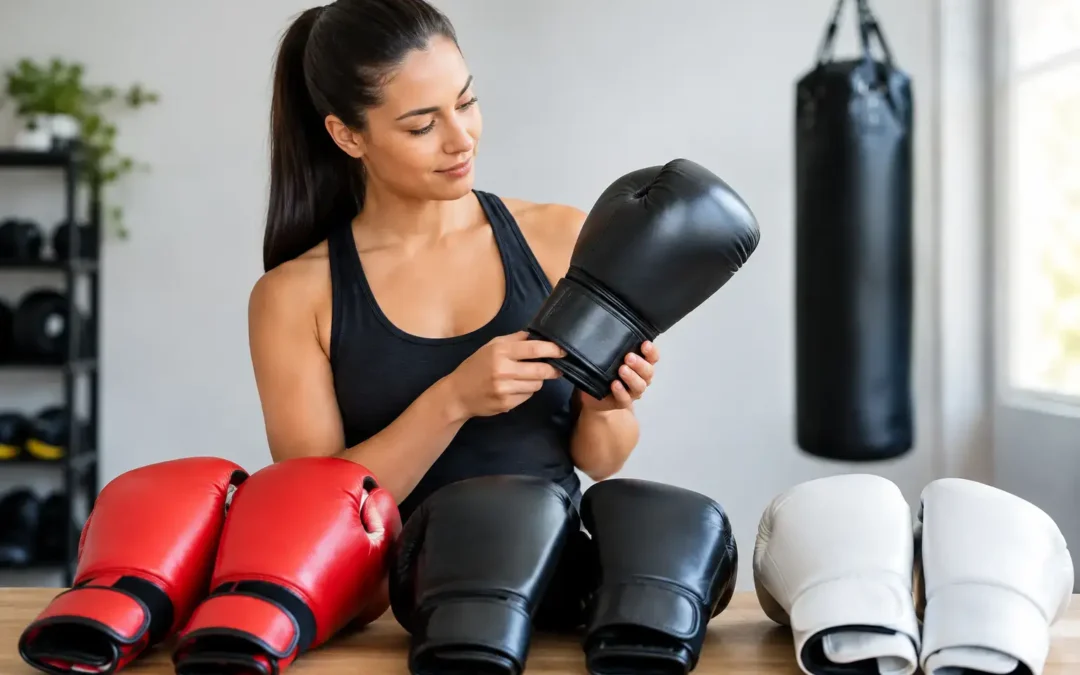
Your gloves are the first piece of kit that will feel truly yours. They protect your hands, help you strike with confidence and become part of the routine that gets you focused before every class. Choosing kickboxing gloves is not about buying the biggest or most expensive pair on the shelf. It is about finding gloves that fit securely, suit the way you train and let you concentrate on building real skill.
For children, teenagers and adults starting kickboxing, the right pair removes one more barrier to getting involved. A good fit feels comfortable and supportive. A poor fit can distract from the lesson, rub your knuckles or leave your wrist feeling unstable.
Start with how you will use your gloves
Kickboxing gloves are made for different jobs. The pair you use for hitting pads and bags may not be the best pair for controlled partner drills or sparring. Before you buy, ask your instructor what is expected in your class and whether one pair will cover your current training.
For most beginners, a versatile training glove is the sensible starting point. It should offer enough padding for pad work, bag work and technical partner practice. As you progress, you may eventually want separate gloves for different sessions, but there is no need to rush into buying several pairs before you understand your own training routine.
Sparring needs particular care. Heavier, more padded gloves help reduce the impact on your training partner and encourage control rather than power. Your club may have clear rules on glove weight for sparring, so always follow that guidance. Looking after your partner is part of learning kickboxing well.
Choosing kickboxing gloves by weight
Gloves are usually measured in ounces, often written as oz. This is the weight of the glove, not a measure of how hard someone hits. In general, a lighter glove feels less bulky and is common for smaller hands, children and pad work. A heavier glove has more padding and is often used for adult training and sparring.
There is no single weight that suits everyone. Your body size, hand size, the kind of class you attend and your academy’s safety rules all matter. A smaller child will need a glove that they can comfortably lift, open and close without the glove slipping around. An adult who is preparing for sparring may need more padding than they use for a fitness-focused pad session.
It can be tempting to choose a lighter glove because it looks neater or feels quicker. However, too little padding can make striking uncomfortable, especially while you are still learning to land punches with good alignment. Equally, gloves that are overly heavy for a young child can make it difficult to practise technique with confidence. The best choice supports safe repetition, not just appearances.
If you are unsure, try gloves on before buying where possible and ask your instructor for a recommendation. They can see how you move, what equipment you use in class and whether the glove gives your wrist the support it needs.
Fit matters more than a fashionable design
A kickboxing glove should feel snug around your hand without squeezing your fingers. Your fingertips should reach near the end of the glove, but they should not be crammed hard against it. There should be no painful pressure across the knuckles, and your thumb should sit naturally in its own padded section.
Make a gentle fist while wearing the glove. You should be able to close your hand comfortably, with your knuckles sitting beneath the main padded area. If the glove feels loose when you punch the air, twists around the hand or leaves a large empty space at the fingertips, try another size or shape.
Different brands have different hand compartments. Some feel narrow, while others allow more room across the knuckles. This is why glove size is not simply about age or clothing size. The right glove for one person may feel awkward for another person with hands of a similar size.
For parents buying gloves for a child, avoid sizing up too far in the hope that they will last longer. A glove that is too large can make it harder for a child to form a proper fist and learn safe punching mechanics. Equipment should support progress now, not get in the way for the sake of a few extra months of use.
Test the wrist fastening
The wrist strap should close firmly and keep the glove stable, without cutting into the skin. Hook-and-loop fastenings are practical for most beginners because they are quick to put on and take off, particularly for children who are learning to manage their own kit. Lace-up gloves can provide a close fit, but they need another person to secure them and are less convenient for regular classes.
When the strap is fastened, your wrist should feel supported in a straight position. It should not be forced backwards or feel wobbly as you make a fist. Good wrist support helps you practise the correct line from knuckles through to forearm, reducing the chance of discomfort when you hit pads or bags.
Do not overlook hand wraps
Hand wraps are a useful layer of protection inside your gloves. They help support the small bones and joints in the hand, add stability around the wrist and absorb sweat. Many beginners are surprised by how much more secure their gloves feel once wraps are fitted properly.
Wraps do take a little practice, but that is normal. Your coach can show you a simple method that is appropriate for your training. They should be firm but never so tight that your fingers tingle, go numb or change colour. If wraps make your gloves suddenly too tight, the glove fit may be too small or the wraps may need adjusting.
Some people prefer quick-wrap gloves as a convenient alternative. They can be useful, especially for younger members, but traditional wraps often allow a more tailored fit. What matters is that the hand feels supported and you can still close your fist correctly.
Padding, materials and comfort over time
Most training gloves use either leather or synthetic materials. Leather can be durable and may soften nicely with regular use, but it usually costs more. Synthetic gloves are often more affordable, easier for beginners to replace and perfectly suitable for consistent class training when they are well made.
Focus less on the label and more on the quality of the padding and construction. The padding should feel even across the knuckle area, with no hard lumps or thin patches. The stitching should be tidy, the thumb attachment secure and the lining comfortable against the hand.
Breathable sections can help with comfort, but every glove will get warm during a busy session. Sweat is part of training. The key is to air your gloves properly afterwards rather than leaving them sealed in the bottom of a kit bag.
A simple care routine makes gloves last
After each session, take your gloves out of your bag and open the wrist straps. Let them dry in a well-ventilated place away from direct heat. Wiping the outside with a clean, slightly damp cloth can help keep them fresh, while hand wraps should be washed regularly.
Do not leave damp gloves in a car, sports bag or cupboard for days. That is the quickest route to unpleasant smells and worn-out lining. A little care protects your investment and shows respect for the people you train alongside.
Know when it is time to replace them
Gloves do not last forever, particularly when you train several times a week. Replace them if the padding becomes compressed or uneven, the wrist strap no longer holds securely, the inner lining tears or your knuckles begin to feel impact that the glove used to absorb.
Visible wear is not always the only sign. If a glove starts twisting on your hand, feels less supportive or has an exposed area of foam, stop using it for partner work. Safe equipment helps everyone train with trust and confidence.
Ask before you buy
The best glove is the one that matches your class, your hands and your current stage of training. Bring your questions to your first session, whether you are joining for fitness, self-defence, confidence or a new challenge. A good instructor will help you make a sensible choice rather than expecting you to know it all from day one.
At Kane Academy, beginners are supported from their first class, because progress starts with feeling prepared and included. Choose gloves that feel right, look after them well and let the real focus stay where it belongs: turning up, working hard and becoming more capable with every session.