
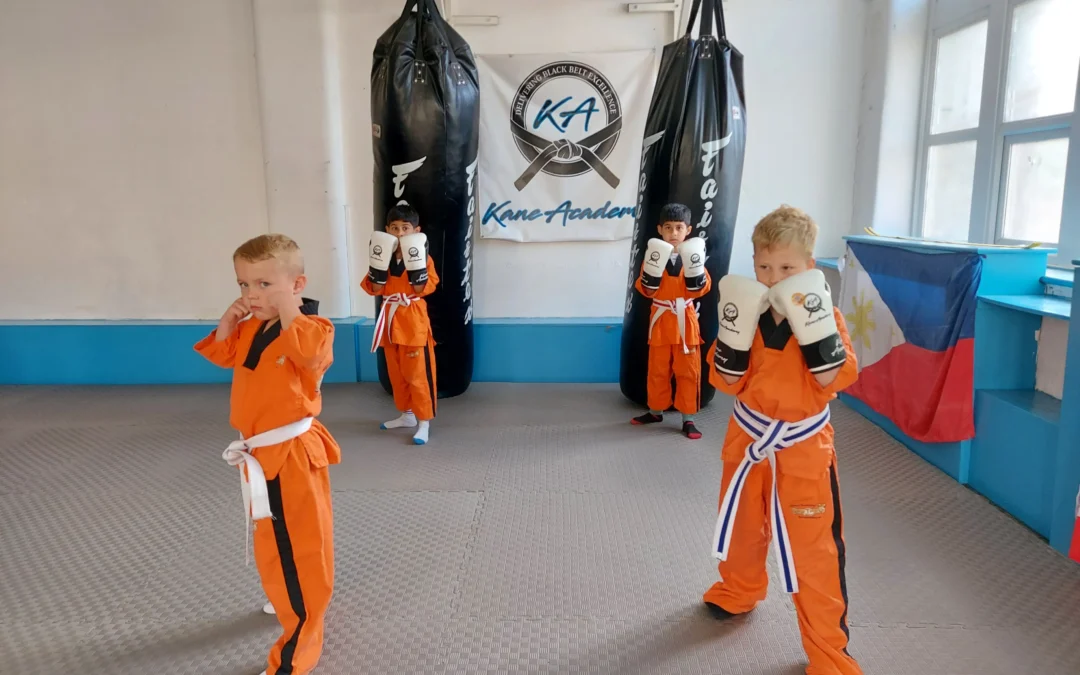
If your child finds it difficult to sit still, follow instructions or stay focused for more than a few minutes, you may have heard that martial arts can “fix” the problem.
That promise is too simple.
Structured martial arts can support useful skills such as attention, routine, self-regulation, confidence and emotional control. However, it does not treat, cure or fix ADHD. It is one positive activity that may form part of a wider support plan for your child.
At Kane Academy in Huddersfield, personal development is at the core of every class. Our aim is not to make children fit one narrow idea of behaviour. It is to help them build practical skills, resilience and confidence in a welcoming environment that respects different ages, abilities, personalities and learning styles.
First, what does “focus” really mean?
Focus is not simply sitting completely still.
For many children, especially those with ADHD or other neurodivergent profiles, focus may look like:
- Listening to one instruction at a time.
- Returning attention after becoming distracted.
- Waiting for a turn.
- Remembering a short sequence.
- Stopping safely when asked.
- Trying again after making a mistake.
- Managing excitement or frustration.
A martial arts class gives children frequent opportunities to practise these skills while moving. That can be more accessible than asking them to remain seated and concentrate for a long period.
What martial arts genuinely supports
1. Active attention
Martial arts requires children to watch, listen, copy and respond. A coach may ask them to change stance, raise their guard, move in a particular direction or perform a combination.
This is active attention rather than passive listening. Your child is using their eyes, ears, body and memory together.
Research into structured martial arts programmes, including taekwondo, suggests promising improvements in areas such as attention control, working memory and inhibitory control. Some studies have found stronger gains than standard physical education. However, research quality and individual results vary, so these findings should be viewed as encouraging rather than guaranteed.
You can read a high-level review of the evidence in this research review on children’s executive functions.

2. Routine and predictability
A well-structured class usually follows a familiar pattern:
- Arrival and preparation.
- Warm-up.
- Skill practice.
- Partner or equipment drills.
- A short challenge or game.
- Review and finish.
Predictable routines can reduce the mental effort required to work out what happens next. This may help some children feel more secure and ready to participate.
At Kane Academy, our Tiny Tigers sessions are designed for children aged 4–7, while Ninja Kids classes are for children aged 7–12. The activities are age-appropriate, energetic and structured, with clear expectations around kindness, respect and safe practice.
3. Self-regulation and impulse control
Martial arts is not about encouraging children to hit whenever they feel frustrated. In fact, safe training teaches the opposite.
Children practise:
- Waiting for a signal.
- Controlling the strength of a movement.
- Keeping hands and feet to themselves when instructed.
- Pausing before starting a drill.
- Stopping when the coach says stop.
- Using breathing and posture to reset.
These are small moments of self-regulation. They do not remove impulsivity, but they give your child repeated opportunities to practise pausing and responding.
A review of martial arts and ADHD research found potential benefits in areas including inhibition, working memory and cognitive flexibility, while also emphasising that martial arts should complement, not replace, clinical, educational or family support.
You can explore this review of martial arts and ADHD research.
4. Confidence through achievable progress
Children who regularly hear that they are “not listening” or “cannot sit still” can begin to associate learning with failure.
Martial arts provides a different kind of feedback. Progress may involve:
- Remembering a new combination.
- Holding a stance for a little longer.
- Completing a class.
- Showing respect to a partner.
- Returning after a difficult session.
- Working towards a grading.
These achievements can help your child develop a more positive view of themselves. Confidence does not mean believing everything will be easy. It means learning, “I can improve with practice.”

5. Movement with purpose
Some children concentrate better after moving. Physical activity can provide an appropriate outlet for energy while also requiring thinking and decision-making.
Martial arts combines movement with structure. Your child is not simply running around; they are learning when to move, how to move and when to pause.
That combination may support a child who struggles in activities that involve long periods of sitting. It also helps build coordination, balance, physical confidence and healthy habits.
What martial arts does not do
Honest guidance matters, particularly when you are looking for support for your child.
It does not cure or fix ADHD
ADHD is a neurodevelopmental condition. Martial arts cannot remove ADHD, change your child’s personality or guarantee that concentration difficulties will disappear.
Your child may still fidget, interrupt, lose equipment, become overwhelmed or find homework difficult. That does not mean the class has failed.
It does not guarantee better behaviour everywhere
A child may listen carefully during a martial arts drill but still struggle at school or home. Skills do not automatically transfer from one environment to another.
Transfer may be encouraged when adults use similar language, such as “pause,” “listen for the next instruction” or “take one step at a time”. Even then, progress is usually gradual and inconsistent.
It is not the right fit for every child
Some children enjoy noise, movement and group activities. Others may find crowds, uniforms, equipment or physical contact overwhelming.
A good programme should be willing to discuss your child’s needs. You can ask about class size, sensory considerations, contact levels, breaks, instructions and how new children are welcomed.
Most importantly, your child should feel safe, respected and included, not judged for needing support.

How to help your child get the most from a class
If you are considering martial arts for your child, take these practical steps:
-
Start with a trial session.
A free trial allows you and your child to experience the environment before making a decision. -
Share useful information with the team.
Tell the instructor what helps your child listen, what can cause distress and whether there are relevant sensory, medical or behavioural considerations. -
Focus on participation rather than perfection.
Completing part of a class, trying one new activity or returning after a difficult moment is still meaningful progress. -
Use specific praise.
Say, “You stopped when the instructor asked,” or “You came back and tried again.” This reinforces the skill you want your child to notice. -
Allow time.
One lesson rarely tells you whether an activity is a good fit. Give your child time to learn the routine, meet the instructors and understand the expectations.
If your child’s difficulties with attention, activity levels, emotions or behaviour are affecting daily life, speak warmly and openly with your GP, your child’s school SENCO or another qualified health professional. They can help you understand your child’s needs and discuss appropriate assessment, adjustments and support. Martial arts can be part of that wider picture, but it should not replace professional guidance.
Junior martial arts classes at Kane Academy
Our family-friendly junior programmes welcome children with different ages, confidence levels and fitness levels.
Tiny Tigers: ages 4–7
- Tuesday and Thursday: 4:00–4:30pm and 4:30–5:00pm
- Saturday: 9:00–9:30am and 9:30–10:00am
Ninja Kids: ages 7–12
- Tuesday and Thursday: 5:00–5:45pm and 5:45–6:30pm
- Saturday: 10:00–10:45am and 10:45–11:30am
Please check the full Kane Academy timetable before booking, as class times may change.
New members can begin with a free trial session, the £49.99 four-week starter programme, or the £199 beginner course, which includes a uniform, gloves and gradings.
Our programmes are led by a team shaped by world champion instruction from Rebecca Kane. More importantly, we place kindness, resilience, inclusivity, healthy living and continuous growth at the heart of the community.
The honest answer
So, what does martial arts really do for a child who cannot sit still for ten minutes?
It gives them a structured place to practise attention while moving. It can support routines, self-regulation, emotional control, confidence and resilience. It can help your child experience success in a setting where progress is measured in small, achievable steps.
It does not cure ADHD, guarantee perfect concentration or make every challenge disappear.
Your child does not need to become a different person to benefit. They need the right environment, patient instruction, encouragement and time.
If you are based in Huddersfield, Marsh, Lindley, Salendine Nook, Oakes, Fixby, Greenhead or elsewhere across Kirklees and West Yorkshire, you are welcome to discover whether Kane Academy is the right fit for your family. Book a free trial session and give your child the opportunity to unleash their inner warrior: one focused step at a time.