
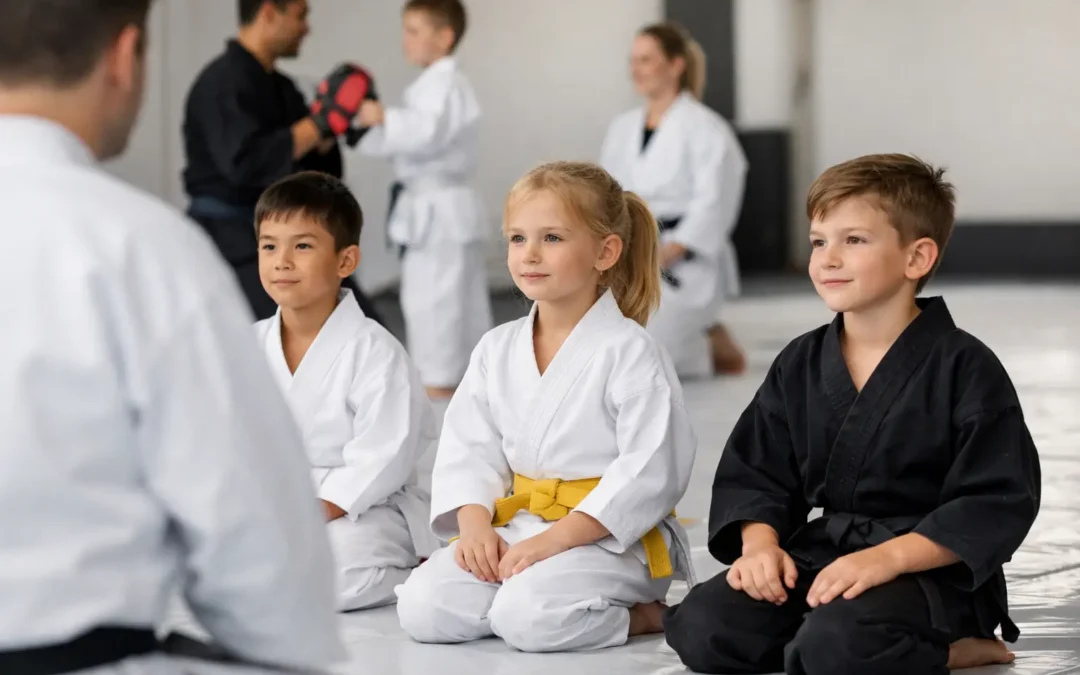
A child does not need to be loud, sporty or naturally confident to thrive in martial arts. In fact, the right class can be the place where a shy child finds their voice, an energetic child learns focus, or a child who has struggled to stick with activities discovers a real sense of progress. Knowing how to choose children’s martial arts means looking beyond the name of the style and finding a programme where your child can feel safe, supported and proud of what they achieve.
The best choice is rarely the class with the flashiest moves or the toughest-looking training. It is the one that matches your child’s age, personality and needs, while giving them a clear route to build confidence, fitness, discipline and practical skills over time.
How to Choose Children’s Martial Arts for Your Child
Start with the outcome you want your child to gain. Some parents are looking for a healthy, active hobby away from screens. Others want help with confidence, listening, social skills or resilience. You may want your child to understand personal safety, especially as they become more independent.
All of these are valid reasons to start training. A good children’s martial arts programme should not force parents to choose between fun and structure. Children need lessons they enjoy enough to return to each week, but they also benefit from boundaries, routine and the satisfaction of working towards a goal.
Avoid choosing only by the style name. Kickboxing, self-defence and Filipino martial arts can all offer valuable skills when taught well. For younger children, the quality of coaching, class structure and age-appropriate activities matter much more than whether a programme is labelled as one discipline or another.
Ask yourself a simpler question: can you picture your child being encouraged, challenged at the right level and treated with respect in this class? If the answer is yes, you are looking in the right direction.
Look for Proper Age-Specific Classes
Children are not small adults, and they should not be trained as though they are. A four-year-old needs very different instruction from an eleven-year-old. Their attention span, coordination, emotional development and reasons for joining will be different too.
The strongest academies separate children into suitable age groups and shape each session around that stage of development. For younger children, classes should use movement, games, simple techniques and short focused activities to develop balance, coordination, confidence and listening skills. They should feel purposeful, but never overwhelming.
As children get older, they can take on more technical kickboxing, self-defence awareness, controlled partner work and goal-setting. They may also begin to understand why discipline matters: arriving ready to train, practising consistently, showing respect and responding positively when something feels difficult.
At Kane Academy, for example, Tiny Tigers is designed for ages four to seven, while Ninja Kids supports children aged seven to twelve. A clear age pathway gives children room to grow without being rushed into training that does not suit them.
Watch the Coach, Not Just the Class
A great instructor can make a nervous beginner feel welcome within minutes. They can also set the tone for the whole room: calm, positive, focused and inclusive.
When you visit a class, watch how the coach speaks to children. Are instructions clear and encouraging? Do they correct mistakes without embarrassing anyone? Are quieter children noticed, rather than left at the edge of the group? Do confident children learn self-control as well as technique?
Martial arts should teach respect, but respect is not built through shouting, fear or humiliation. Children learn discipline best when expectations are consistent and the coach models the behaviour they want to see. A firm standard and a kind approach work together.
It is also worth asking about the instructors’ experience with children, including those who have additional needs. Not every child learns in the same way. Patient coaching, sensible adaptations and honest communication with parents can make martial arts accessible to children who may not feel comfortable in larger or less structured activities.
Make Safety and Control Non-Negotiable
Parents often worry that martial arts will encourage fighting. In a well-run class, the opposite is true. Children learn that physical skills come with responsibility, self-control and respect for others.
Look for a programme that teaches safe distances, controlled contact and clear rules for partner work. Children should be supervised closely, particularly when practising kicks, strikes or self-defence movements. Equipment should be introduced when appropriate, and the academy should explain what children will need as they progress.
Ask how the school handles behaviour, injuries and concerns between children. You are not looking for a perfect environment where no child ever gets frustrated. You are looking for adults who deal with problems quickly, fairly and calmly.
A sensible class also avoids pushing children into sparring or intense contact before they are ready. Some children love the challenge of controlled sparring later on; others may benefit more from building technique, confidence and fitness first. Progress should be earned and supported, not rushed.
Choose a Class With a Clear Pathway
Children stay motivated when they can see that effort leads somewhere. That does not mean grades and belts should become the only reason they train, but they can be useful markers of progress when handled well.
A structured programme should show families what happens after the first lesson. Is there a beginner course? Are there achievable goals? Will your child learn foundations before moving on to more advanced skills? Is their effort recognised through feedback, certificates or gradings?
The right pathway creates small wins. A child may start by learning to stand confidently, follow instructions and remember a simple sequence. Weeks later, they may be demonstrating better balance, stronger focus and the courage to perform in front of the group. These changes often carry into school, friendships and family life.
Be wary of promises that your child will become an expert very quickly. Martial arts are most powerful as a long-term activity. Consistent training builds capability that lasts, along with the resilience to keep trying when a technique does not work immediately.
Consider Your Child’s Personality and Needs
The best class for one child may not be the best fit for another. A highly energetic child may benefit from a programme with clear routines and opportunities to channel their energy productively. A shy child may need a patient welcome, low-pressure partner work and time to settle before joining in fully.
If your child has additional needs, have an open conversation before booking. Explain what helps them participate, what they may find difficult and what a successful first session would look like. A thoughtful academy will want to understand the child in front of them, not simply fit every child into the same approach.
It can also help to involve your child in the decision. Show them that trying a class does not mean committing forever. Ask what they enjoyed afterwards, but do not judge the experience only by whether they performed perfectly on day one. The first session can be exciting, unfamiliar and tiring all at once.
Try Before You Commit
A trial class is one of the most useful ways to make a confident decision. Websites and photographs can tell you about a programme, but a visit lets you see how it feels.
Arrive a little early if possible. Notice whether staff welcome families, explain what will happen and make beginners feel included. During the lesson, watch whether children are engaged and whether the coach balances energy with control. Afterwards, ask your child what they liked, what felt hard and whether they would like to go back.
It is normal for children to be unsure after a first lesson, especially if they are naturally reserved. Give them a little space to process the experience. If the class was supportive and they showed even a small spark of interest, a short introductory course can be a better test than making a decision after one hour.
Price and timetable matter too, of course. Choose a commitment that works realistically for your family, because regular attendance is what creates results. A well-planned beginner course that includes key equipment and a clear next step can remove uncertainty and help children begin with confidence.
The right martial arts class should leave your child feeling challenged but safe, tired but happy, and eager to tell you one thing they learned. Give them the chance to try, grow at their own pace and discover just how capable they can become.