
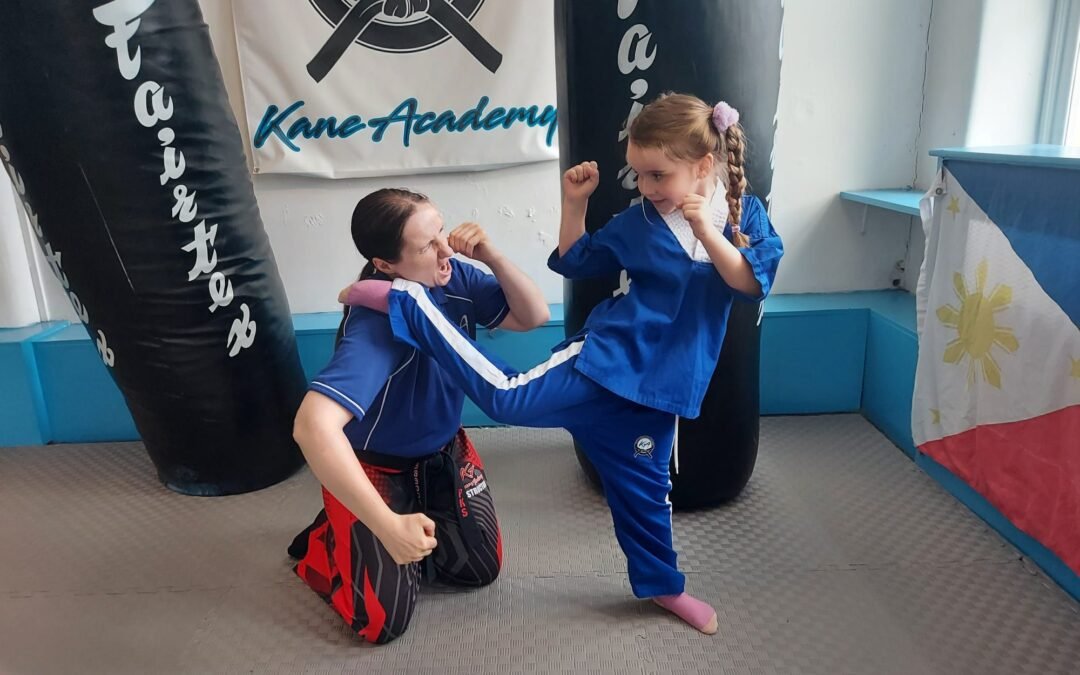
If your child has ADHD or a neurodivergent profile, you may already know that traditional activities do not always provide the right environment for them to succeed. Long periods of sitting still, unclear expectations or highly competitive settings can make participation difficult.
That does not mean your child lacks ability, motivation or discipline. It often means they need the right structure, movement and encouragement to show what they can do.
At Kane Academy, our martial arts programmes help children develop focus, emotional regulation, confidence and routine in a welcoming environment. Through age-appropriate kickboxing and martial arts training, children learn that progress is built one step at a time.
For families in Huddersfield, including Marsh, Lindley, Salendine Nook, Oakes, Fixby and Greenhead, our Tiny Tigers and Ninja Kids classes offer a positive place for children to move, learn and thrive.
Why structure can make such a difference for children with ADHD
Every child is different, and ADHD can affect attention, impulse control, organisation and emotional regulation in different ways. Some children may struggle to wait their turn, follow several instructions at once or recover quickly after becoming frustrated.
A structured martial arts class gives children repeated opportunities to practise these skills in a supportive setting.
A typical lesson includes:
- A predictable beginning – children know what to expect when they enter the class.
- A physical warm-up – movement helps them release energy and prepare to learn.
- Short, focused activities – instructions are broken into manageable steps.
- Repetition and practice – children develop confidence by returning to the same skills.
- Positive feedback – effort, listening and progress are recognised.
- A calm finish – the session ends with reflection, stretching or a clear routine.
This consistency can help reduce uncertainty. Instead of being told simply to “pay attention”, your child is given a clear task, an achievable goal and encouragement to try again.
1. Martial arts can support focus and executive function
Focus is not a single ability. It includes listening, remembering instructions, switching between activities and stopping before acting. These are often described as executive-function skills.
Kickboxing and martial arts naturally practise these skills because children need to:
- Listen for a particular instruction.
- Remember the order of a combination.
- Wait for their turn.
- Stop when the instructor says “freeze”.
- Move safely around other students.
- Adjust their technique after feedback.
- Concentrate on what their body is doing.
The aim is not to force every child to behave in exactly the same way. Instead, instructors can help children find practical ways to engage with the session.
Research into physical activity and ADHD is encouraging, although it is important to remain balanced. A 2024 randomised controlled trial involving children aged 8 to 12 found that a structured, striking-based exercise programme delivered three times a week for 12 weeks improved some measures of self-control. The researchers described the activity as a complementary support, not a replacement for clinical care or other evidence-based treatment. Read the study in Global Pediatric Health.
There is also research into martial arts and cognitive control, although results are mixed and direct research into kickboxing for children with ADHD remains limited. The key takeaway is that structured movement, repeated practice and clear coaching may help children exercise the skills involved in focus and self-regulation.
2. Movement provides a constructive outlet for energy
Many children with ADHD feel more settled after physical activity. Kickboxing gives them a safe and purposeful way to move, rather than expecting them to suppress their energy for a long period.
Punches, kicks, footwork, balance exercises and pad drills all require physical effort. However, they also require control. Children learn that power must be directed carefully, movements must be performed safely and the instructor’s signal must be respected.
This creates an important message:
Your energy is not a problem. You can learn to direct it.
At Kane Academy, martial arts is not about encouraging aggression. It is about developing self-control, awareness, respect and resilience. Children are taught how to use technique responsibly, in a safe and age-appropriate environment.
Physical activity may also support sleep, mood and general wellbeing. These benefits can make it easier for some children to manage the demands of school and family life, although every child will respond differently.

3. Martial arts creates opportunities to practise emotional regulation
Emotional regulation does not mean never feeling angry, excited, disappointed or overwhelmed. It means gradually learning how to recognise feelings and choose a safe response.
Martial arts can support this development through simple, repeated experiences:
- A child misses a technique but tries again.
- A combination feels difficult, so the instructor breaks it down.
- A student becomes excited and learns to pause when asked.
- A child waits for a turn instead of rushing forward.
- A new skill is achieved after several weeks of practice.
These moments help children experience challenge without being defined by it.
At Kane Academy, we celebrate effort, kindness, listening and improvement. A child does not need to be the fastest, strongest or most naturally coordinated student in the room to succeed. Personal development is at the core of what we teach.
Progress might look like:
- Staying engaged for an extra few minutes.
- Returning to class after a difficult day.
- Asking for help instead of giving up.
- Remembering a class rule.
- Handling a correction calmly.
- Showing respect to another student.
These are meaningful achievements. By noticing them, you help your child build self-awareness and confidence.
4. Clear routines can support confidence and independence
Children with ADHD and other neurodivergent profiles may benefit from knowing what will happen next. A regular class can create a reliable point in the week, supporting both the child and the wider family routine.
You can help your child prepare by:
-
Explain the class routine in advance.
Tell them that the session will include a warm-up, technique practice, games or drills and a cool-down. This helps make the experience more predictable. -
Arrive with enough time to settle.
Rushing through the door can increase stress. A calm arrival gives your child time to adjust to the environment. -
Use simple, positive language.
Focus on one or two goals, such as “listen for the stop signal” or “try your best during the warm-up”. -
Keep expectations realistic.
Your child may have a brilliant class one week and find the next one difficult. Consistency matters more than perfection. -
Celebrate participation.
Praise the behaviours you want to encourage, including effort, courage, kindness and persistence.
By doing so, you show your child that success is not about getting everything right immediately. It is about learning how to keep moving forward.
5. A welcoming community can strengthen confidence
Some children with ADHD or neurodivergent traits have experienced criticism, exclusion or repeated reminders about what they are doing wrong. Finding a positive activity where they feel accepted can be transformative.
Martial arts offers a shared sense of belonging. Students train alongside children of different ages, personalities and abilities. They learn to respect one another, support their partners and recognise that everyone progresses at a different pace.
Our programmes welcome children of all fitness levels and abilities. World-champion instructor Rebecca Kane leads with high standards, warmth and a clear belief in every student’s potential.
A supportive environment can help your child:
- Feel proud of what their body can do.
- Build positive friendships.
- Develop resilience after setbacks.
- Become more comfortable trying new things.
- Experience achievement outside the classroom.
- See themselves as capable and courageous.

Tiny Tigers and Ninja Kids classes in Huddersfield
Our classes are designed around the developmental needs of each age group.
Tiny Tigers: ages 4–7
Tiny Tigers introduces younger children to movement, listening, coordination, confidence and respect through fun, structured activities.
Confirmed class times are:
- Tuesday: 4:00pm–4:30pm or 4:30pm–5:00pm
- Thursday: 4:00pm–4:30pm or 4:30pm–5:00pm
- Saturday: 9:00am–9:30am or 9:30am–10:00am
Ninja Kids: ages 7–12
Ninja Kids builds on these foundations with age-appropriate kickboxing, martial arts technique, fitness, resilience and self-defence awareness.
Confirmed class times are:
- Tuesday: 5:00pm–5:45pm or 5:45pm–6:30pm
- Thursday: 5:00pm–5:45pm or 5:45pm–6:30pm
- Saturday: 10:00am–10:45am or 10:45am–11:30am
You can view the full Kane Academy timetable for the latest class information.
Is kickboxing a replacement for ADHD treatment?
No. Martial arts should be viewed as a positive complement to your child’s wider support, not as a replacement for an ADHD assessment, medication, therapy, school support or professional medical advice.
Research is still developing, and no activity can guarantee the same outcome for every child. The most important step is to choose an instructor and club that prioritise safety, inclusion, communication and personal development.
Before your child starts, you may wish to tell the instructor:
- Your child’s strengths and interests.
- Any sensory sensitivities.
- What situations they find difficult.
- How they respond best to instructions.
- Whether they need additional preparation or reassurance.
This information helps the coaching team create a positive first experience.

Help your child unleash their inner warrior
Your child does not need to become a different person to succeed in martial arts. They need an environment where their strengths are recognised, their challenges are understood and their progress is celebrated.
Through structured kickboxing, your child can practise focus, movement, self-control, emotional regulation and resilience. Over time, those small achievements can build into something powerful: a stronger belief in what they are capable of achieving.
If you are looking for a welcoming martial arts club near Marsh, Lindley, Salendine Nook, Oakes, Fixby, Greenhead or across Huddersfield, contact Kane Academy to book a trial session. New members are welcome, and every child can begin at a level that suits them.
Consistency is the key. Start with one class, one skill and one positive step forward. Your child’s journey begins there.