
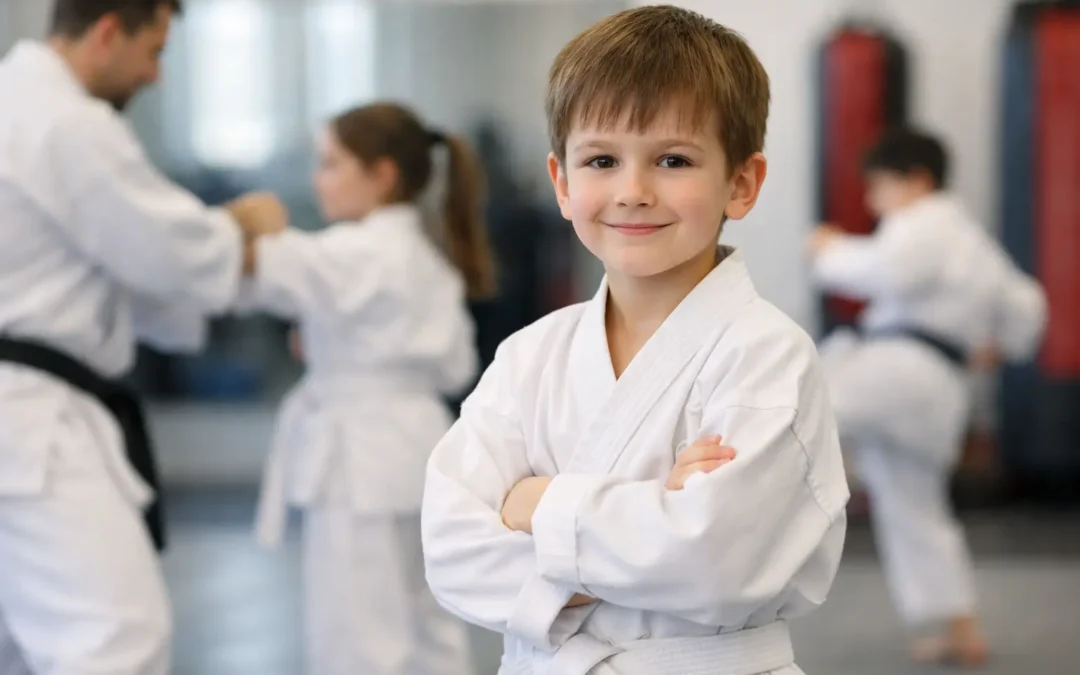
A child does not need to be loud, sporty or ready to perform in front of a room to begin training. In fact, martial arts for shy children can be one of the most positive ways to help them grow in confidence without asking them to become someone they are not.
Some children take time to warm up in new places. They may stay close to a parent, avoid eye contact, speak quietly or worry about getting something wrong. That is not a weakness. It is simply where their journey starts. With patient coaching, clear routines and achievable goals, martial arts gives them a place to practise being brave in small, manageable steps.
Why martial arts suits shy children
Martial arts classes have structure. Children arrive, line up, learn a skill, practise it safely and finish knowing what they have achieved. For a shy child, that predictability can feel reassuring. They do not have to guess what is expected or compete for attention before they feel ready.
Unlike some team sports, early progress is not dependent on being picked first, shouting the loudest or already knowing how to play. Every child can work on their own stance, balance, focus and technique. They can improve at their pace while still feeling part of a group.
There is also a valuable difference between confidence and being outgoing. The aim is not to turn a quiet child into the centre of attention. Real confidence means knowing, “I can try this. I can keep going. I can handle a challenge.” A child may remain naturally calm and reserved while becoming far more comfortable speaking up, joining in and backing themselves.
Confidence grows through small wins
A good children’s martial arts programme breaks learning into clear steps. A child might first learn how to stand safely, then practise a simple block, then remember a short sequence. Each success is visible. They can feel their coordination improve and see that effort leads somewhere.
That matters because shy children can be especially hard on themselves. If they fear making a mistake, they may avoid joining in altogether. Supportive instruction changes the message. Mistakes become part of training, not something to be embarrassed about. Everyone is learning, and everyone has a next step.
Gradings, certificates and new belt levels can help too, provided they are presented as personal progress rather than pressure. A grading gives children a meaningful target and a moment to recognise how far they have come. They may begin by quietly following the group, then gradually volunteer to demonstrate a skill or answer a question. Those moments are earned, not forced.
The first class should feel safe, not overwhelming
Parents often worry about the first session. Will their child refuse to join in? Will they be expected to spar straight away? Will the other children be much more confident?
A well-run beginner class should meet a child where they are. For younger children, the focus is usually on movement, listening, coordination, simple self-defence awareness and learning through age-appropriate activities. They should be shown what to do clearly, given encouragement for effort and never pushed into contact or performance before they are ready.
It is normal for a child to watch during their first class. Some join in immediately; others need a few minutes, or even a few sessions, to feel settled. The key is gentle consistency. If they are greeted warmly, know the routine and see familiar faces each week, the room soon becomes less daunting.
At Kane Academy, age-specific programmes help make this process feel natural. A four-year-old needs a different approach from an eleven-year-old, and both deserve coaching that matches their stage of development. The goal is to create challenge without creating unnecessary fear.
What shy children gain beyond the class
The benefits often travel home, into school and into everyday situations. Martial arts cannot remove every worry, and it is not a substitute for professional support where a child is experiencing significant anxiety. But regular, encouraging training can give children practical evidence that they are capable.
They learn to listen, take turns and work alongside others. They practise speaking clearly when responding to an instructor. They learn that a strong posture and calm breathing can help when nerves appear. They also develop resilience: if a technique does not work the first time, they reset and try again.
For many parents, the most meaningful changes are the quiet ones. Their child starts getting ready for class without being asked. They talk about a new move on the way home. They stand a little taller in photographs. They make one friend, then another. These changes may look small from the outside, but they can feel enormous to a child who previously held back.
Choosing martial arts for shy children
Not every class will be the right fit, and that is worth acknowledging. A highly competitive environment may motivate some children but discourage others, especially in the early stages. Look for a programme that values discipline and standards while treating children with patience and respect.
A positive class for a shy beginner will usually have:
- Clear routines that help children know what will happen next.
- Coaches who praise effort, focus and improvement, not just natural ability.
- Safe, closely supervised partner work introduced at the right time.
- A welcoming group culture where children are not mocked for mistakes.
Ask how beginners are introduced, whether children can try a session before committing, and how instructors support those who need extra reassurance. It can also help to let your child know that they do not need to be brilliant on day one. Their only job is to have a go.
If your child has additional needs, speak to the coaching team before their first class. The right academy will want to understand what helps them feel comfortable, whether that is extra explanation, a quieter introduction, clear visual demonstrations or time to settle. Inclusion should be practical, not just a promise.
How parents can make the start easier
Your approach before and after class can make a real difference. Avoid building the session up as a big test. Instead, describe it simply: they will meet a coach, learn a few moves and see what the class is like. Give them permission to feel nervous. Courage is not the absence of nerves; it is taking a step while nerves are there.
Arrive with enough time that they are not rushed. Let them wear comfortable clothes and bring water. If possible, keep the first few weeks consistent. Children often need repetition before a new activity feels like part of their routine.
After class, try questions that invite reflection rather than judgement. “What was the easiest move?” or “What would you like to practise next time?” is often more helpful than “Were you the best?” Celebrate attendance and effort, particularly when they found it difficult to walk through the door.
It is also wise not to expect an overnight transformation. One child may become chatty after two classes; another may take several months before their confidence becomes obvious. Progress is rarely a straight line. A child might seem hesitant one week and surprise you with a bold moment the next.
Strength without losing their gentle nature
Parents sometimes worry that martial arts will make a sensitive child aggressive. Quality instruction teaches the opposite. Children learn that martial arts skills come with responsibility, self-control and respect. They are taught when not to use force, how to manage frustration and why kindness matters alongside confidence.
This can be especially empowering for a shy child. They do not need to become confrontational to feel safer. They can learn to use a confident voice, set boundaries, stay aware of their surroundings and seek help when needed. Physical skills are part of the training, but the deeper lesson is that they have the right to take up space and be treated with respect.
The child who begins at the back of the class may not suddenly become the loudest person in the room. They may become something better: a child who knows they belong there. Give them a supportive place to train, time to grow and the chance to collect their own small victories. Before long, those victories can become the confidence they carry everywhere else.