
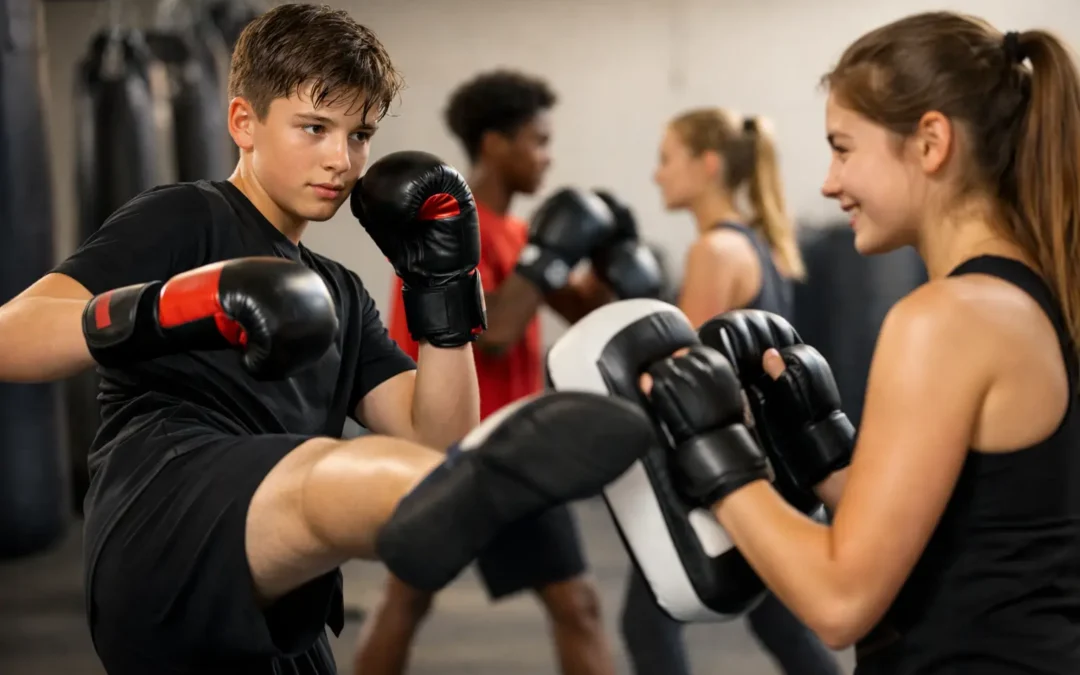
A teenager does not need to be naturally sporty, loud or already confident to begin kickboxing. The best teenage kickboxing classes Huddersfield families choose give young people room to start where they are, learn at their own pace and feel proud of what they can do. That might mean throwing their first combination with real focus, getting through a challenging fitness drill, or simply walking into class without worrying what anyone thinks.
For many teenagers, martial arts becomes the one part of the week where progress feels clear. They work towards a goal, receive constructive coaching and train alongside people who are doing the same. Kickboxing is energetic and demanding, but it should also be structured, safe and welcoming from the very first session.
Why teenagers benefit from kickboxing
The teenage years can be full of pressure. Schoolwork, exams, friendships, social media and changing expectations all compete for attention. A regular kickboxing class provides a positive outlet: a place to move, concentrate and put everyday stresses to one side for an hour.
Physical fitness is a big part of the experience. Teenagers develop coordination, balance, mobility and cardiovascular fitness through pad work, technical drills and carefully managed conditioning. Unlike simply being told to exercise, they are learning skills with a purpose. Each stance, punch, kick and defensive movement gives fitness training a clear focus.
The benefits reach beyond the physical. Kickboxing asks students to listen, practise, reset after mistakes and keep going when something feels difficult. Those habits can support better self-belief at school, at home and in social situations. Confidence is not about becoming the loudest person in the room. It is about knowing that you can stay calm, learn a new skill and handle a challenge.
There is also the social side. Teen classes bring together young people with a shared aim, rather than placing all the attention on winning or being the best. A respectful training environment can be particularly valuable for a teenager who has not found their group in team sport, or who wants an activity that feels more individual while still being part of a community.
What teenage kickboxing classes in Huddersfield should feel like
A good class has energy, but it should never feel chaotic or intimidating. Teenagers need coaching that is clear, encouraging and consistent. They should know what is expected of them, why they are doing each drill and how to improve.
At Kane Academy, training is built around technical development as well as the personal qualities that help young people thrive: discipline, resilience, kindness, accountability and continual growth. Students are challenged, but they are not expected to get everything right immediately. Everyone starts somewhere.
A typical session may begin with a warm-up that prepares the body for movement, followed by skill practice. Students learn how to stand well, move with balance, strike pads accurately and defend with control. They may then work through combinations, fitness exercises and supervised partner drills before finishing with a cool-down and a chance to reflect on the session.
Partner work is introduced appropriately and with clear boundaries. The purpose is not to make anyone feel nervous or to encourage aggression. It is to develop timing, awareness, control and respect. Coaches should make safety a constant priority, ensuring techniques are suitable for the group and that teenagers understand how to train responsibly.
Technique before power
One of the most useful lessons a teenager can learn in kickboxing is that control matters more than showing off. Strong technique begins with posture, balance and accuracy. Throwing a powerful kick without control is not a sign of progress; learning to move well and practise safely is.
This approach helps beginners feel included. A teen who is smaller, less experienced or initially less fit can still make meaningful progress because kickboxing rewards attention, consistency and willingness to learn. As technique improves, confidence and power can develop naturally.
A genuine route to self-defence awareness
Parents often ask whether kickboxing helps with self-defence. It can build valuable skills, including awareness, composure, distance management and the confidence to set boundaries. It also improves general fitness and teaches young people not to panic under pressure.
However, responsible self-defence is not about looking for confrontation. The safest choice is always to avoid danger, create distance and seek help where possible. Martial arts training supports this mindset by teaching discipline and respect alongside practical movement skills. Teenagers learn that being capable also means making sensible decisions.
Is kickboxing right for a shy or nervous teenager?
Often, yes. A shy teenager does not need to arrive full of confidence. In fact, many young people are drawn to kickboxing because the structure takes away some of the uncertainty. They are not expected to make conversation all session or perform in front of everyone. They can focus on a drill, follow the coach’s guidance and gradually become familiar with the group.
The first class can still feel like a big step, particularly if a teenager worries about being judged or has had a difficult experience with sport before. A supportive instructor will recognise that and offer reassurance without making a fuss. The aim is to help them feel part of the class, not put them on the spot.
It is worth remembering that progress may look different from one teenager to another. One student may quickly enjoy pad work and group drills. Another may need a few sessions before they feel comfortable joining in fully. Both are valid. What matters is a steady environment where effort is noticed and small wins are celebrated.
What parents should look for before booking
Not every kickboxing class offers the same experience, so it is sensible to ask a few practical questions. Find out whether teens train in age-appropriate groups, whether beginners are welcome and how instructors manage safety during partner work. Ask how the academy handles new starters, progression and gradings.
Look for a programme with a clear pathway rather than a class that simply leaves teenagers to copy the most experienced students. A structured beginner course can make the transition much easier, giving new members time to learn foundations, understand class routines and build confidence before progressing.
It also helps to consider the atmosphere. Is the coaching respectful? Are students encouraged to support one another? Is there a balance between having fun and maintaining high standards? An academy can be technically excellent, but teenagers are more likely to stick with training when they feel known, safe and motivated.
For families managing busy schedules, practical details matter too. Check class times, expected equipment and whether a trial session is available. A low-pressure first visit is often the best way for a teenager to decide whether kickboxing feels right for them.
Helping your teenager get the most from their first weeks
The most helpful message is simple: they do not need to be perfect. Encourage them to attend consistently, listen carefully and give themselves time. It can take a few weeks for new movements to feel natural, especially when coordination and fitness are developing together.
Comfortable sports clothing and a water bottle are usually enough for a first session, depending on the academy’s guidance. As a teenager continues, appropriate protective equipment and training kit become part of learning to train safely and responsibly. A quality beginner programme should explain what is needed and when, rather than leaving parents guessing.
Try not to measure success only by grades or how hard they can kick. Notice the quieter changes too: standing taller, taking feedback better, making a new friend, sleeping more soundly after exercise or choosing to keep trying when a drill is difficult. These are the habits that can stay with them long after a class finishes.
Kickboxing can be a powerful next step for a teenager who wants more than another fitness activity. With champion-led coaching, a supportive group and a clear route from beginner to progression, they can build skills that feel useful now and carry into the years ahead. A trial session gives them the chance to take that first step, feel the atmosphere for themselves and find out what they are capable of.