
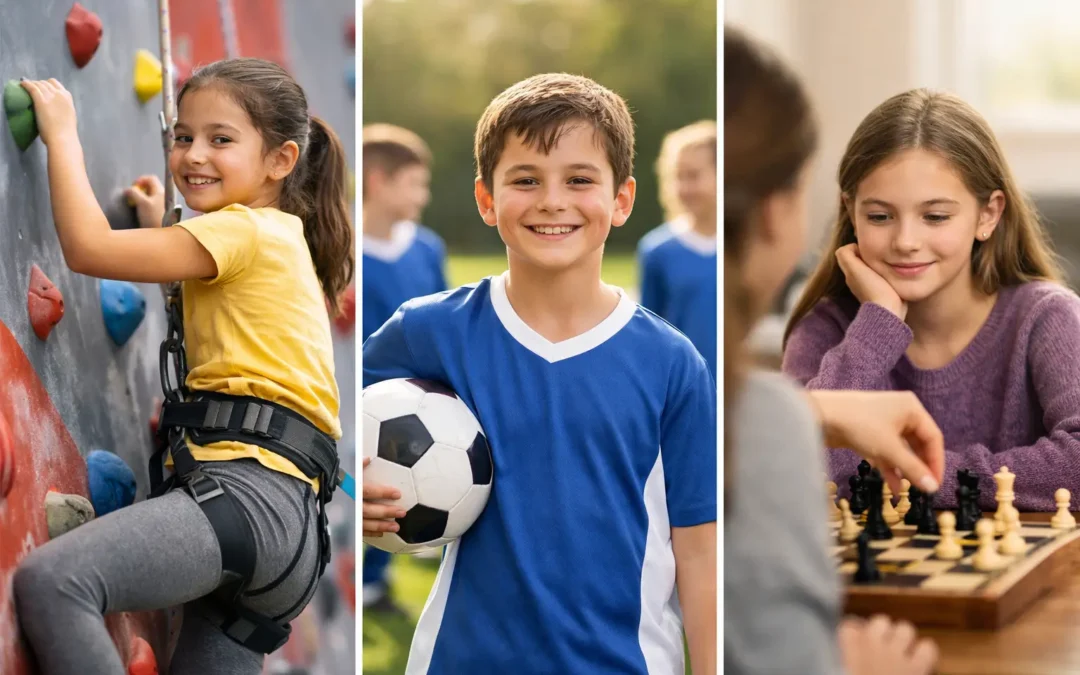
A child who barely speaks up in class may be the same child who chats freely while drawing, racing around a sports hall or practising a new kick. Confidence is not usually built by telling children to be more confident. It grows when they have regular chances to try, improve, make mistakes and realise, “I can do this.” The best after school confidence activities create those moments in a setting where children feel safe, supported and seen.
For parents, the aim is not to fill every afternoon with another commitment. It is to find an activity that gives your child something meaningful: a skill to work towards, positive friendships, encouraging adults and a reason to feel proud of their own effort. What works best will depend on your child’s personality, energy levels and needs.
What makes an after-school activity build confidence?
A confidence-building activity gives children an achievable challenge, followed by clear feedback and another chance to practise. That process matters more than instant success. When children see progress – whether that is speaking louder, tying their own belt, scoring a goal or performing a short piece of music – they begin to trust their ability to learn.
The strongest activities also have structure. Children thrive when they know what is expected, what comes next and how their effort is recognised. A supportive coach or instructor can make a huge difference here, particularly for a child who is shy, anxious or worried about getting something wrong.
Look for an environment that welcomes beginners rather than rewarding only the loudest or most naturally sporty children. Confidence is not about being the best in the room. It is about feeling capable enough to take part.
The best after school confidence activities for children
1. Martial arts classes
Martial arts are one of the most practical routes to growing confidence because progress is personal and visible. A child learns a stance, movement or self-defence skill that once felt unfamiliar, then improves it through patient repetition. Gradings, belts and certificates can provide motivating milestones, but the real value is in the small wins each week.
Well-led children’s kickboxing and martial arts classes also teach children how to listen, follow instructions, work with partners and use their energy constructively. They learn that discipline is not about being told off. It is about showing respect, trying again and taking responsibility for their own development.
For many children, the physical element is especially powerful. Standing taller, moving with purpose and learning age-appropriate self-defence can help them feel more secure in themselves. The right class should be friendly, closely supervised and adapted to the child, including those with additional needs. A trial session is often the best way to see whether the atmosphere suits them.
2. Drama and performing arts
Drama gives children permission to be expressive. They may take on a character, tell a story, improvise a scene or work towards a performance. For a child who is reluctant to speak in everyday situations, this can feel less exposing than being asked to “be confident” as themselves.
It is not the final performance alone that helps. Learning lines, rehearsing with others and recovering from a forgotten word all build resilience. Drama can be a brilliant choice for imaginative children or those who enjoy communication, but it may feel overwhelming at first for a child with significant social anxiety. A small, supportive group is often a gentler starting point than a large production.
3. Team sports with a development focus
Football, netball, rugby, cricket and other team sports can build confidence through belonging. Children learn how to communicate, encourage team-mates and cope with both wins and losses. A good session teaches them that their contribution matters, even if they are not the person who scores.
The key is the coaching culture. A highly competitive team can be motivating for a child who enjoys competition, while another may become discouraged if they spend every session comparing themselves with others. Seek out coaches who rotate opportunities, celebrate effort and help children develop skills at their own pace.
4. Swimming or climbing
Some children gain confidence most quickly when they overcome a physical challenge. Learning to swim independently, floating without help or reaching a new climbing hold can be a real turning point. These activities develop body awareness and perseverance while giving children a clear sense of achievement.
Swimming is particularly useful for children who prefer an individual activity, although lessons still offer a sociable routine. Climbing can be excellent for problem-solving and courage, but it is worth choosing a programme where instructors carefully manage safety and encourage children without pressuring them to go beyond what feels manageable.
5. Music lessons and group singing
Learning an instrument teaches a valuable confidence lesson: improvement comes from practice, not perfection. At first, a child may struggle to make a clear sound or keep time. Over weeks, those small efforts become a tune they can recognise and share. That is powerful evidence that persistence pays off.
Choirs and group music sessions add a social dimension. Children who are nervous about solo attention can take part as part of a group, gradually becoming more comfortable with their voice. Music suits children who enjoy routine, listening and creativity, although it takes patience from both child and parent. Progress is rarely instant.
6. Scouts, guides and outdoor groups
Outdoor and community groups build confidence by giving children real responsibilities. They might learn first aid, cook something simple, navigate a route, work in a team or help organise an activity. These are practical skills that children can carry into daily life.
The mix of challenge and friendship is a major strength. Children often feel more confident when they are contributing to a group rather than being measured on a single skill. This can be a great option for a child who likes variety and hands-on learning.
7. Art, craft and creative clubs
Creative clubs are sometimes overlooked because they do not always look like conventional confidence training. Yet making something from scratch gives children ownership. They can choose colours, solve problems, learn a technique and show their finished work with pride.
Art can also provide a calm social space after a busy school day. It may suit a child who needs time to settle before joining a more active activity. The confidence it builds can be quieter, but no less real: the confidence to make choices, share ideas and accept that there is more than one way to get a good result.
8. Coding, robotics and problem-solving clubs
For children who enjoy figuring out how things work, coding and robotics clubs can create a strong sense of competence. They learn to break a problem into smaller steps, test an idea and make adjustments when it does not work. That is resilience in action.
These clubs can be especially helpful for children who do not connect with team sports or performance-based activities. However, make sure the group still has a social element. Confidence grows more deeply when a child can share an idea, ask for help and celebrate a solution with others.
9. Dance classes
Dance combines movement, coordination and expression. As children learn routines, they become more aware of posture, rhythm and how they carry themselves. Performing with a group can strengthen courage, while regular practice gives a satisfying sense of progress.
As with drama and sport, the atmosphere matters. Some children thrive on preparing for shows; others prefer classes that focus on enjoyment and technique without the pressure of regular performances. Ask what the class involves before committing.
10. Volunteering and helping roles
Older children can build enormous confidence by being trusted to help. Supporting a younger group, collecting for a local cause, helping at a community event or taking on a simple responsibility at home shows them that they have something useful to offer.
This works because confidence is not only about achievement. It is also about contribution. When children see that their kindness, reliability and effort help other people, they develop a steadier form of self-belief.
How to choose the right activity for your child
Start with your child’s interests, not the version of them you wish existed. A high-energy child may need somewhere to move, while a quieter child may first flourish in a small creative group. You can gently encourage them to try something new, but avoid framing it as a fix for shyness or poor confidence. That can make the activity feel like another test.
Instead, talk about what they might enjoy learning. Ask whether they would rather create, perform, solve problems, play with a team or become stronger and more active. Then give the activity enough time. One difficult first session does not mean it is wrong, but several weeks of dread is worth listening to.
At Kane Academy, children are encouraged to progress at their own pace within structured, age-appropriate martial arts classes. For parents in Huddersfield, a beginner-friendly trial can offer a low-pressure way to find out whether kickboxing or martial arts gives their child the challenge and encouragement they need.
The most helpful next step is simple: choose one activity your child can try, stay curious about their experience, and praise the courage it took to walk through the door. That is where confidence starts.