
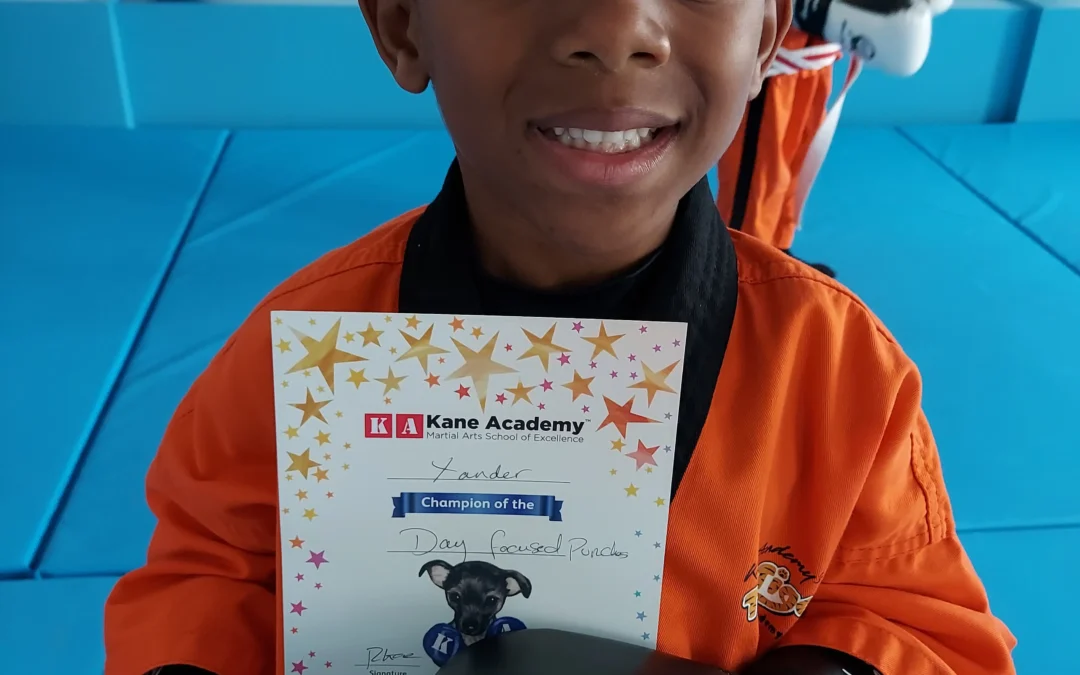
The new school term brings fresh opportunities for your child to grow, learn and build positive habits. It can also bring uncertainty. New classrooms, new routines, new teachers and increased expectations may feel exciting for some children, but overwhelming for others.
That is why many Huddersfield parents are looking beyond traditional after-school activities and choosing children’s martial arts. A well-structured martial arts programme can help your child become more confident, focused and resilient while giving them a welcoming community in which to learn.
At Kane Academy, personal development is at the heart of every class. Through encouragement, discipline and consistent practice, children learn skills that extend far beyond the academy floor.
Why martial arts are a powerful new-term activity
Children’s martial arts are not about encouraging aggression. The right programme teaches children how to manage their energy, listen carefully, respect others and respond calmly to challenges.
Research into youth martial arts suggests that structured, values-led programmes can support:
- Improved self-confidence and self-esteem
- Better self-control and emotional regulation
- Greater focus and listening skills
- Positive social behaviour
- Physical fitness and healthy movement
- Resilience when facing difficulty
A systematic review of martial arts participation among children and young people found encouraging links with social skills, confidence, self-regulation and reduced aggressive behaviour. Other research has also suggested that structured martial arts programmes can support classroom conduct and prosocial behaviour.
The teaching environment matters. Programmes that prioritise respect, personal growth and non-violence are more likely to help children develop these wider benefits. That is why the values behind each lesson are just as important as the physical techniques.

1. Build confidence through achievable progress
Confidence grows when children experience success for themselves. Martial arts provide regular opportunities for this through simple, achievable steps.
Your child may begin by learning how to stand correctly, follow instructions or perform a basic movement. Over time, they can develop combinations, improve their technique and work towards gradings. Every improvement shows them that progress comes from practice.
This is particularly valuable for children who may feel unsure in other activities. Martial arts do not require your child to be the fastest, strongest or most naturally athletic person in the room. They are encouraged to work at their own level and celebrate personal progress.
How parents can reinforce confidence at home
- Praise effort rather than perfection. Recognise the fact that your child tried, listened or kept going. This helps them understand that ability develops over time.
- Ask what they learned, not whether they won. By focusing on learning, you encourage a growth mindset.
- Celebrate small milestones. Remembering a new technique or showing better concentration is meaningful progress.
At Kane Academy, children receive positive encouragement from instructors and fellow students. With world-champion instruction from Rebecca Kane and a supportive coaching team, your child can begin to see themselves as capable of achieving more.
2. Create structure and discipline for the school routine
The return to school often means earlier mornings, homework, packed lunches and more responsibility. Establishing a regular after-school activity can help your child adapt to this structure.
Martial arts classes follow a clear format. Children learn to arrive prepared, listen when instructions are given, take turns and respect the training space. These expectations are consistent, understandable and age-appropriate.
For Tiny Tigers, this structure is introduced through fun, energetic activities. For Ninja Kids, lessons can build greater independence, responsibility and perseverance.
Discipline is not about being harsh. It is about helping children understand that their choices and actions matter. When children practise showing respect and staying focused in class, they can begin to apply those habits at school and at home.
Establish a positive weekly rhythm
- Choose regular class days. Consistency makes the activity easier to remember and helps turn attendance into a healthy habit.
- Prepare kit the night before. Encourage your child to take responsibility for their uniform and equipment.
- Allow enough time to arrive calmly. Rushing can make the transition from school to training more stressful.
- Keep expectations simple. Focus on one or two goals, such as listening carefully or showing good manners.
The aim is not to create pressure. It is to give your child a dependable routine that supports healthy living and personal development.
3. Improve focus and readiness to learn
Children face more distractions than ever, from screens and notifications to busy schedules. Martial arts offer a valuable opportunity to practise concentration in a positive, active setting.
During a lesson, your child must listen to instructions, remember movements, watch their space and respond at the right time. They are developing physical coordination and mental focus together.
This mind-body connection is one reason martial arts can be so engaging. Children are not expected to sit still and concentrate for long periods. Instead, they learn through movement, repetition and practical challenges.
Breathing, balance and controlled technique can also help children slow down and become more aware of their bodies. These skills may support their ability to settle before homework, prepare for school or manage moments of frustration.
A study comparing taekwondo with traditional physical education found improvements in areas including classroom conduct and mental-maths performance among children in the martial arts group. While no single activity guarantees academic results, regular physical activity and self-regulation can help create a stronger foundation for learning.

4. Develop resilience by learning how to keep going
Resilience is not the absence of setbacks. It is the ability to face difficulty, learn from it and continue moving forward.
Martial arts give children a safe, supervised way to practise this skill. A movement may feel difficult at first. A grading goal may take longer than expected. A child may forget a technique or feel nervous about trying something new.
With patient instruction, they learn that difficulty is not a reason to give up. They can pause, ask for help, practise again and improve.
This lesson can become especially valuable during the school term. Children may face challenging homework, friendship problems or situations that require courage. Their martial arts experience can remind them that progress is built one step at a time.
Encourage your child to use the language of persistence:
- “I cannot do it yet.”
- “I can practise one part at a time.”
- “Mistakes help me learn.”
- “I can ask for support.”
By doing so, you help them develop a healthier response to challenge.
5. Encourage positive friendships and belonging
A new school year is also a social transition. Children may be meeting new classmates or trying to find their place within a group.
Martial arts can provide a welcoming environment where children train alongside others, work in pairs and encourage one another. The focus is on individual improvement, but children still experience the benefits of belonging to a positive community.
This can be particularly helpful for children who do not enjoy traditional competitive team sports. They can set personal goals without feeling that the result of a match depends entirely on them.
At Kane Academy, kindness, respect, inclusion and continuous growth are central community values. Children learn that everyone begins somewhere and that supporting others is part of becoming stronger themselves.

Which Kane Academy class is right for your child?
Kane Academy welcomes children of different ages, experience levels and fitness abilities. The current timetable includes:
Tiny Tigers , ages 4–7
- Tuesday: 4:00–4:30pm or 4:30–5:00pm
- Thursday: 4:00–4:30pm or 4:30–5:00pm
- Saturday: 9:00–9:30am or 9:30–10:00am
Tiny Tigers classes introduce young children to movement, listening, confidence and respect through engaging activities suited to their age.
Ninja Kids , ages 7–12
- Tuesday: 5:00–5:45pm or 5:45–6:30pm
- Thursday: 5:00–5:45pm or 5:45–6:30pm
- Saturday: 10:00–10:45am or 10:45–11:30am
Ninja Kids classes help older children develop fitness, resilience, self-belief, coordination and practical awareness in a structured environment.
Class availability can change, so please check the full Kane Academy timetable for the latest information. Trial sessions are available for new members, giving your child the chance to experience the academy before making a longer-term commitment.
Start the new term with a stronger foundation
The best after-school activity is one that supports your child as a whole person. Martial arts can help them become fitter, more focused and more confident, while teaching the discipline and resilience needed to navigate everyday life.
At Kane Academy, your child will be welcomed, encouraged and challenged in a safe, family-friendly environment. Whether they are taking their first steps as a Tiny Tiger or developing greater independence as a Ninja Kid, every lesson is an opportunity to grow.
This new school term, help your child unleash their inner warrior. Book a trial session through Kane Academy’s timetable and take the first step towards greater confidence, discipline, focus and belonging.