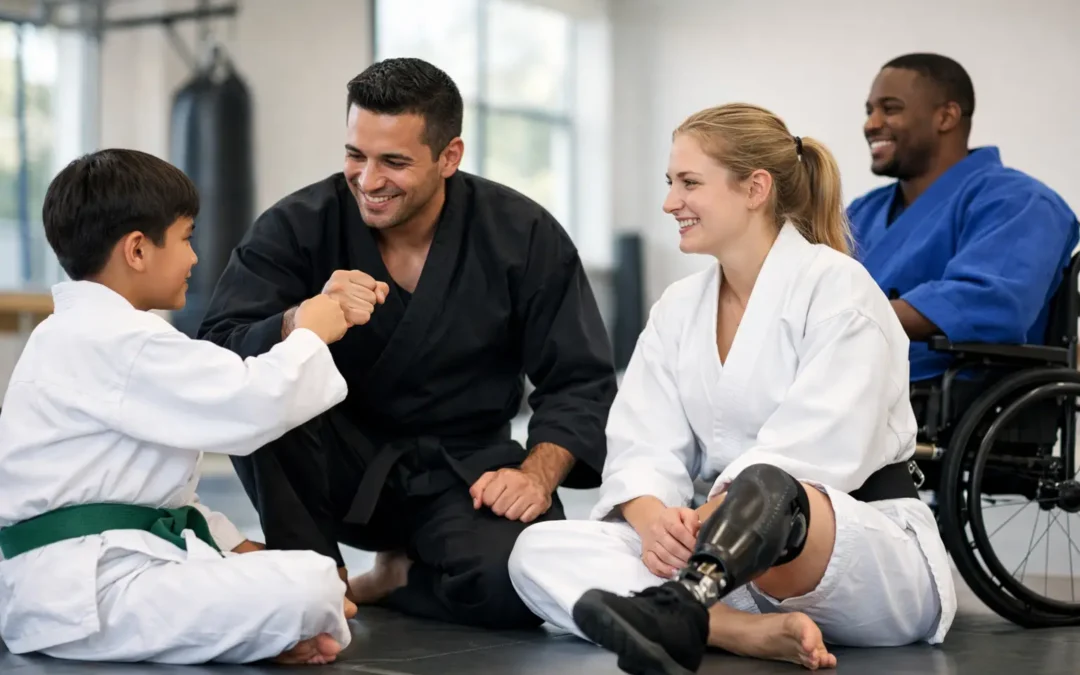
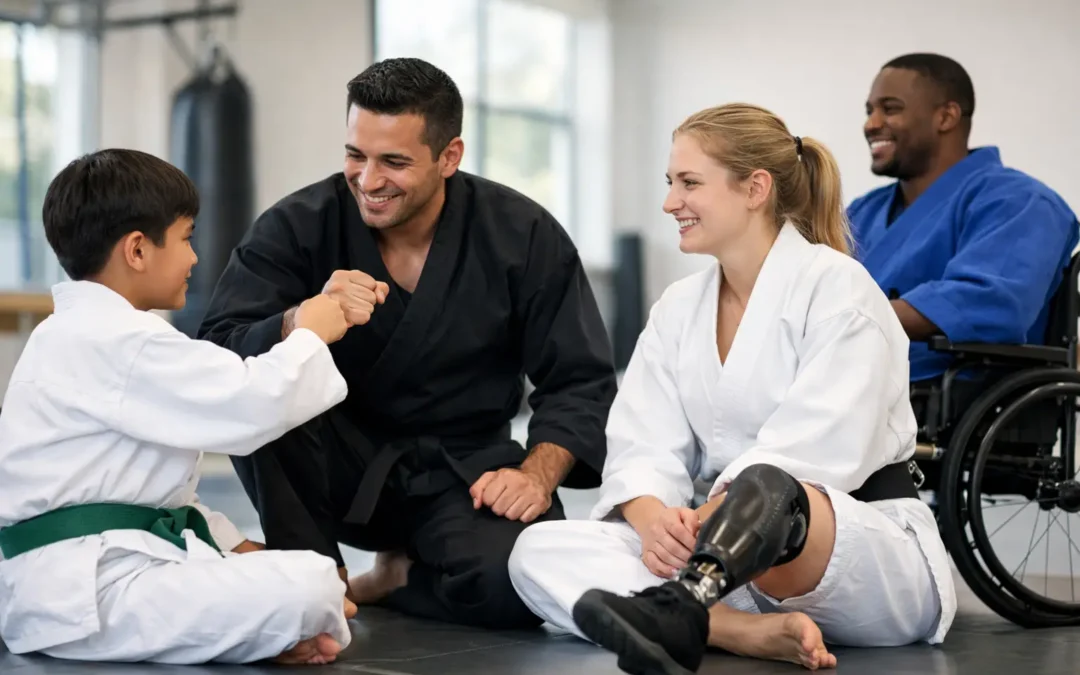
A child who stays at the edge of the mat is not necessarily uninterested. An adult who needs a movement shown three times is not necessarily uncommitted. A teenager who avoids partner drills may still be ready to grow. A good guide for inclusive martial arts coaching starts with this simple principle: every student deserves to feel safe, capable and genuinely welcome before they are asked to perform.
Martial arts can build powerful habits – confidence, focus, fitness, resilience and practical self-defence skills. But those benefits are not reserved for naturally athletic, loud or experienced students. They grow when coaching is structured around the individual in front of you, while still maintaining clear standards, safe boundaries and purposeful progression.
What inclusive martial arts coaching really means
Inclusive coaching is not about making every class easier or lowering expectations. It is about creating more than one route towards the same positive experience of learning. Students may differ in age, confidence, sensory needs, mobility, communication style, fitness level or previous experience. The coach’s job is to recognise those differences and teach with enough clarity and flexibility for each person to take part.
That means keeping the values of martial arts intact. Students still learn respect, self-control, technique and accountability. They still practise consistently. They still work towards goals. The difference is that progress is measured against an appropriate starting point, not against the loudest or quickest person in the room.
For families, this approach matters enormously. A parent may bring a shy child to class hoping they will make friends and stand a little taller. Another may be looking for a positive, active outlet for a child with additional needs. Adults may arrive after years away from exercise, unsure whether they will fit in. The first few sessions can shape whether they believe martial arts is for them.
Start with a class environment that feels safe
Students are more willing to try difficult things when the room feels predictable. A warm welcome, a clear start to the lesson and consistent routines reduce uncertainty for beginners of every age.
Explain what will happen at the beginning of class: warm-up, technique practice, pad work, partner work and finish. For younger members, simple visual demonstrations and repeated instructions can make a huge difference. For adults, being shown the purpose of an exercise can remove the fear of looking inexperienced.
Language matters too. Avoid using pressure as motivation. Phrases such as “you should know this” or “keep up” can make a student withdraw. Replace them with clear coaching cues: “Try this version first”, “Take your time with the footwork”, or “Ask if you would like me to show it again.” This keeps standards high without making a mistake feel embarrassing.
Physical and emotional safety must work together. Set boundaries around contact, partner drills and respectful behaviour from the first class. Students should know they can say if a drill feels uncomfortable, ask for a different partner or take a brief moment to reset. This is not an excuse to avoid challenge. It is how you create the trust needed for challenge to be productive.
Teach one skill in more than one way
Not everyone learns by listening to a verbal explanation. Some students need to see the technique demonstrated slowly. Others need to practise it in small sections before putting the movement together. A few may understand it best when they can feel the position safely through coached pad work.
A strong inclusive lesson often follows a simple pattern: explain the goal, demonstrate the movement, break it into key points, let students practise, then offer individual feedback. Keep instructions short. Rather than giving six corrections at once, choose the one detail that will help most – perhaps guard position, balance or turning the hip.
There is also value in offering sensible variations. A student who is new to fitness might work at a lower pace while learning the same combination. Someone who finds close-contact drills overwhelming may begin with distance-based pad work, then build towards partner exercises when ready. A child with coordination difficulties may repeat a simpler sequence until it feels secure.
The trade-off is that too many options can make a class confusing. Variations should support the lesson goal, not turn the session into several unrelated activities. The best coaching keeps everyone connected to the same core skill while adapting how they reach it.
Use partners with care
Partner work develops timing, communication and respect, but it can also be the hardest part of a class for anxious beginners. Do not assume that pairing students quickly will solve the issue. Take a moment to match partners thoughtfully, particularly with children, new starters or students who need extra reassurance.
Give both partners a clear role. One person holds the pads safely, the other practises with control, then they swap. Demonstrate the expected level of contact and remind students that control is a martial arts skill, not an optional extra. Where needed, a coach or trained assistant can work directly with a student until they are comfortable joining a pair.
Build confidence through achievable progress
Confidence does not come from constant praise alone. It grows when students see themselves do something they could not do before. That might be a four-year-old remembering their stance, a teenager speaking clearly during a drill, or an adult completing a full round on the pads without stopping.
Set small, visible goals. In a children’s class, this may mean listening for the full instruction, keeping hands up for a combination or showing kindness to a training partner. In adult kickboxing, it may mean improving balance, learning a practical self-defence response or attending regularly for a month. Celebrate effort and progress specifically, rather than offering a vague “well done”.
Gradings and structured courses can be especially helpful because they give students a clear pathway. They can see what they are working towards and understand that skill is built lesson by lesson. However, progression should never become a source of shame. If someone needs longer to develop a technique, the answer is more patient practice and supportive feedback, not comparison.
Communicate with parents and students
Inclusive martial arts coaching works best when communication continues beyond the mat. For children, a brief conversation with a parent can reveal useful information about confidence, routines, sensory needs or what helps their child settle. It also gives parents a chance to understand how the class will support development without making promises that no coach can guarantee.
Ask practical, respectful questions. Is there anything that helps your child feel comfortable in a new activity? Are there particular situations they find difficult? Would they benefit from knowing the class routine in advance? Listen carefully, then agree on realistic steps.
With teenagers and adults, speak to the student directly. Some will want support but not attention drawn to it. Offer choices privately where possible, and avoid making assumptions based on appearance or diagnosis. A person is always more than the adjustment they may need.
Keep coaches accountable too
An inclusive academy is built through consistent coaching habits, not a single welcoming poster. Coaches should reflect after class: Who joined in confidently? Who stayed quiet? Did everyone receive useful feedback? Was any student left without a partner or unclear about the task?
It is also worth reviewing whether the structure of a session serves the whole group. Fast-paced, high-energy training has a place in kickboxing, especially as students develop fitness and stamina. Yet every class does not need to be a test of who can cope with the most intensity. Technical focus, controlled repetition and well-managed rest can produce better learning as well as better inclusion.
At Kane Academy, martial arts is taught as a lifelong activity built on kindness, empowerment, accountability and continual growth. That means helping students work hard while making sure they know they belong. Champion-led instruction should feel credible and disciplined, but never intimidating.
A stronger class starts with one thoughtful choice
You do not need to redesign every lesson overnight. Start by learning names quickly, explaining the class routine clearly and giving each student one achievable next step. Watch what changes when people feel seen rather than judged.
The most memorable martial arts coaches are not only remembered for the combinations they taught. They are remembered for helping someone walk onto the mat with uncertainty and leave feeling stronger. Create that moment often, and your class can become a place where more people discover what they are capable of.