
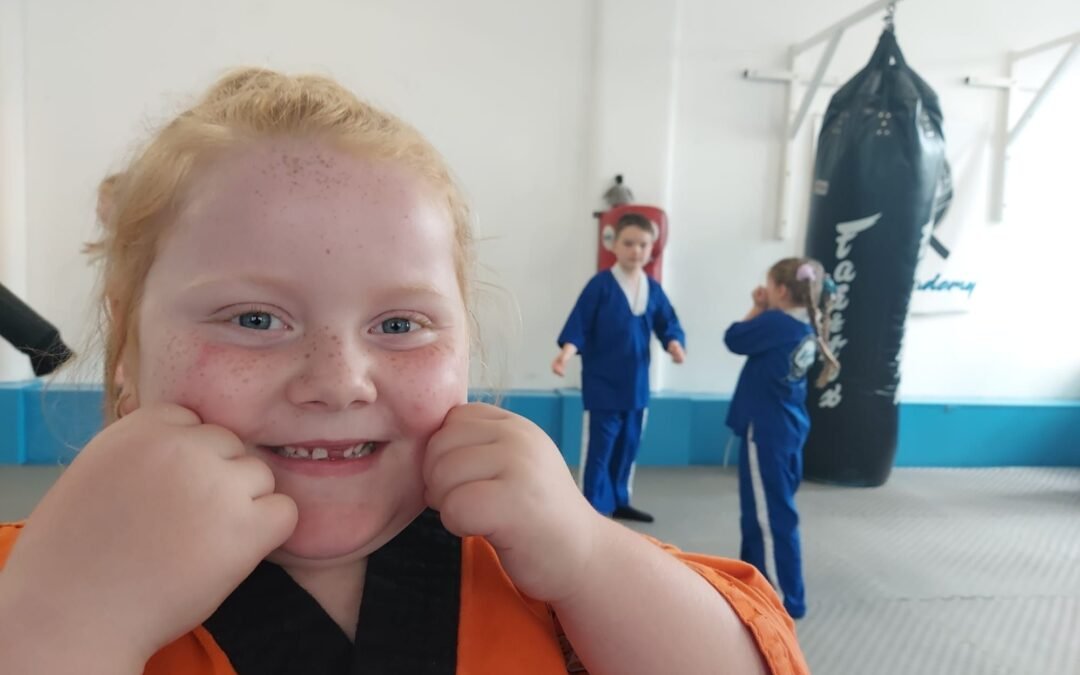
When many people picture ADHD, they imagine a child who is constantly moving, calling out or struggling to sit still. However, ADHD does not always look loud or disruptive.
For many girls, particularly those with an inattentive presentation of ADHD, the signs can be much quieter. They may daydream, forget instructions, lose belongings or appear to be listening while their thoughts have drifted elsewhere. Because they are often polite, gentle and well-behaved, their difficulties can be overlooked at home and in school.
This does not mean that every quiet or dreamy child has ADHD. Only a qualified professional can assess and diagnose ADHD. However, understanding how inattentive difficulties may appear can help you recognise when your child might benefit from additional support.
A structured, encouraging activity such as martial arts can provide valuable opportunities to practise focus, self-regulation and confidence. At Kane Academy in Huddersfield, children develop these skills in a welcoming environment where personal growth matters as much as physical ability.
Why ADHD in girls can be missed
Research suggests that girls are more likely than boys to show inattentive symptoms rather than obvious hyperactivity. Resources such as CHADD’s information on ADHD symptoms in women and girls and this research review on ADHD in girls highlight how easily these children can be misunderstood.
A girl with inattentive ADHD may:
- Daydream frequently or appear “lost in her own world”.
- Struggle to follow multi-step instructions.
- Forget homework, equipment or everyday responsibilities.
- Make mistakes despite understanding the task.
- Take a long time to begin or complete work.
- Become overwhelmed by organisation and transitions.
- Seem to listen but fail to remember what was said.
- Avoid activities where she expects to make mistakes.
- Become anxious, self-critical or reluctant to participate.
Because she is not disrupting other people, adults may assume that she is lazy, shy, careless or simply not trying hard enough. Over time, repeatedly forgetting, losing focus or falling behind can affect her self-belief.
The important message is that these difficulties are not a measure of intelligence, effort or potential. With the right support, quiet children can make remarkable progress.
How martial arts supports focus and self-regulation
Martial arts is not a treatment or cure for ADHD, and it should not replace professional advice, school support or any recommended treatment. However, a well-run class can reinforce many of the skills that children with inattentive ADHD are working to develop.
1. Practise returning your attention
Martial arts requires children to listen, watch, remember and move. They may need to copy a stance, respond to a cue, follow a short sequence or adjust their position.
Attention will naturally wander from time to time. The goal is not to expect perfect concentration. Instead, instructors can help children notice when they have lost focus and calmly bring their attention back to the activity.
This repeated practice can be empowering. Your child learns that losing focus is not failure; refocusing is a skill she can develop.
2. Use movement to support learning
Many children find it easier to engage when learning includes movement. Martial arts combines physical activity with simple instructions, repetition and immediate feedback.
A child may find it difficult to concentrate during a long verbal explanation, but she may engage more successfully when the instruction is demonstrated and then practised straight away. Short drills and regular movement changes can make learning feel achievable rather than overwhelming.
Research into exercise and ADHD suggests that physical activity may support attention, mood and executive functioning. While research specifically examining martial arts for girls with inattentive ADHD remains limited, the combination of movement, structure and repetition is a promising fit for many children.
3. Build self-regulation through controlled action
Martial arts is not about hitting as hard or moving as quickly as possible. Children learn control: waiting for a signal, keeping a safe distance, listening to a partner and stopping when instructed.
These moments give children practical ways to experience self-regulation. Rather than simply being told to “calm down” or “pay attention”, your child can practise breathing, pausing and responding with control.
This can be especially helpful for children who become frustrated when they make mistakes. A supportive instructor can show them how to pause, try again and keep going.
4. Create regular experiences of success
Quiet girls with inattentive ADHD may receive frequent reminders about what they have forgotten or failed to complete. Martial arts provides another kind of feedback: visible progress.
Learning a new technique, remembering a sequence or completing a class with confidence gives your child an opportunity to think, “I can do difficult things.”
Gradings and milestones can also break progress into manageable steps. This helps children focus on improvement rather than comparing themselves with others.

Choosing a supportive martial arts school
The environment matters. A demanding or overly competitive class may increase anxiety, while a patient and structured school can help your child feel safe enough to learn.
Before enrolling, look for a school that:
-
Uses clear, concise instructions
Children benefit when techniques are demonstrated and explained in small steps. This reduces the pressure of remembering too much at once. -
Creates predictable routines
A familiar structure, such as warm-up, skills practice, games and cool-down, can make transitions easier and reduce uncertainty. -
Celebrates effort and progress
Ask whether instructors recognise listening, kindness, persistence and improvement, not only speed, strength or competition results. -
Responds without shame
Every child will lose focus occasionally. The right instructor redirects calmly rather than labelling a child as lazy, naughty or careless. -
Welcomes communication with parents
Share anything that may help the instructor understand your child. A supportive coach will want to know how she learns best. -
Values inclusion and personal development
Your child should feel that she belongs, whether she is naturally confident or needs time to settle into a new environment.
At Kane Academy, personal development is at the heart of our martial arts programmes. We welcome children of different ages, abilities, personalities and fitness levels, helping each student grow at their own pace.
Tiny Tigers and Ninja Kids at Kane Academy
Our programmes are designed to give children a positive introduction to martial arts while developing confidence, respect and resilience.
Tiny Tigers: ages 4–7
Tiny Tigers classes introduce younger children to movement, listening, coordination and confidence through age-appropriate activities. The lessons are structured, active and encouraging, helping children practise following instructions while enjoying themselves.
For a quiet or dreamy child, the short class format can make it easier to engage without feeling overwhelmed.
Ninja Kids: ages 7–12
Ninja Kids classes build on these foundations with more developed techniques, fitness exercises, self-defence awareness and goal-setting. Children learn to work with others, remember combinations and take pride in their progress.
The programme is suitable for children who are completely new to martial arts. Your child does not need to be sporty, outgoing or already confident to begin.
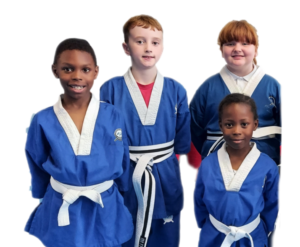
Confirmed Kane Academy children’s class times
Our current children’s timetable includes the following sessions:
| Day | Tiny Tigers, ages 4–7 | Ninja Kids, ages 7–12 |
|---|---|---|
| Tuesday | 4:00–4:30pm or 4:30–5:00pm | 5:00–5:45pm or 5:45–6:30pm |
| Thursday | 4:00–4:30pm or 4:30–5:00pm | 5:00–5:45pm or 5:45–6:30pm |
| Saturday | 9:00–9:30am or 9:30–10:00am | 10:00–10:45am or 10:45–11:30am |
Please check the full Kane Academy timetable before booking, as class availability and scheduling can change.
Start gently with a trial or beginner course
A new activity can feel daunting for a child who already worries about getting things wrong. That is why we encourage families to begin with a trial session. It gives your child the opportunity to meet the instructor, explore the training space and experience the class without pressure.
We also offer:
-
4-week starter programme: £49.99
This gives your child time to become familiar with the class, practise the basics and decide whether martial arts feels right for her. -
6-week beginner course: £199
This includes a uniform, gloves and gradings, helping your child begin with the equipment and milestones she needs to feel part of the academy.
Speak with the team before your child’s first session and explain any concerns about attention, transitions, confidence or sensory needs. Small adjustments and encouragement can make a significant difference.

Help your child discover her inner warrior
A quiet child should never be mistaken for a child who is not struggling, and she should never be underestimated.
For girls with inattentive ADHD, martial arts can offer a positive space to practise attention, self-regulation and persistence. Through clear routines, supportive coaching and achievable goals, your child can develop the confidence to participate, make mistakes, try again and recognise her own strengths.
If you are based in Huddersfield, Kirklees or West Yorkshire, book a trial session at Kane Academy and let your child take her first step towards greater focus, resilience and self-belief.
Explore the children’s martial arts programmes at Kane Academy and discover how she can unleash her inner warrior.