
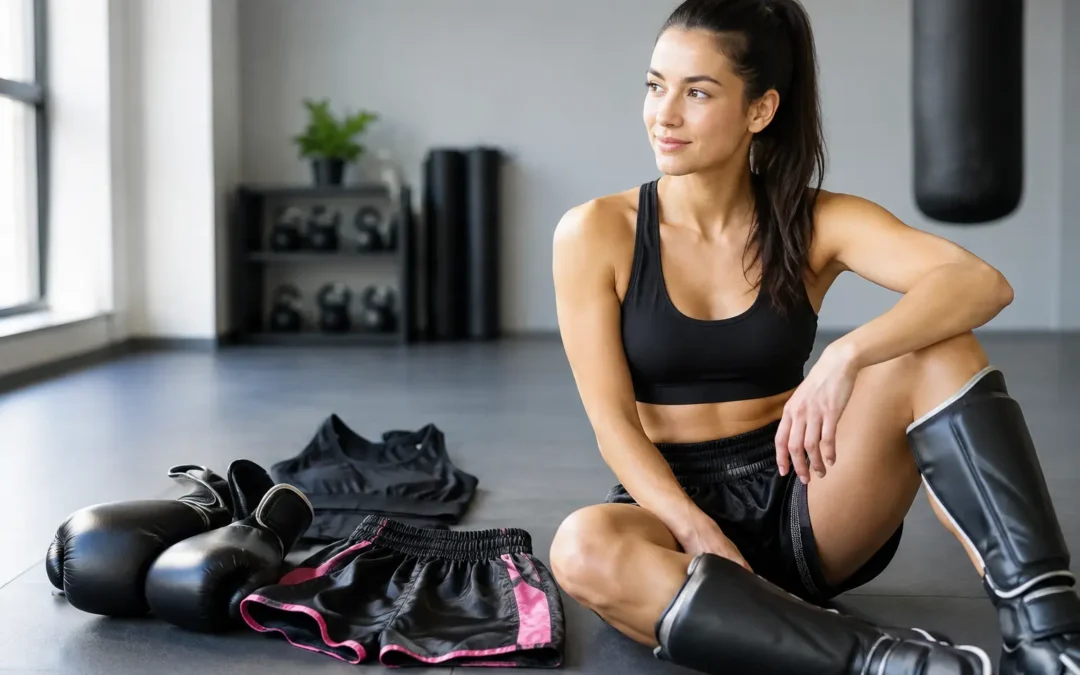
Walking into your first session should feel exciting, not like a test of whether you own the right gym kit. This women’s kickboxing clothing guide keeps it simple: wear clothing that lets you move freely, stays comfortable when you sweat and helps you focus on learning rather than constantly adjusting your outfit.
Kickboxing is active from the first warm-up. You may be squatting, stepping, pivoting, lifting your knees, throwing punches and practising kicks in the same class. The best clothing supports that movement while helping you feel confident in a friendly training environment.
Start with comfort, not a perfect outfit
You do not need specialist fightwear before your first kickboxing class. A clean T-shirt or fitted sports top, comfortable leggings or sports trousers, and supportive trainers are usually enough to get started. Choose items you have already worn for exercise, rather than buying something new that might rub, slip or feel restrictive.
The key question is not, “Does this look like kickboxing clothing?” It is, “Can I move properly in it?” You should be able to raise your arms above your head, bend your knees, stretch your legs and turn your hips without feeling held back.
A first session is about taking that positive step for yourself. Whether your goal is fitness, self-defence, stress relief or a stronger sense of confidence, comfortable clothing helps you give your attention to the coaching and enjoy the experience.
Women’s kickboxing clothing guide: the essentials
For most beginner classes, a fitted but non-restrictive top works best. A sports T-shirt, vest or long-sleeved training top are all suitable choices. Some people prefer a looser top for extra coverage, while others like a closer fit because it does not move around during pad work. Both are completely fine if you can train comfortably.
For your bottom half, leggings are a popular option because they allow a full range of movement. Look for an opaque, squat-proof fabric with a waistband that stays in place. High-waisted leggings can feel especially secure when you are practising knee strikes, front kicks and stretches.
Sports joggers are another good choice, particularly if you prefer more coverage or are training in cooler weather. Avoid very baggy trousers, though, as excess fabric can catch around your feet or make it harder for an instructor to see your stance and technique. Denim, stiff fashion trousers and anything with restrictive seams will make kicking far less comfortable.
A supportive sports bra is worth prioritising. Kickboxing includes footwork, cardio drills and fast combinations, so the support you need may be greater than for yoga or a gentle walk. Choose one that lets you breathe deeply and move your shoulders freely. If the straps dig in or the band feels uncomfortably tight, it can become distracting quickly.
Should you wear shorts or leggings for kickboxing?
This comes down to personal comfort. Training shorts offer excellent freedom for high kicks and can feel cooler in a busy class. They are often worn over fitted cycling shorts or leggings by people who prefer extra coverage. If you choose shorts, make sure they are designed for sport and have enough room through the hips and thighs.
Leggings are equally suitable, especially for beginners. They can help you feel secure while learning unfamiliar movements and are practical for warm-ups, stretching and floor-based exercises. The trade-off is that thicker leggings may feel warm during high-energy sessions, so breathable material is helpful.
There is no need to dress like everyone else. A supportive women’s kickboxing class should make room for different preferences, body shapes and confidence levels. The right choice is the one that allows you to train with purpose rather than worrying about your clothing.
Footwear depends on how the class trains
Kickboxing footwear is not always the same. Some classes train in clean indoor trainers, while others work barefoot on mats. It depends on the style of kickboxing, the training surface and the structure of the session.
If you are unsure, ask before your first class. Do not assume that running shoes are ideal simply because they are trainers. Very thick, heavily cushioned soles can make it harder to pivot smoothly when kicking, while outdoor shoes may not be suitable for indoor training spaces.
If your class uses trainers, bring a clean pair used only indoors where possible. They should feel secure around the heel and offer enough grip without sticking to the floor. If you train barefoot, keep your toenails short and remove toe rings or ankle jewellery that could catch or cause discomfort.
As you progress, your instructor can advise whether specialist footwear is useful for your training. It is rarely something a complete beginner needs to rush out and buy.
What to avoid wearing to class
A few clothing choices can make training more difficult or less safe. Avoid jewellery such as rings, hoop earrings, bracelets and necklaces. Even small items can catch on clothing, gloves or pads. It is also best to avoid watches, belts, scarves and tops with hard zips or sharp decorations.
Very loose clothing can get in the way of punches and kicks, while clothing that is too tight may limit your hip movement or make breathing difficult. Test your outfit at home with a few bodyweight squats, knee raises and arm circles. If it shifts, pinches or needs frequent adjustment, choose another option.
Make-up is entirely your choice, but heavy foundation can feel uncomfortable once you start sweating and may transfer onto gloves or pads. Tie long hair back securely with a soft hair tie. A ponytail, braid or bun that stays put can make a real difference when you are moving quickly.
Bring the small things that make training easier
Your first class does not require a large kit bag, but a few simple items are useful. Bring water in a bottle with a secure lid, a small towel and any medication you may need. If you wear glasses, consider whether sports straps or contact lenses are more comfortable for movement and pad work.
Once you begin regular training, you may also want a spare top for after class and a lightweight layer for travelling home. Kickboxing can be a serious workout, and getting changed out of damp clothing afterwards is more comfortable, especially on colder evenings.
Your academy may provide or recommend gloves, pads and other equipment as part of a beginner programme. This is helpful because properly fitted kit matters more than buying the most expensive gloves on your own. Good coaching includes showing you how to wear and care for equipment safely.
Clothing confidence matters too
For many women, deciding what to wear is tied to feeling visible, new or unsure in a fitness setting. That feeling is common, especially when you are stepping into a class for the first time. Remember that everyone is there to train, improve and support one another – not to judge what you are wearing.
At Kane Academy, women’s kickboxing is built around learning practical skills in a positive, encouraging setting. You do not need to arrive looking experienced. You only need clothing that lets you move and the willingness to give yourself a chance.
As your confidence grows, you may choose branded kit, training shorts or more specialist clothing. Let that happen naturally. The best kit is not what makes you look the part on day one. It is what helps you turn up consistently, train comfortably and leave each session feeling stronger than when you arrived.
Choose an outfit that feels good, pack your water and take the first step. Your clothing should support your training, but your decision to start is what creates the real change.