
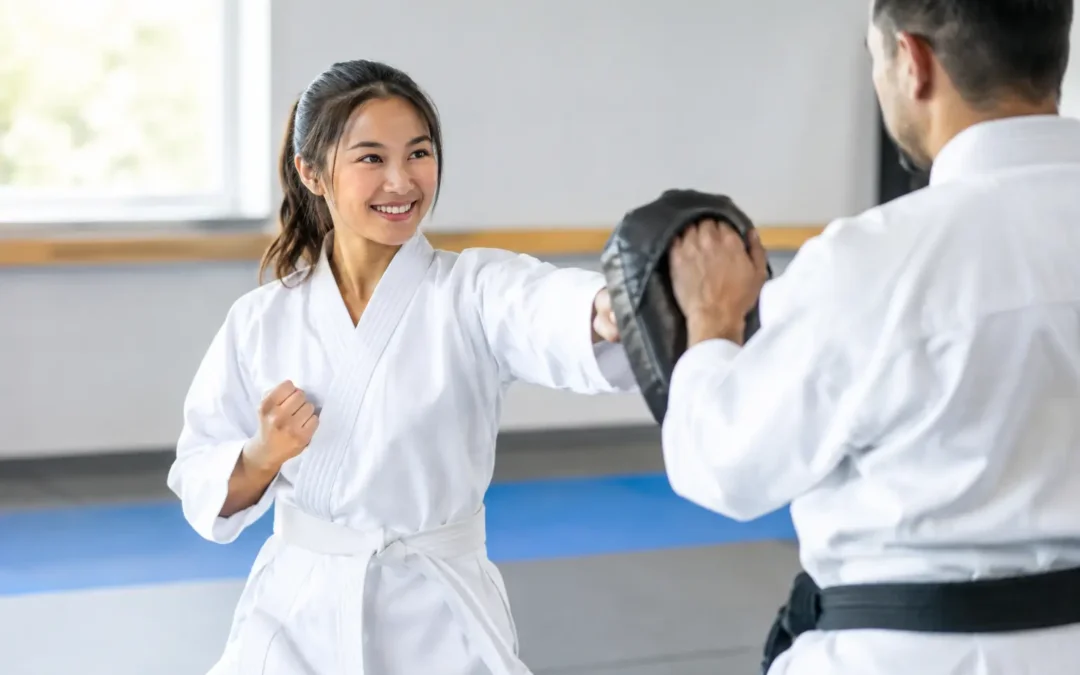
A child who hangs back at the edge of the mat, an adult who has not exercised for years, and a teenager looking for a positive outlet can all ask the same question: are martial arts classes inclusive? The honest answer is that they should be, but the quality of inclusion depends on how a class is taught, structured and led.
Martial arts are not reserved for the loudest, fittest or most naturally confident person in the room. Done well, training gives each student a clear starting point and a practical route forward. You do not need experience to begin. You need patient coaching, a safe environment and a willingness to take the first step.
What inclusive martial arts classes look like
An inclusive class is not simply a room where anyone is allowed through the door. It is a class where people are actively helped to take part, learn safely and feel that they belong.
That starts with the instructor. Good coaches explain techniques clearly, demonstrate more than once and break skills into manageable stages. They notice when a student is overwhelmed, unsure or being left behind. They set standards for effort, kindness and self-control, so confidence is built without anyone being mocked for making mistakes.
Structure matters too. Beginners benefit from knowing what will happen when they arrive: a warm-up, skill practice, pad work or partner drills, fitness training and a calm finish. Predictable routines can be especially reassuring for younger children and for students who find unfamiliar situations difficult.
In an inclusive setting, progress is personal. One person may be working on balance and coordination, while another is preparing for a grading. Both deserve meaningful coaching and recognition. Martial arts can be challenging, but challenge should feel purposeful, not intimidating.
Are martial arts classes inclusive for children?
For children, inclusion begins with age-appropriate teaching. A four-year-old does not need the same instruction, pace or expectations as a twelve-year-old. Younger children learn best through energetic, focused activities that develop listening, movement, confidence and basic coordination. Older children can take on more technical skills, responsibility and goal-setting.
The right class can be particularly valuable for a shy child. Martial arts do not demand that children become the centre of attention on day one. They can build confidence gradually by learning a stance, completing a drill, working with a partner and seeing themselves improve week by week. Small wins matter. A child who initially avoids eye contact may later volunteer to demonstrate a technique or encourage a new starter.
Behaviour is also handled differently in a well-run martial arts programme. Discipline should not mean shouting or embarrassment. It should mean clear boundaries, consistent routines and an understanding that respect is shown through actions. Children learn that turning up, listening and trying again after a setback are all part of becoming more capable.
Supporting children with additional needs
Some children need more than a standard coaching approach. They may benefit from extra time to process instructions, a quieter introduction to the class, visual demonstrations, regular reassurance or carefully adapted activities. The goal is not to lower every expectation. It is to make learning accessible while keeping the child safe, involved and proud of their progress.
Parents should feel comfortable discussing their child’s needs before a trial session. Share what helps them settle, what situations they find difficult and what success would look like in the early weeks. A thoughtful instructor can then advise whether the class format is suitable and how support can be provided.
There are occasions when a busy group setting may not be the best immediate fit for a child, or when a gradual introduction is needed. That is not a failure. It is responsible coaching. Inclusion means being honest about what a programme can offer and finding the most positive route into training.
Inclusion is about adults too
Many adults delay starting because they assume everyone else will be younger, fitter and more experienced. In reality, beginner martial arts classes often include people returning to exercise, parents wanting time for themselves, professionals managing stress and adults who want practical self-defence skills.
A supportive class does not expect someone to arrive at peak fitness. Fitness develops through consistent training. Early sessions can be adapted through pace, intensity and rest, while technique is built carefully. The focus should be on learning good movement and gaining confidence, not trying to prove something in the first lesson.
Women’s kickboxing classes can offer an especially encouraging route for those who would feel more comfortable training in a women-only group. They create space to focus on fitness, strength and real-world self-defence without worrying about whether you already know the terminology or have trained before. For many women, the result is not only better fitness but a stronger sense of personal capability.
Teenagers need their own kind of inclusion. They want to be treated with respect, challenged properly and given a constructive place to direct their energy. A good teenage programme provides physical training alongside accountability and resilience. It is a place where effort earns progress, and where students can build friendships around shared goals rather than pressure to fit in.
Questions to ask before joining a class
Not every martial arts class has the same culture. Before committing, it is sensible to ask how beginners are introduced, whether classes are separated by age or experience, and how instructors manage partner work. Ask what adjustments can be made for additional needs, injuries or low confidence.
It is also worth observing how students speak to one another. Are new people welcomed? Do instructors correct mistakes calmly? Is safety treated seriously? A class can be physically demanding while still being friendly, professional and encouraging.
A trial session is often the clearest way to judge the atmosphere. It lets a child, teenager or adult experience the pace of the class without pressure. For parents, it is a chance to see whether their child is engaged and supported. For adults, it removes the uncertainty that often keeps people from starting.
Inclusion does not mean removing standards
There is a common misunderstanding that inclusive training means every student does exactly the same thing, receives the same result or progresses at the same speed. It does not. Martial arts still require focus, respect, safe behaviour and regular effort.
The difference is that standards are communicated clearly and applied fairly. Students are taught what good progress looks like for them. A beginner may be praised for showing up despite nerves; a more experienced student may be challenged to refine their control and help a partner learn. Both are growing, and both are accountable.
This balance is one reason martial arts can be so powerful. Students are not labelled by their starting point. They are given the tools, encouragement and structure to develop. Over time, the nervous child, hesitant teenager or uncertain adult often discovers that they can do far more than they first believed.
At Kane Academy, that community approach sits alongside professionally led kickboxing, self-defence and Filipino martial arts training. Classes are designed to be welcoming while still giving students a genuine sense of achievement, from their first session to each new stage of progress.
The best time to judge whether a class feels inclusive is not after months of wondering. Take a trial, ask the questions that matter and pay attention to how you or your child feel when the session ends. Feeling challenged is good. Feeling supported enough to come back is where confidence begins.