
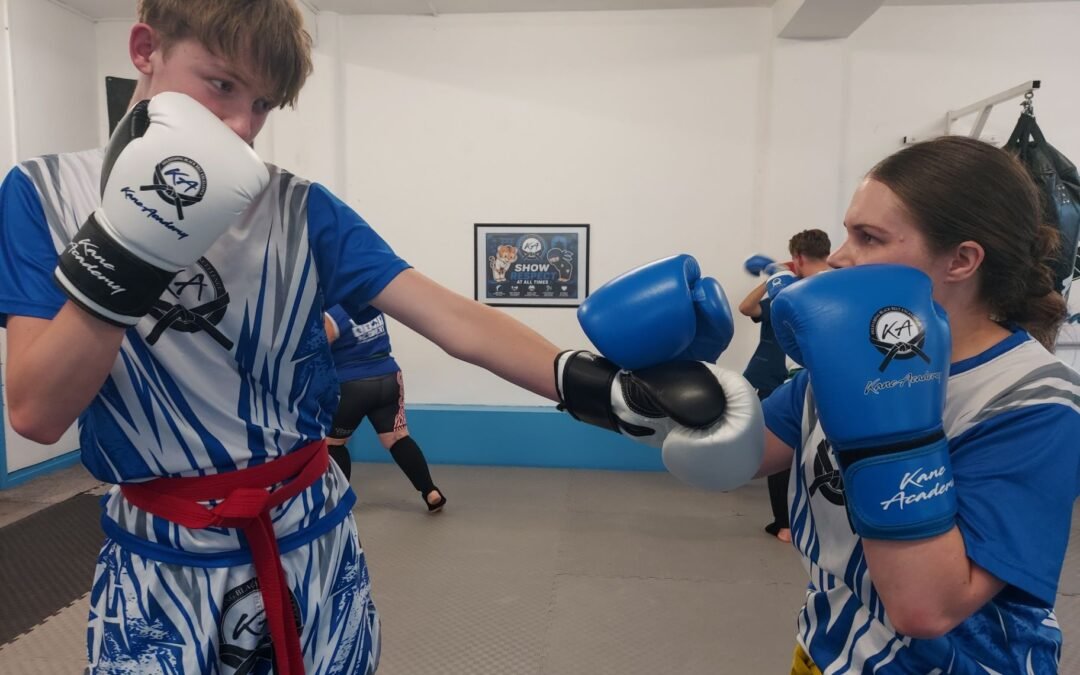
Starting kickboxing can feel like a big step. You might be wondering whether you need to be fit, confident or coordinated before you walk through the door. You do not. A beginner course is there to help you learn, improve and find your feet: one session at a time.
At Kane Academy, the 10-week beginner kickboxing course in Huddersfield costs £199 and includes lessons designed for new starters, a uniform, gloves and gradings. It is a structured introduction for juniors, teenagers and adults who want to build skills in a welcoming setting. Training is led by Rebecca Kane, a six-time world champion in combat martial arts, with female-led coaching.
Here is a realistic look at how those first ten weeks can unfold. Individual lessons vary by age group and programme, so think of this as a guide to the journey, not a promise that every class follows the exact same script.
Weeks 1–2: Finding your feet
Your first achievement may simply be showing up. You will get familiar with the training space, meet your instructors and learn how a class works. The focus is on the basics: listening to instructions, moving safely and trying new things without worrying about getting everything right first time.
Depending on your age and class, early sessions may introduce stance, balance, simple movements and beginner-friendly fitness activities. Juniors learn in age-appropriate groups, while teenagers and adults are guided through kickboxing foundations at a suitable pace.
Focus on taking part, not being perfect. This helps you settle in and gives your instructors a chance to support you where you are today. If you feel nervous, that is normal; confidence often follows action rather than arriving beforehand.

Weeks 3–4: Learning the building blocks
As the routine becomes more familiar, you can start linking movements and responding to coaching cues. Beginner lessons may introduce basic punches and kicks, footwork, controlled pad work and simple combinations. You will also practise how to train safely and respectfully alongside other students.
It is common to need a few tries to remember a sequence or coordinate your hands and feet. That is part of learning, not a reason to hold back.
- Listen to one coaching point at a time. This helps you focus on a manageable change instead of trying to fix everything at once.
- Ask for a demonstration if you are unsure. A clear example can make a new movement easier to understand.
- Notice small improvements. Remembering a combination or feeling steadier on your feet counts as progress.
Weeks 5–6: Building consistency and resilience
By the middle of the course, some techniques may feel more familiar. Your lessons can build on those foundations through repeated practice, combinations and fitness activities suited to your group. You may find that you can follow instructions more readily or keep moving for longer than you could at the start.
The effort is not only physical. Training asks you to listen, practise, adapt and try again when a skill feels challenging. That is a practical way to work on discipline and resilience: not by expecting every attempt to be perfect, but by returning to the task.
Research offers some encouraging context. A small study of five weeks of kickboxing training reported improvements in several fitness measures among participants, including aerobic capacity, flexibility and agility. The study was limited in size, and individual results vary, so it is not a promise of what you will achieve. It does support the idea that regular, structured practice can challenge your body in a range of ways. Read the study.

Weeks 7–8: Putting skills together
As you become more comfortable, you can practise applying techniques in longer sequences and controlled training activities. Your instructor will help you develop accuracy, coordination and awareness while keeping the work appropriate to your level.
You may also find that a familiar class feels different from your first one. You know where to stand, what to expect and how to respond to a correction. These everyday signs of progress matter. Kickboxing is not about proving yourself to anyone else; it is about learning skills and becoming more capable at your own pace.
If a technique is not clicking, break it into smaller steps. Ask your instructor for guidance, return to the basics and keep practising. This makes a challenging movement more manageable and helps you build patience along with technique.
Weeks 9–10: Bringing your progress together
In the final weeks, you can revisit the foundations and prepare for the grading included in the course. Grading gives you a structured goal and a chance to demonstrate what you have learned so far. It is a milestone, not a demand for perfection.
By the end of ten weeks, you may have a stronger understanding of basic kickboxing movements, improved familiarity with class routines and a clearer sense of what you would like to work on next. Your progress will depend on factors such as attendance, starting point and individual pace. The important thing is to recognise what you have achieved, and keep building from there.
Who is the course for?
The course is a good option if you are new to kickboxing and want a clear way to get started. It can suit a young person looking for a positive challenge, a teenager wanting to develop fitness and confidence, or an adult who would rather learn with coaching than train alone.
You do not need to arrive at a particular fitness level. Kane Academy’s wider community includes beginners and experienced students, and its values centre on healthy living, kindness, resilience, inclusivity and continuous growth. Women are welcome in the academy’s female-led coaching environment, and age-appropriate classes help students train with others in a suitable group.
If ten weeks feels like too much of a commitment at first, the 4-week starter programme is £49.99. Free trial sessions are also available for new members, so you can experience a class before choosing your next step.
Class times at Kane Academy
These are the confirmed class times. Check the full timetable before planning your visit.
| Day | Class | Time |
|---|---|---|
| Tuesday & Thursday | Tiny Tigers | 4:00–4:30pm |
| Tuesday & Thursday | Tiny Tigers | 4:30–5:00pm |
| Tuesday & Thursday | Ninja Kids | 5:00–5:45pm |
| Tuesday & Thursday | Ninja Kids | 5:45–6:30pm |
| Tuesday & Thursday | Black Belt Club Elite Class | 6:30–7:15pm |
| Tuesday & Thursday | Teen & Adult Kickboxing | 7:15–8:00pm |
| Saturday | Tiny Tigers | 9:00–9:30am |
| Saturday | Tiny Tigers | 9:30–10:00am |
| Saturday | Ninja Kids | 10:00–10:45am |
| Saturday | Ninja Kids | 10:45–11:30am |
| Saturday | Women’s Kickboxing | 11:30am–12:15pm |
| Saturday | Family Kickboxing | 12:15–1:00pm |
For adults looking specifically for kickboxing, the listed Teen & Adult sessions are Tuesday and Thursday evenings. For juniors, the timetable provides Tiny Tigers and Ninja Kids sessions at different times across Tuesday, Thursday and Saturday.
Take the first step in Huddersfield
If you live in Marsh, Lindley, Salendine Nook, Oakes, Fixby, Greenhead or elsewhere in Kirklees, your first class does not need to be a test of how fit or skilled you already are. It is simply an opportunity to begin.
The £199 beginner kickboxing course gives you ten weeks of new-starter lessons, a uniform, gloves and gradings. Start with a free trial, explore the Kane Academy classes or find out more about the beginner course. Turn up ready to learn, and let each small achievement help you build confidence, fitness and resilience.