
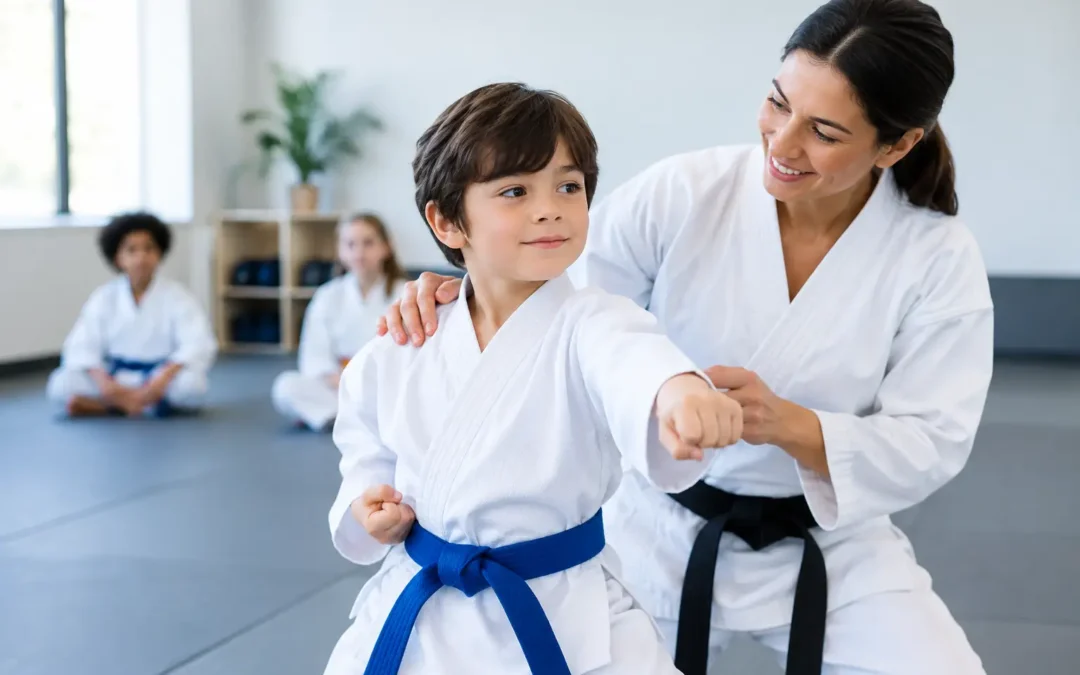
A sensory friendly martial arts guide starts with one reassuring truth: a child does not need to be loud, instantly sociable or comfortable in a busy room to benefit from martial arts. With patient coaching, predictable routines and the right level of support, training can become a place where they feel capable, included and proud of what they can do.
For some children, the buzz of a class is exciting. For others, noise, close contact, unexpected changes or a new environment can feel overwhelming. That does not mean martial arts is the wrong activity. It means the class needs to recognise the child in front of them and give them a secure way to take part.
What sensory-friendly martial arts really means
Sensory-friendly training is not about lowering expectations or removing challenge. It is about making the learning environment clearer, more manageable and more responsive, so a child can access the same positive outcomes as their peers: fitness, confidence, discipline, coordination and practical self-defence awareness.
Every child’s sensory profile is different. One may find sudden shouting difficult but enjoy pad work. Another may need extra personal space, yet thrive when practising a sequence they know well. Some children benefit from movement to regulate their energy; others need a quieter start before joining the group. A good instructor does not assume that one approach will suit everybody.
The most helpful classes tend to be structured. Children know how the session begins, what activity comes next and how it ends. Instructions are short and demonstrated as well as spoken. Coaches give time to process information, celebrate effort and provide a calm route back into the activity if a child needs a brief break.
Why martial arts can be a positive fit
Martial arts gives children something concrete to work on. A stance can be practised. A combination can be repeated. A belt or grading goal creates a visible marker of progress. For children who find open-ended social situations difficult, that clarity can feel reassuring.
Training also develops body awareness. Learning how to balance, move with control, hold pads safely and judge distance can support coordination and confidence in movement. The aim is not perfection on day one. It is helping each child notice that regular practice creates progress.
There is a social benefit too, although it should never be forced. Children work alongside others, take turns, listen to simple instructions and encourage teammates. The shared focus is on learning skills, rather than making conversation on demand. Over time, many quieter children become more willing to speak up, make eye contact and join in because they feel secure in the routine.
For parents, the value often shows up beyond the class. A child who has learned to persevere through a challenging drill may become more willing to try something new at school. A child who practises respectful boundaries in partner work may become clearer about personal space. These changes take time and will look different for every family.
What to look for in a sensory-friendly martial arts class
The instructor matters more than the style. A technically strong class is valuable, but children also need coaches who can communicate with warmth, consistency and calm authority. Ask how instructors support children with additional needs and whether they are open to learning about your child’s preferences.
Before booking, it is useful to ask about the class environment. Is there a regular routine? Can your child watch briefly before joining in? Are ear defenders acceptable if they help? Is there a quiet place or agreed strategy for a short reset? Can the coach give visual demonstrations or break a skill into smaller stages?
You should also ask how physical contact is introduced. Martial arts often involves partner drills, pad holding and practising safe responses, but these should be taught gradually and with consent. A child may initially prefer to train with a coach, work independently or use equipment rather than partner up. That can be a sensible starting point, not a barrier to progress.
Look for language that is respectful rather than patronising. The goal is not to make a child appear settled for the sake of the room. The goal is to help them genuinely feel safe enough to learn. A class should be organised, energetic and encouraging without treating overwhelm as bad behaviour.
How to prepare for a first session
A first class can be a big step, particularly when the setting and people are unfamiliar. Preparation can reduce the unknowns. Tell your child what will happen in simple, honest terms: they will meet a coach, do warm-up movements, learn a few skills and have chances to rest if needed. Avoid promising that it will be easy. Instead, remind them that they only need to try one part at a time.
Comfortable clothing, a drink and arriving with a few minutes to settle can make a real difference. If your child has a favourite regulation tool, such as ear defenders or a small familiar item to keep with their belongings, discuss this with the instructor beforehand. Clear communication allows the coach to welcome them well from the moment they arrive.
It can help to agree on a simple signal for a break. This gives the child a sense of control without requiring them to explain how they feel in front of a group. The break should be short, calm and free from pressure. Returning to one small task, rather than trying to catch up with everything, is often the best next step.
Supporting progress without pressure
Confidence is built through repeated experiences of success, not through being pushed past a child’s limits. Some children will join in straight away; others may spend several sessions watching, copying from the edge or completing only part of the lesson. Progress still counts.
At home, focus on what went well. Perhaps they entered the training space, wore their kit, tried a new stance or stayed for five minutes longer than last time. Specific praise is more meaningful than a broad “well done”. You might say, “You kept practising even when the room felt busy,” or, “You remembered to ask for space when you needed it.”
Consistency helps, but there is a balance. Regular attendance allows routines and relationships to become familiar. At the same time, a difficult day does not erase progress. If a child needs to leave early or observe rather than participate, that information can help the coach adjust the next session.
Parents and instructors work best as a team. Share what helps your child regulate, what situations are likely to be difficult and what signs suggest they are becoming overloaded. Equally, let the coach share the small wins they see in class. A child may be far more independent when practising a familiar drill than they realise.
The role of clear boundaries and achievable goals
Inclusive teaching is not the same as having no boundaries. Children benefit from knowing that equipment is used safely, instructions matter and everyone deserves personal space. Clear expectations can be particularly reassuring because they make the class easier to understand.
The key is how those boundaries are taught. Rather than giving a rapid stream of corrections, a skilled coach demonstrates the expected behaviour, offers a simple reminder and notices improvement. If a child struggles with waiting, noise or transitions, the answer may be to adapt the task, not to label them as disruptive.
Goals should be personal and achievable. For one child, a goal may be to complete a warm-up. For another, it may be to work with a new partner or prepare for a grading. Technical progression remains valuable, but it should sit alongside emotional safety and genuine enjoyment.
Choosing a supportive next step
A trial session is often the best way to judge whether a class feels right. It gives your child a chance to experience the routine, meet the coach and see the training space without a long-term commitment. It also gives you an opportunity to notice how staff respond when a child needs extra time, reassurance or a different explanation.
Kane Academy believes martial arts should be a place where children are challenged with kindness and recognised for their individual progress. The right first session is not the one where everything goes perfectly. It is the one where your child leaves knowing they were welcomed, understood and able to try again next time.