
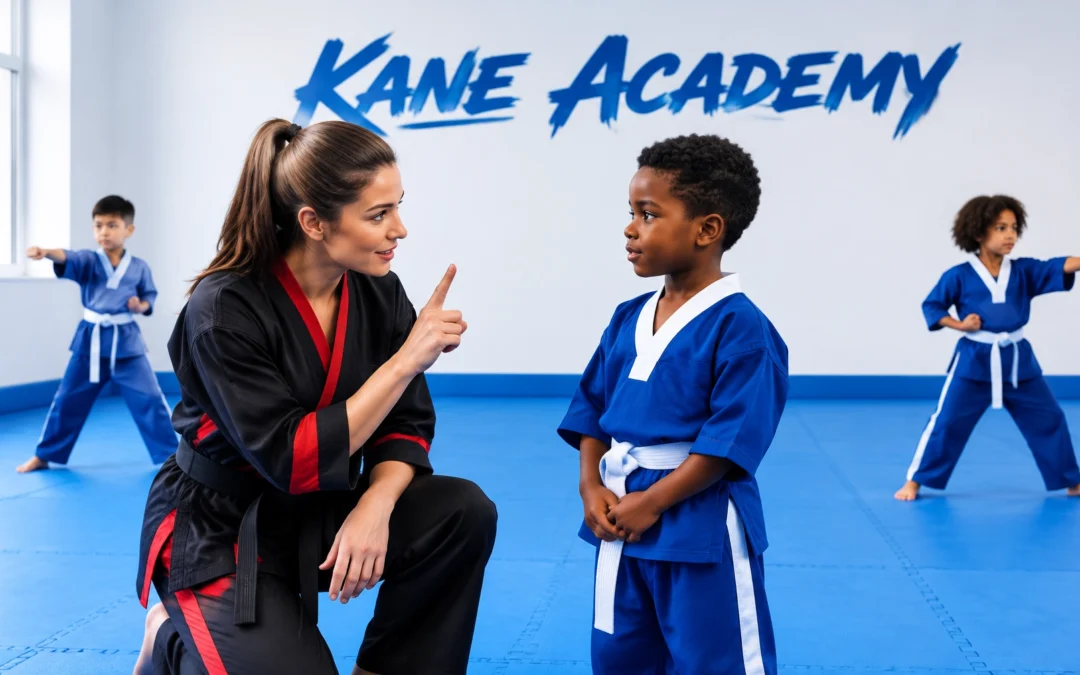
If your child has ADHD, you may already know that traditional activities do not always hold their attention. Long instructions, waiting around, repetitive drills and unstructured environments can quickly become frustrating.
Martial arts can offer a different experience.
With movement, clear routines, short-burst learning and achievable goals, a well-run martial arts class gives children regular opportunities to practise focus, self-control, confidence and resilience. It is not a treatment for ADHD, and every child is different, but research suggests that structured physical activities such as martial arts can support executive function, attention and self-regulation.
At Kane Academy, we welcome children from across Huddersfield, Kirklees and West Yorkshire, including children who may feel anxious, energetic, easily distracted or overwhelmed in group activities.
Why movement-based learning can suit ADHD brains
Children with ADHD often learn best when they are actively involved. Sitting still and listening for long periods can be difficult, while physical activity can help them engage with the lesson and release energy positively.
Martial arts combines movement with thinking. During one class, a child may need to:
- Listen for a short instruction.
- Remember a sequence of movements.
- Wait for their turn.
- Control the strength of a punch or kick.
- Move between activities.
- Respond to a visual demonstration.
- Complete a task and receive immediate feedback.
This combination keeps the brain and body involved. A review of research into physical activity and ADHD found that complex, coordinated exercise can support attention, inhibitory control, working memory and cognitive flexibility. In simple terms, martial arts gives children practical opportunities to practise the skills they use at school and home.
It also makes progress visible. A child may not notice that they are developing better concentration, but they can see themselves learning a new combination, earning a stripe or completing a grading milestone.

1. Short-burst learning makes progress achievable
A long lesson can feel overwhelming when a child is unsure what is expected. Short, focused activities are often easier to understand and complete.
A martial arts class may include several short sections, such as:
- A warm-up game.
- A technique demonstration.
- Partner or pad practice.
- A movement challenge.
- A confidence-building activity.
- A calm finish and review.
Each section has a clear beginning and end. This helps children understand what they are doing now, rather than worrying about the entire session.
At Kane Academy, instructors can adapt the pace and the way instructions are delivered. This may mean demonstrating a movement more than once, using clear and simple language, giving one instruction at a time or allowing a child a moment to reset before trying again.
The aim is not to lower expectations. It is to provide the right support so your child can meet them.
2. Clear routines build focus and self-regulation
Children often feel more secure when they know what will happen next. Martial arts naturally provides a consistent structure: arrive, prepare, listen, practise, review and finish.
Over time, these routines can help a child practise:
- Starting an activity without repeated reminders.
- Looking and listening when an instructor speaks.
- Moving safely in a shared space.
- Managing excitement during energetic drills.
- Recovering after making a mistake.
- Completing a task before moving on.
These are important self-regulation skills. They develop gradually through repetition, encouragement and consistent boundaries.
The research is encouraging, but progress should be viewed realistically. Martial arts will not make every child suddenly sit still or eliminate every challenge. Instead, it can give them a supportive environment in which to practise one small skill at a time.
That repeated practice can make a meaningful difference.
3. Gradings turn effort into visible achievement
Many children with ADHD hear more corrections than encouragement during the school day. Martial arts can provide a positive framework where effort, kindness, perseverance and improvement are recognised.
Gradings and belt progress give children a clear goal. They know what they are working towards, and instructors can break the journey into manageable steps.
A child may first focus on:
- Remembering a single technique.
- Showing a safe stance.
- Following a short sequence.
- Staying engaged for a little longer.
- Encouraging a partner.
- Trying again after a mistake.
These small achievements build towards a larger milestone. The result is not only a new belt or certificate. Your child begins to understand that progress comes from practice rather than perfection.

4. A supportive instructor can change the experience
The quality of the martial arts school matters. A child with ADHD should not be treated as disruptive simply because they need movement, repetition or additional reassurance.
Look for qualified martial arts teachers who:
- Speak to children respectfully.
- Give clear and concise instructions.
- Demonstrate rather than relying only on verbal explanations.
- Recognise effort as well as technical ability.
- Set firm but positive boundaries.
- Understand that children may regulate themselves differently.
- Communicate openly with parents.
- Know how to respond if a child becomes anxious or overwhelmed.
At Kane Academy, our approach is centred on personal development. We want children to become more confident, resilient and capable while learning in a welcoming environment. Our team includes experienced coaches and female instructors, and all new members can begin with a trial session so you can see whether the class feels right for your child.
You can learn more about our Ninja Kids martial arts classes or view all Kane Academy classes.
What happens during a first class?
A first class can feel exciting and daunting, especially for a child who is anxious, sensitive to noise or unsure of new routines.
Before arriving, explain the session simply. You might say:
“We are going to watch first, meet the instructor and try a few activities. You do not have to be perfect.”
When your child arrives, a good instructor should help them understand where to stand, what equipment they will use and what will happen first. They may begin by observing before joining in. That is perfectly acceptable.
During the class, your child may:
- Join a warm-up when they feel ready.
- Watch a demonstration from a safe position.
- Try one movement rather than the whole sequence.
- Take a brief pause if the environment feels overwhelming.
- Rejoin the activity with encouragement.
- Finish by reviewing what they achieved.
The first goal is not flawless behaviour or perfect technique. The first goal is a positive experience that makes your child willing to return.
If your child has specific needs, share helpful information with the academy before the session. Tell the instructor what tends to help, what may trigger anxiety and how your child communicates when they need a break.
The role of siblings
Siblings can have a powerful influence on how a child feels about starting martial arts.
If a brother or sister also attends, avoid comparing their performance. One child may enjoy grading quickly, while another may need more time to become comfortable. Both journeys are valid.
Instead, encourage siblings to:
- Celebrate each other’s effort.
- Practise simple movements together at home.
- Use positive language after mistakes.
- Respect each other’s need for space.
- Focus on personal improvement rather than competition.
Family participation can make martial arts feel like a shared activity rather than something your child is doing because they are “different”. Kane Academy’s family-friendly approach means martial arts can become part of a healthy routine for children, teenagers and parents.
The parent's role at home
Your support outside the academy can reinforce the benefits of training.
Keep expectations clear
Use simple reminders such as, “First put your kit away, then we can have a snack.” Predictable routines reduce unnecessary friction.
Praise the process
Say, “You kept trying when that was difficult,” rather than focusing only on whether the technique was correct. This builds resilience and a growth mindset.
Avoid over-practising
A few minutes of enjoyable practice is usually more helpful than a long session that becomes stressful. Stop while your child is still feeling successful.
Prepare for class
Pack the uniform, water bottle and any required equipment in advance. Reducing last-minute decisions can make the journey to class calmer.
Share useful feedback
Tell the instructor about improvements you notice at home, such as better confidence, more willingness to try or improved ability to follow a routine. This helps everyone support your child consistently.
Kane Academy class times in Huddersfield
Our current timetable includes the following junior sessions:
Tuesday and Thursday
- 4:00–4:30pm: Tiny Tigers
- 4:30–5:00pm: Tiny Tigers
- 5:00–5:45pm: Ninja Kids
- 5:45–6:30pm: Ninja Kids
- 6:30–7:15pm: Black Belt Club Elite
- 7:15–8:00pm: Teen & Adult Kickboxing
Saturday
- 9:00–9:30am: Tiny Tigers
- 9:30–10:00am: Tiny Tigers
- 10:00–10:45am: Ninja Kids
- 10:45–11:30am: Ninja Kids
- 11:30am–12:15pm: Women’s Kickboxing
- 12:15–1:00pm: Family Kickboxing
Times and availability can change, so please check the full Kane Academy timetable before booking.
Choosing the best martial arts school in Huddersfield for your child
When comparing schools, visit or contact them before enrolling. Ask:
- Do you offer a trial class?
- How do instructors support children who are anxious or easily distracted?
- Are lessons structured with clear routines?
- Are coaches qualified and experienced with children?
- How are gradings and behaviour expectations explained?
- What happens if a child needs a short break?
- Is the environment welcoming to different abilities and confidence levels?
- Can parents discuss their child’s needs with the instructor?
The best martial arts school in Huddersfield is not necessarily the one with the loudest advertising or the biggest trophies. It is the school where your child feels safe, respected and motivated to keep growing.
Help your child unleash their inner warrior
For many children with ADHD, martial arts offers more than exercise. It provides structure without removing fun, challenge without judgement and achievement without demanding perfection.
With the right instructors and a supportive environment, your child can practise focus, self-regulation, coordination, confidence and resilience one step at a time.
If you are considering martial arts in Huddersfield, book a trial class with Kane Academy. We will help your child take their first step at a pace that feels positive, encouraging and achievable.